CHITARRA - GUITAR

GILBERT PAUL STYLE TECHNICAL SHREDDING Key of A Guitar Quick Licks Andy James DVD CHITARRISTA MR. BIG

GILBERT PAUL STYLE TECHNICAL SHREDDING, Key of A. Guitar Quick Licks. Andy James DVD

Technical Shredding in A harmonic minor.

Learn killer rock guitar licks in the style of Paul Gilbert, technical shredding virtuoso! Also includes a guitar jam track. Lessons by Andy James.

Each DVD in the Quick Licks series includes an arsenal of licks in the style of your chosen artist to add to your repertoire, plus backing tracks to practice your new licks and techniques.

Andy James is a well respected guitarist and teacher whose influences include Greg Howe, Paul Gilbert, Tony Macalpine and Zakk Wylde.

His blistering technique has been applauded by guitar legends such as Vinnie Moore, and featured on Sky TV's Musicians Channel.

Prezzo: €29,99
€29,99

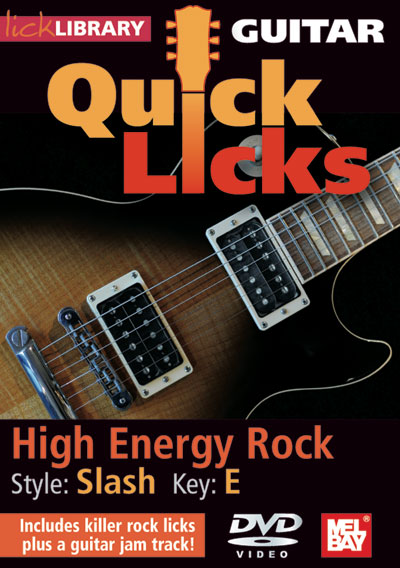
SLASH STYLE Key of E HIGH ENERGY ROCK Guitar Quick Licks Danny Gill DVD CHITARRA GUNS N' ROSES

SLASH STYLE DVD. HIGH ENERGY ROCK, Key of E. Guitar Quick Licks. Danny Gill DVD


Product Description:

Learn licks in the style of Slash, whose killer riffs and instantly recognizable sound made him one of the most acclaimed guitarists of our time! Also includes a rock guitar jam track. Lessons by Danny Gill.

Each Quick Licks DVD includes an arsenal of licks in the style of your chosen artist to add to your repertoire, plus backing tracks to practice your licks and techniques. 

Prezzo: €34,99
€34,99

LEARN GUITAR TECHNIQUES: JAZZ, Stuart Bull. DVD

LEARN GUITAR TECHNIQUES: JAZZ, Stuart Bull. DVD

Impara la tecnica della chitarra jazz con Stuart Bull. Questo DVD di 2 ore ti svelerà alcune delle tecniche Jazz che hanno influenzato i chitarristi di tutto il mondo. Se cercate di migliorare il vostro livello di chitarristi questo DVD vi fornirà l'arsenale di licks necessario per poter espandere i vostri solos.  

Prezzo: €22,99
€22,99

REAL BLUES-ROCK GUITAR Kenn Chipkin 2 DVD TABLATURE LIBRO SPARTITI METODO CHITARRA VIDEO

REAL BLUES-ROCK GUITAR. Kenn Chipkin. 2 DVD TABLATURE
(Revised Edition of Real Rock Guitar with 2 DVDs).

LIBRO METODO DI MUSICA ROCK BLUES. CON 2 DVD. OLTRE 4 ORE DI VIDEO

SPARTITI PER CHITARRA.

ACCORDI, PENTAGRAMMA E TABLATURE. 

By Kenn Chipkin. For Guitar. This edition: Revised. Book; DVD; Guitar Method or Supplement; Method/Instruction. Blues; Rock. 112 pages. 

Blues; Rock.

The late 1960s saw the perfect fusion of blues and rock, giving birth to modern rock guitar and a generation of groundbreaking players. Real Blues-Rock Guitar focuses on these amazing guitar players and shows you their chord progressions, licks, styles, and techniques. This revised edition, now with companion DVDs and all-new engravings, guides you through the styles of blues-rock guitar masters like Jimi Hendrix, Eric Clapton, Billy Gibbons, Jeff Beck, Jimmy Page, The Allman Brothers, Joe Walsh, and many others—with insight that has been carefully researched and documented to help you understand their unique styles. On the accompanying 2-DVD set, Kenny Chipkin performs every example in the book, breaks down how to play the solos effectively, and provides his unique perspective on the history and influence of the blues-rock greats. High-quality MP3 tracks for all the examples and solos in the book are included.

Prezzo: €29,99
€29,99

GROOVY GUITAR 15 CLASSIC '60 SONGS Bill Piburn CD TABLATURE LIBRO (Sittin' On) The Dock Of The Bay

GROOVY GUITAR, 15 CLASSIC '60 SONGS ARRANGED FOR SOLO GUITAR. Bill Piburn. BOOK WITH CD & TABLATURE

LIBRO DI MUSICA POP ROCK, CON CD.

SPARTITI PER CHITARRA FINGERSTYLE, CHITARRA SOLA, FINGERPICKING, CON: 

PENTAGRAMMA E TABLATURE. 


Series: Guitar Solo

Format: Softcover with CD - TAB

Arranger: Bill Piburn

Artist: Various

Recording Engineer: Jack Pearson


From the editor of Fingerstyle Guitar magazine comes 15 custom arrangements of popular music classics, including: Daydream • Happy Together • A Hard Day's Night • Last Train to Clarksville • Scarborough Fair • (Sittin' On) The Dock of the Bay • Spooky • Walk On By • What Becomes of the Broken Hearted • and more. Songs are arranged for solo guitar in notes and tab.


Bill Piburn has lived in Nashville since 1987. Growing up in Kansas City, Missouri, he began his guitar studies with his father Russell at the age of ten. He went on to study with Douglas Niedt at sixteen and Christopher Parkening at age nineteen. He also studied harmony with jazz pianist John Elliot. His playing has won him high praise from legendary players such as Martin Taylor, Chet Atkins, Johnny Smith, Tommy Emmanuel, and Earl Klugh.

"Bill Piburn's arrangements are creative and very musical. He draws on a wide range of musical styles and influences to keep the player and listener surprised and engaged. The music is personal, whimsical, and colorful with lots of interesting counterpoint and unique harmonies. It is immediately apparent when you meet him that the guitar is his passion. We've had great conversations about the guitar and life, and I am proud to have him as a friend." - Earl Klugh


Song List:

Daydream  -  John Sebastian

Downtown  -  Tony Hatch

Happy Together  -  Garry Bonner and Alan Gordon

A Hard Day's Night  -  John Lennon and Paul McCartney

I'll Never Fall In Love Again  -  Burt Bacharach

Last Train To Clarksville  -  Bobby Hart and Tommy Boyce

Mellow Yellow  -  Donovan Leitch

Scarborough Fair  -  Simon & Garfunkel

(Sittin' On) The Dock Of The Bay  -  Steve Cropper and Otis Redding

Spooky  -  Cobb, Buddy Buie, Middlebrooks, Mike Shapiro

Sunny  -  Bobby Hebb

Up On The Roof  -  Gerry Goffin and Carole King

Walk On By  -  Burt Bacharach

What Becomes Of The Broken Hearted  -  J. Dean, Paul Riser, William Henry Weatherspoon

What The World Needs Now Is Love  -  Lyric: Hal David, Music: Burt Bacharach


56 pages

Prezzo: €26,99
€26,99

POPULAR GUITAR STYLES REGGAE & MUSIC OF THE ISLANDS Burkhard Buck Wolters CD TABLATURE

POPULAR GUITAR STYLES, REGGAE & MUSIC OF THE ISLANDS. Burkhard Buck Wolters. SHEET MUSIC BOOK WITH CD AND GUITAR TABLATURE .

LIBRO DI MUSICA REGGAE , LATINA, CON CD. 

SPARTITI PER SOLA CHITARRA CON : 

PENTAGRAMMA E TABLATURE. 

Popular Guitar Styles: Reggae and Music of the Islands reflects recent popular styles and transfers them to classical or fingerstyle technique. Guitar players who want to add reggae or Island music to their solo-repertoire will find an original and unique collection of compositions which will give joy to both players and listeners. The playing-level is intermediate to advance. Left-hand difficulties like barres and stretches are minimized as much as possible to make it easy to make the music groove. Written in notation and TABLATURE.

Series: Popular Guitar Styles

Buck Wolters belongs to the very small company of guitar players and composers who are familar with nearly every style. His authentic mix of jazz, world and latin music, combined with a mastery of classical guitar technique is very unique and outstanding. Born in 1961 in Dortmund, Germany, he began to play the guitar as an autodidact at the age of five. After hearing a recording of Big Bill Broonzy he took his first guitar lessons at the age of thirteen, digging into the blues for several years. At the age of sixteen he went to the conservatory in his hometown where he studied classical guitar. The music of Agustin Barrios, Heitor Villa-Lobos and David Qualey were his main influences. After leading the life of a busker in his twenties, he went to the School of Arts in Amsterdam to study jazz guitar and composition and spent most of his time then copying jazz solos from musicians like John Coltrane, Keith Jarrett, Pat Metheny and Wes Montgomery. He completed his studies as a bachelor with distinction. Today Buck Wolters is very busy performing, composing, recording and teaching throughout Europe. His greatest success belongs to his composition "Dshamilja" ordered in commission by the Opera of Frankfurt.

In the following I will give some brief explanations on the pieces that appear in this book and the popular Caribbean styles that they represent. Moreover some techinical and musical insight on how to produce special sounds on the guitar are given. Keep up the sunny Caribbean mood and have fun with it! Buck Wolters


Kingston Feet (Reggae)

The word "Reggae" was coined around 1960 in Jamaica to identify a "ragged" style of dance music, that melted New Orleans rhythm'n'blues and Caribbean music together. Later African elements were also included. The legendary Bob Marley (1944 -1981) made Reggae popular all over the world, and he is still one of the most active influences in recent popular music. Kingston Feet is to be played in even eights (straight, no shuffle). On the recording you will hear some percussion elements, which have been left out of the score for reading matters. Anyway, you should learn the piece first without percussion. If you want to add them later, here is an explanation: There are two sounds: a "bass drum" on count three, and a "rimshot" on count one (imitating the drumset). The "bassdrum" is produced by dropping the right-hand palm on the bridge. (It takes a little practice to drop the palm and hit strings at the same time.) The rimshot is produced by tapping a finger (preferably the little one) on the top. The "muffle" or "etouffe" is produced by holding the notes with the left-hand fingers without pressing them down to the fret.


Pan-Man-Limbo (Limbo)

The Limbo is also known as the "Under Stick Dance," a dance competition which was very popular at beach parties in Trinidad and Tobago, and is still alive today in Caribbean stage shows. The dancer moves under a stick, trying not to touch it, while being accompanied with Caribbean music, often played on the steeldrum ("Pan"). The harmonics in the beginning of the piece imitate the sound of the "Pan" and they are written as notes that would sound if you fingered them regularly.


Friendly Fritz (Reggae)

This Shuffle-Reggae is dedicated to Frit: Rossel, a very good friend of mine and a genius of a special kind. He is an excelent guitar builder, photographer, writer, salesman and last but not least an extraordinary musician. He plays keyboards, bass and guitar like no one I know. The highlight is when he starts to sing: he can imitate any singer from Harry Bellafonte to Mick Jagger, from Stevie Wonder to Bob Marley, that it makes you laugh until you cry. Again you will hear some percussion elements on the recording, which are produced in the same way on the guitar as in Kingston Feet.


Mentomania (Mento)

Mento is a style from Jamaican heritage, which had its beginnings in the 19th century and can be seen as the "grandfather" of Reggae. Mento had its golden age in the 1950s. Some of the famous mento musicians of that time were: Harold Richardson, Hubert Potter, and Monty Reynolds. Although Mentomania is notated in even eighths, it has a slight feeling of swing or shuffle. As in many Caribbean rhythms the 3/2 clave is featured. (see Popular Guitar Styles Vol. 1 - Latin & Salsa). To give the piece a light, typical Caribbean mood, I suggest you play it with the capo on the 3rd fret. Near the end of the piece (measures 103 through 124) you will hear the ...


Song Title: Composer/Source:

Children of St. Vincent - Buck Wolters
Friendly Fritz - Buck Wolters
Kingston Feet - Buck Wolters
Les Jardins d'Andre - Buck Wolters
Mentomania - Buck Wolters
Pan-Man-Limbo - Buck Wolters

Prezzo: €29,99
€29,99

EMMANUEL TOMMY AND FRANK VIGNOLA JUST BETWEEN FRETS LIBRO guitar TABLATURE Reinhardt SWING

EMMANUEL TOMMY AND FRANK VIGNOLA, JUST BETWEEN FRETS. TABLATURE

LIBRO PER DI MUSICA SWING MANOUCHE,

SPARTITI PER CHITARRA, 

ACCORDI, PENTAGRAMMA E TABLATURE

by Tommy Emmanuel & Frank Vignola ; transcribed by Vinney Raniolo

"Just Betweens Frets"  è l'ultimo risultato della collaborazione tra Tommy Emmanuel e Frank Vignola. Frank e Tommy prendono brani famosi e li trasformano grazie al loro virtuosismo e alla chimica unica che si crea dentro il loro duetto, creando una catena non stop di magici momenti musicali catturati in due spontanee sessions. Questo libro è la trascrizione dell'album e comprende la notazioni standard con tablature sia per la parte di Tommy, sia per la parte di Frank.  Include: Paper Moon, How High the Moon, Clouds e altri.

Just Betweens Frets is the latest collaboration of Tommy Emmanuel and Frank Vignola.
Frank and Tommy turn many a well known tunes inside out with their virtuosity and unique chemistry as a duo, creating a non-stop chain of magical musical moments that were captured in a couple of spontaneous recording sessions. This book is a transcription of the album and features standard notation and tablature for both Frank’s and Tommy’s parts. Tunes include: Paper Moon, How High the Moon, Clouds and many more.


1934 - Clouds - Walter Donaldson
1945 - Django’s Castle - Django Reinhardt 
1940 - How High the Moon - Morgan Lewis
1930 - I’ve Got a Crush on You/Young at Heart - George Gershwin & Ira Gershwin
2009 - Just Us for All - William Emmanuel
1947 - Nature Boy - Eden Ahbez
1933 - Paper Moon - Harold Arlen
1955 - Sweet Dreams - Don Gibson
2009 - Swing 09 - Tommy Emmanuel
1939 - Swing 39 / Swing 42 - Django Reinhardt & Stephane Grappelli
1946 - Tenderly - Walter Gross

Prezzo: €32,99
€32,99

RONDAT PATRICK GUITAR OF CD TABLATURE LIBRO CHITARRA VIVALDI TRIBUTE ELEGY Jean-Michel Jarre

RONDAT PATRICK, GUITAR OF. SHEET MUSIC BOOK WITH CD & GUITAR TABLATURE .

LIBRO DI MUSICA METAL CON CD.

SPARTITI PER CHITARRA :

ACCORDI, PENTAGRAMMA, TABLATURE. 


Rondat è un virtuosista francese, tecnicamente tra i più bravi in Europa. Ha suonato con gli Elegy, Jean Michel Jarre, il G3 con Joe Satriani e Steve Vai, a Parigi.

Prodotto Metodo, studio, tecnica

Per Chitarra con tablature

Allegati CD

Un homme, une guitare. Dix doigts, six cordes.

Cette équation, Pat:rick Rondat s'échine à la résoudre depuis toujours ou presque.

Un beau paquet d'années en tout cas.

Ni le premier ni le dernier, rétorquera-t-on. Pas faux. Seulement, quand on choisit de monter au front seul (le plus souvent) et de lier son destin à la musique instrumentale (la plupart du temps), c'est peu dire qu'on ne se facilite pas la tâche! A fortiori quand il s'agit ensuite d'intituler - puis de les incarner - certains de ses titres-morceaux «The Day After )}(le jour d'après), « Rape Of The Earth )}(viol de la terre), « Shattered Chains )}(chaînes brisées), «Welcome To The Donkeys Island)} (bon, là, ça devrait aller au niveau de l'anglais, non? Donkey, peut-être? Âne, baudet. ..), pour ne prendre que quelques exemples plus ou moins récents ... Au fil des années, entre albums solo et projets collectifs Oean-Michel Jarre, Elegy, Consortium Project, un dernier en date en totale osmose avec le pianiste classique Hervé N'Kaoua), Patrick Rondat aura su s'attirer les faveurs et les ferveurs de centaines de milliers d'aficionados, guitaristes ou pas. Si vous lisez ces lignes, les probabilités sont grandes que vous apparteniez à la première catégorie. Apprentis ou confirmés du manche et de la tige de vibrato, est-il besoin de vous préciser que vous allez pénétrer ici dans un territoire à nul autre pareil ? Un univers où la virtuosité n'est jamais prétexte, où la mélodie se conjugue au mode exigence, où le sens de la note juste confine à l'obsession. Qu'ils prennent leur temps pour installer leurs climats ou qu'ils « déboulent pleine bourre )},les différents chapitres qui jalonnent le parcours musical de Patrick ont ceci en commun que leur force évocatrice, leur faculté à faire naître des images dans l'esprit de celui qui les reçoit, en font aussitôt une signature, une « marque de fabrique)} identifiable entre toutes. Et ce qu'ils défouraillent le hard-rock et/ou le heavy-metal, caressent le jazz ou se frottent à la musique classique. Oserait-on vous recommander de faire preuve de patience et de persévérance au moment de vous essayer à en percer les méandres et les mystères? Allez, osons! Bon courage en tout cas (dans tous les sens du terme ... ) ! Xavier Bonnet


SERIE ARTISTE • Patrick RONDAT

Au fil des années, entre albums solo et projets collectifs (Jean-Michel Jarre, Elegy, Consortium Project, Hervé N’Kaoua…), Patrick Rondat aura su s’attirer les faveurs et les ferveurs de centaines de milliers d’aficionados, guitaristes ou pas. 8 titres incontournables relevés note pour note, vérifiés et validés par Patrick Rondat, en solfège et tablatures, accompagnés d’un CD contenant les play-backs :

– Donkeys Island - Patrick Rondat

– Tethys - Patrick Rondat, trascritto da Franck Graziano

– World Of Silence - Patrick Rondat, trascritto da Franck Graziano

– Partita - musica: J. S. Bach

– Barbarians At The Gates - Patrick Rondat, trascritto da Franck Graziano

– Avalonia - Patrick Rondat, trascritto da Franck Graziano

– Vivaldi Tribute - musica Antonio Vivaldi, arangiamento Patrick  Rondat - 1995

– Rape Of The Earth - Patrick Rondat, trascritto da Franck Graziano

Avec une interview et de nombreux conseils pédagogiques. 

Prezzo: €99,99
€99,99

SKOLNICK ALEX JAZZ GUITAR BREAKING THE TRADITIONAL BARRIERS 3 DVD TABLATURE chitarra ViDeO

SKOLNICK ALEX, JAZZ GUITAR. BREAKING THE TRADITIONAL BARRIERS. SHEET MUSIC BOOKLET with TABLATURE & 3 DVD . 


3 DVD VIDEO DI MUSICA .

CHITARRA 

LIBRETTO 


Serie: Rock House

Editore: Rock House

Formato: DVD

Artista: Alex Skolnick

Alex Skolnick è conosciuto nel mondo odierno per aver creato un mix senza precedenti tra la musica metal e il jazz tradizionale. Fino al 1993 era conosciuto solo come il chitarrista dei Testament, ora Skolnick si è dato al Jazz come Andy Summers dei Police. Chi non conosce una persona che ha fatto la stessa cosa? Negli anni '80 era un metallaro e come musica esisteva solo l'heavy, adesso studia l'armonia quartale e suona fraseggi Jazz. Nel suo primo programma istruttivo, Alex ci svela le prospettive e i segreti per conoscere la chitarra jazz. Usando le progressioni blues classiche ci guida attraverso i concetti del jazz e ci dimostra come eseguire le progressioni concentrando l'attenzione sulla tonalità, le triadi, gli abbellimenti, i modi e i patters. Imparerai ad applicare tecniche come gli accordi estensi, i cromatismi, il fraseggio jazz, e aggiungerai alle tue abilità accenti Bossa Nova, swing, 6/8 e stile ritmico di valzer. Alex trasforma le canzoni rock come "Still loving you" degli Scorpions in composizioni jazz, e ci spiega il suo approccio agli standard classici come “Autumn Leaves.” Chitarristi jazz, rock e metal troveranno che gli argomenti di questo programma dedicati alla teoria e ai concetti della musica jazz arricchiranno il vocabolario, il repertorio, fluidificheranno il fraseggio   complessiva. Formattato per la zona 0 per ogni tipo di DVD player. 62 Pagine TABLATURE


Alex Skolnick is world renowned for creating an unprecedented blend of Metal and traditional Jazz. On his first-ever instructional program, Alex shares his perspectives and secrets for conquering Jazz guitar. Using basic Blues progressions, he guides you through Jazz concepts and shows how to follow progressions by targeting chord tones, triads, embellishments, modes and Jazz patterns. Learn to apply techniques like upper chord extensions, chromaticism, Jazz licks, and to add Bossa Nova, Swing, 6/8 time and Waltz rhythmic styles to your skill set. Alex reveals how he transforms rock songs like the Scorpions "Still Loving You" into a Jazz composition, as well as his approach to classic standards such as "Autumn Leaves." Jazz, Rock and Metal guitarists, will find this program details Jazz theory and concepts that will increase your music vocabulary, repertoire and overall fluency.

160 minutes on a 3 DVDs ,

52 Page Interactive Tab Booklet , 

You Print Right From The DVDs Video ,


Well, it's finally here. I need to recharge my batteries and escape from the wonderful but daunting task of coming up with a new instructional guitar. However, I'm dreaming up lots of ideas for the future, and in all likelihood I'll return before you know it with loads of fresh ideas. In the meantime, a lot of things are going on which require more attention than I can give while still maintaining the quality you expect in this column. I'd like to take this opportunity to describe what's going on, then leave you with some closing advice. Right now I have a bunch of things in the works. My latest project features guitar, saxophone, bass, drums and percussion, and it's a far cry from anything I've done before. It's raw, funky instrumental music, a lot of it inspired by '70s crime/suspense theme songs. Although it is energetic enough for rock fans, the grooves make it perfect for jazz improvisation, with a lot of interplay between the instruments. It's a great opportunity to put to work a lot of the ideas I've presented here over the years. Will it become a national act? Who knows, but at the very least, this project has been getting a very positive response by those who have seen it so far. Even if it's destined never to break out of the Bay Area here in California, it's so enjoyable that it's still worth it. Current plans are to record a high-quality demo and release it independently. Keep an eye out for Alex Skolnick & The Skoltones you'll see an update with information and a mail-order address in these pages soon enough. The other thing going on, which may or may not come as a shock, is that I've been attending college part time. Now, before you think I'm giving up on music, relax. In fact, going to college is probably the best thing I can do for myself for several reasons. Many of you may be relieved to know you can earn a decent living from teaching and doing guitar clinics, but there's still the harsh reality of the music business: Many musicians are forced to get regular jobs that force them to scale back their practice schedules or quit their instruments entirely. I'd hate to be in that position, but as my name recognition subsides and the music industry becomes increasingly hostile toward serious musicians, there are no guarantees I will be able to continue making a living at this level. Of course, I hope I can, but at this point I have to be realistic. An advantage of going back to school is that it opens up a lot of possibilities; it's tough to get hired without a degree, no matter who you are. I'm taking formal music studies, which is new for me since I learned guitar through self-teaching and private lessons. I'm also studying literature and creative writing. Creativity comes in many forms, and writing this column has instilled in me the desire to expand this knowledge. (l hope it's done the same for you.) I've got some great ideas for stories and insight on the music business, as well as instruction books. So in the meantime, whether I end up with a record deal for the new project, a degree, or both, it feels like I'm on the right track. For the first time I'm making the most of myself as an artist, and I'm much happier than I've ever been. I'd like to close with some parting advice for all of you. Here are three fundamental problems I have noticed in students, whether at clinics or in private lessons. If any of these apply to you, you might want to consider my suggestions.


Bad Pitch

In many ways, the guitar is like the human voice. There are many references to making the guitar "sing," and it's a fitting analogy. And just as it is unpleasant to listen to a vocalist who is off key, the same is true of guitarists. One of the worst habits of guitarists is bending notes and chords out of tune unintentionally. Try holding a single note or a chord, and look at the strings. The space between them should be perfectly even, as ifyou weren't touching the guitar. When bending a note intentionally, you should always have a target note you're shooting for, matching the pitch of that note exactly. Practice by playing the target note first, and keep the pitch ingrained in your mind. It helps to play over a chord that is played by a friend or that you recorded on tape. It also helps to play along with an album, especially one with a good guitarist. Always make sure the guitar is in tune before practicing your bends.


Excess Vibrato

This one drives me nuts! Even many advanced players are guilty of it. Like pitch, vibrato applies to guitar in much the same manner as the human voice. The purpose of vibrato is to enhance a note that is held. In general, it is best not to vibrate a note as soon as it is struck, but to wait until it has had a chance to ring, even if for only a split second. If everything you play is laced with vibrato, it sounds ridiculous. For an exercise, play some licks with absolutely no vibrato, keeping all the notes in perfect pitch. If this is hard to do, you need to break the habit of excess vibrato. Vibrato can be an excellent way to enhance your notes, but you need to be in control of it.


Poor Sense of Timing

This point can't be emphasized enough. Many players spend countless hours practicing scales and licks, only to get stuck because they haven't developed their sense of timing. Metronomes, drum machines, and albums are all excellent sources of a pulse, and it helps to use them when you practice. Even if you can tap to a metronome perfectly, it is important to have an understanding of the possibilities that lie in between the basic 4/4 beats. It is a challenge to play eighth notes, 16th notes, triplets, quintuplets, and sextuplets with good timing. If you practice without a pulse, you may be playing incorrectly, and it is harder to gain control of your playing. Try analyzing the timing of the licks you learn, and make sure that you have them right before trying to use the licks in a song. Hopefully this advice will come in handy. I can't thank you enough for the support you've given me over the years. Your letters and kind words have been more than appreciated. 


BROADENING

by Alex Skolnick
Alex Skolnick is currently working with his band, Exhihit A, as well as with Savatage. In addition to gaining notoriety as the author of this DVD, Alex was afounding member and drivingforce behind Testament.

It's time for a break from music
theory. This month, let's talk in detail
about guitar playing, in particular, developing
your own style. People often tell me
they can recognize my playing, and ask how I
developed my style. It's always flattering, and comes a bit
as a surprise, because style is not something I consciously work
on. Developing a style should happen naturally, but one of the
most important elements (aside from dedicated practice) is to
have broad horizons when it comes to listening to, learning, and
appreciating music. There are many steps you can take to broaden
your horizons. Here are a few of the most important ones:

1. Don't pay attention to just the popular guitarists. For one
thing, copying guitarists of the moment will make you sound
like many others, since they're all learning the same licks. Many
of the greatest guitarists are unknown to the music community
at large. Often there are really good local guitarists lurking
around town, especially if you live in a well· populated area. Also,
there is a whole slew of lesser known guitarists, with albums out,
who should not go unnoticed. Some personal favorites: Jimmy
Herring (Aquarium Rescue Unit), Birelli Lagrene, Danny Gatton,
The Hellecasters (Jerry Donahue, Will Ray, John Jorgenson),
Charlie Hunter, Bill Frisell, Scott Henderson, and Pat Martino.
You probably won't be seeing these guys on M1V anytime soon.

2. Listen to different styles of music. It's too easy to lose sight
of good music; for example, a lot of us grow up with the idea that
anything that's not "rock" (particularly jazz or classical) is boring,
that it seems like our parents' music. I too used to think this, and
the very reason I got into hard rock/heavy metal was that it represented
rebellion. There's nothing wrong with this. But if you
want to be a more serious musician, you're going to have to
learn to appreciate more serious music.
When you're young, music is often the force that unites an
entire social scene. Back in high school, most of my friends and I
had long hair, leather jackets, and listened to Judas Priest,
Scorpions, and a new group called Metallica. Today, a lot of high
schoolers hang out in the same type of social situations, except
they have short, spiked hair and baggy clothes, and listen to
groups like Green Day and Smashing Pumpkins. That's fine, but
it's important to step outside of your particular movement when
it comes to listening to music, even though you're subject to
peer pressure.

3. Go beyond your current favorite players. Guitar playing
didn't start with Van Halen, even though he inspired many of
us to pick the instrument up. While it's fine to be influenced by
'80s and '90s players, realize that most of them were inspired
by another set of players when they were growing up. One
thing that has definitely helped me is learning about the
influences of my favorite players, and their influences, and so
on. Many guitarists have inspired wider interest in other musicians
by citing them as influences. For example: Michael :g,
Schenker (Jeff Beck, Leslie West), Jimi Hendrix (B.B. King, Muddy Waters), Jeff Beck (Roy Buchanan, Les Paul), Al Di
Meola (John McLaughlin, John Coltrane), John McLaughlin (Miles Davis, Charlie Parker), etc. The list goes on.

4. Listen to players of other instruments. Many amazing
players don't play the guitar. So what? You can still get a lot of
licks, grooves and other ideas listening to bassists, keyboardists
and horn players. Following are a handful of recommendations:
Bass: Besides Flea and Les Claypool, check out players like
Otiel Burbridge (Aquarium Rescue Unit), Victor Wooten (Bela
Fleck & The Flecktones), Jaco Pastorius, Stanley Clarke, Marcus
Miller, Daryl Jones, John Patitucci, Michael Manring, and Stu
Hamm.
Keyboards/Piano: Before keyboards and piano took a PR
nosedive in the '80s with the advent of "pop" fusion and "lite"
metal, they were often found in rock, jazz and fusion as dynamic,
exciting musical tools. Check out Chick Corea (especially with
AI Di Meola in Return To Forever), Thelonious Monk (jazz legend
whose fans include Jeff Beck and Henry Rollins), Joe
Zawinul (Weather Report), Joey DeFrancesco (20-something virtuoso),
Herbie Hancock (Headhunters), Jan Hammer (with Jeff
Beck, John McLaughlin), John Lord (Deep Purple), and Rick
Wakeman (Yes).
Horns: Miles Davis (rock fans should start with Aura, We
Want Miles, and Decoy, which feature guitarists John
McLaughlin, Mike Stern and John Scofield, respectively), The
Brecker Brothers (funky and dynamic with the energy of hard
rock-coined the term "heavy metal bebop"), John Coltrane
(saxophone genius), and Wayne Shorter (especially with Weather
Report or Miles).
5. Copy others' phrases exactly. At first, this probably sounds
like it would be defeating the purpose of sounding original, but
it's not. Copying phrases helps develop your ear and your sense
of timing and feel for the music. In the long run it will help you
in the development of your own phrases. Most well-known
artists have practiced by learning the phrases of others, and
many still do it. Van Halen has professed to learning all of Eric
Clapton's Cream solos at one time or another. John Coltrane was
known to run through entire Charlie Parker solos as part of his
warm-up routine. Eric Johnson has said he still gets inspiration
from studying Jimi Hendrix's playing. The more players you
learn phrases from, the better. But just because you learn their
phrases doesn't mean you have to copy everything else about
them.
It is one thing to learn the phrases of different artists, mix
and match, and use their influence to
develop your own voice. But it is
another thing entirely to copy someone'
s material, songwriting style, feel,
tone, gear, clothes, etc. One is innovation,
the other is imitation. 

Prezzo: €149,99
€149,99

CZERNY FOR GUITAR, SCHOOL OF VELOCITY Op. 299, 12 Scale Studies for Classical Guitar. David Patterson. TABLATURE

CZERNY FOR GUITAR, SCHOOL OF VELOCITY Op. 299,

12 Scale Studies for Classical Guitar.

Etude based on school of velocity, op. 299

David Patterson. TABLATURE

Serie: Guitar Book
Formatto: Softcover - TABLATURE
Compositore: Carl Czerny
Autore: David Patterson

Adattamento per la chitarra del metodo "Scuola per la Velocità" di Carl Czerny Opus.299 per il pianoforte. Questo libro esplora le 12 tonalità in 12 diversi approcci e "cura delle esecuzioni". Esplorerete le varie articolazioni, estensioni e prospettive tecniche studiando ogni tonalità. Questi arrangiamenti non soltanto miglioreranno le vostre velocità di eseguire le scale, ma svilupperanno l'orecchio musicale, le conoscenze per la padronanza della tastiera, la capacità di lettura musicale, le forza e resistenza. Con pentagramma e tablature.

Larghezza: 9.0"
Lunghezza: 12.0"
40 pagine

Practicing studies (etudes) as a part of any technical routine is vital to a musician's development. While it is important to practice exercises and scales alone, studies challenge us to focus on particular aspects of technique in the context of a musical composition. Over the years I have collected a good number of wonderful studies for the left and right hands that I continually rotate into my practice routine. However, when it comes to scales, I have always been a little dissatisfied with the guitar study repertoire. In my frustration, I have been compelled to seek a solution in the repertoire of other instruments. I found a perfect example of what I was looking for in Carl Czerny's School of Velocity, Gp. 299 for piano. The study I chose to arrange initially addresses both ascending and descending scales of varying lengths, repeated patterns, large intervallic leaps, and transitions from chords to scales. In addition, it represents a wide tonal range, which, on the guitar, translates to a thorough exploration of the fingerboard vertically and horizontally. Sometimes technique is characterized too narrowly as, "Fast and clean playing equals good technique." As a result, many tend to practice with only those goals in mind. And while speed and accuracy are worthy aspirations, they only represent a few limited aspects of technique and are by no means the sole determining factors as to how accomplished or advanced a musician is. I prefer to think of technique as encompassing everything a musician does physically to play his instrument. Technique is a means to an end-that end being musical expression, creativity, and interpretation. The practice of scales presents the musician with vast possibilities for development of hands, ears, eyes, and mind. It is with this intention that Ihave arranged the first of the Czerny studies in Op. 299 in twelve keys with twelve different approaches or "treatments." You will explore a variety of articulations, ranges, and technical perspectives as you learn each key. Therefore, these arrangements will not only improve your ability to play scales fluently, but will also develop your fingerboard knowledge, ears, reading ability, as well as strength and endurance. The order of the studies is based on difficulty and technical approach rather than key. I hope these arrangements will contribute to your technical and musical development and that you will enjoy working on them as much as I have!


Introduction

Study 1: Bb Major

An Aerobic Workout


Study 2: F Major

Sequential 3rds


Study 3: F# Major

Repeated Notes


Study 4: A Major

short slurs


Study 5: G Major

Long slurs


Study 6: D Major

Shifting/Glissando


Study 7: Ab Major

Dotted Rhythms


Study 8: B Major

Speed Bursts


Study 9: Eb Major

Upper Range


Study 10: Db Major

Arpeggios


Study 11: C Major

Cross-String/Legato


Study 12: E Major

Octaves


Biography & Dedication


Cover photo by Christopher Peters

Prezzo: €10,99
€10,99
Condividi contenuti