ACCORDI - PENTAGRAMMA - TABLATURE / CHORDS - STANDARD NOTATION - TABLATURE

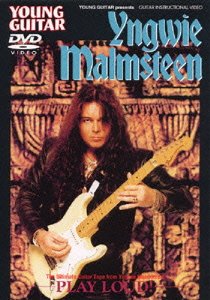
MALMSTEEN YNGWIE-PLAY LOUD 1, 2, 3 DVD TABLATURE LIBRO CHITARRA SPARTITI NEOCLASSICO

MALMSTEEN YNGWIE, PLAY LOUD 1, 2, 3. TABLATURE DVD

DVD VIDEO METODO DI MUSICA HEAVY METAL. 

LIBRO DI SPARTITI PER CHITARRA CON: 

ACCORDI, PENTAGRAMMA TABLATURE.

VIDEO DIDATTICO, ESERCIZI, STUDIO, MANUALE

BOOKLET PAGES: 56

Yngwie Malmsteen - Play Loud!


The 1st Movement - THE BASICS

PART 1 - PICKING & FINGERING

PART 2 - LINEAR LINE

PART 3 - HARMONIC MINOR SCALE & DIMINISHED CHORDS

INTERVIEW I - TALK ABOUT THE ALBUMS & SONGS. 

INTERVIEW II - TALK ABOUT THE STRATOCASTER. 

DEMOSTRATION:

- I'LL SEE THE LIGHT, TONIGHT

- FIRE IN THE SKY

- DEJA VU

- FAR BEYOND THE SUN


The 2nd Movement - ARPEGGIO

PART 1 - ARPEGGIOS WITH 2 & 3 STRINGS.

PART 2 - ARPEGGIOS WITH 4 & 6 STRINGS.  

PART 3 - ADVANCED TECHNIQUES

INTERVIEW I - TALK ABOUT RITCHIE BLACKMORE

INTERVIEW II - TALK ABOUT PLAYNG LIVE

DEMOSTRATION:

- TRILOGY SUITE OP.5

- NEVER DIE

- BLACK STAR

- SEVENTH SIGN


The 3rd Movenment - CLASSICAL STYLING

PART 1 - PENTATONIC SCALE

PART 2 - CLASSICAL NUMBER

INTERVIEW I - TALK ABOUT JIMI HENDRIX

INTERVIEW II - TALK ABOUT CLASSICAL MUSIC

DEMOSTRATION: 

- BASIC BLUES PATTER

- ADAGIO

- OVERTURE 1622

- BROTHERS


Yngwie Johann Malmsteen is a Swedish virtuoso guitarist, composer, multi-instrumentalist and bandleader. Malmsteen became famous and very influential for his neo-classical approach in heavy metal music. He is often considered one of the most talented rock guitarists of all time and is considered to be a pioneer of shred guitar. 

Prezzo: €199,99
€199,99

MALMSTEEN YNGWIE MASTER SESSION STYLES & SECRETS Wolf Marshall GUITAR TABLATURE DVD

MALMSTEEN YNGWIE, MASTER SESSION STYLES & SECRETS. Wolf Marshall interpreta una strabiliante versione per chitarra elettrica della "fuga in re minore" di J.S. bach, compresa nel libro con CD "Rock around the classic" 0317 del nostro catalogo. BOOKLET with GUITAR TABLATURE. DVD


VIDEO DI MUSICA METAL 

LIBRETTO DI SPARTITI PER CHITARRA : 

ACCORDI, PENTAGRAMMA, frazioni della TABLATURE .

The neo-classical showmanship and super-fast trickery that have made Malmsteen a cult hero are dissected in this DVD. Celebrated tutor and transcriber Wolf Marshall guides you through the techniques and tricks that make the Malmsteen approach so formidable, including alternate picking, arpeggios and pedal points. A further section discusses Malmsteen's Baroque-inspired tonalities and progressions. Includes a 20-page booklet of examples in notation with a Tab shorthand.

Prezzo: €49,99
€49,99

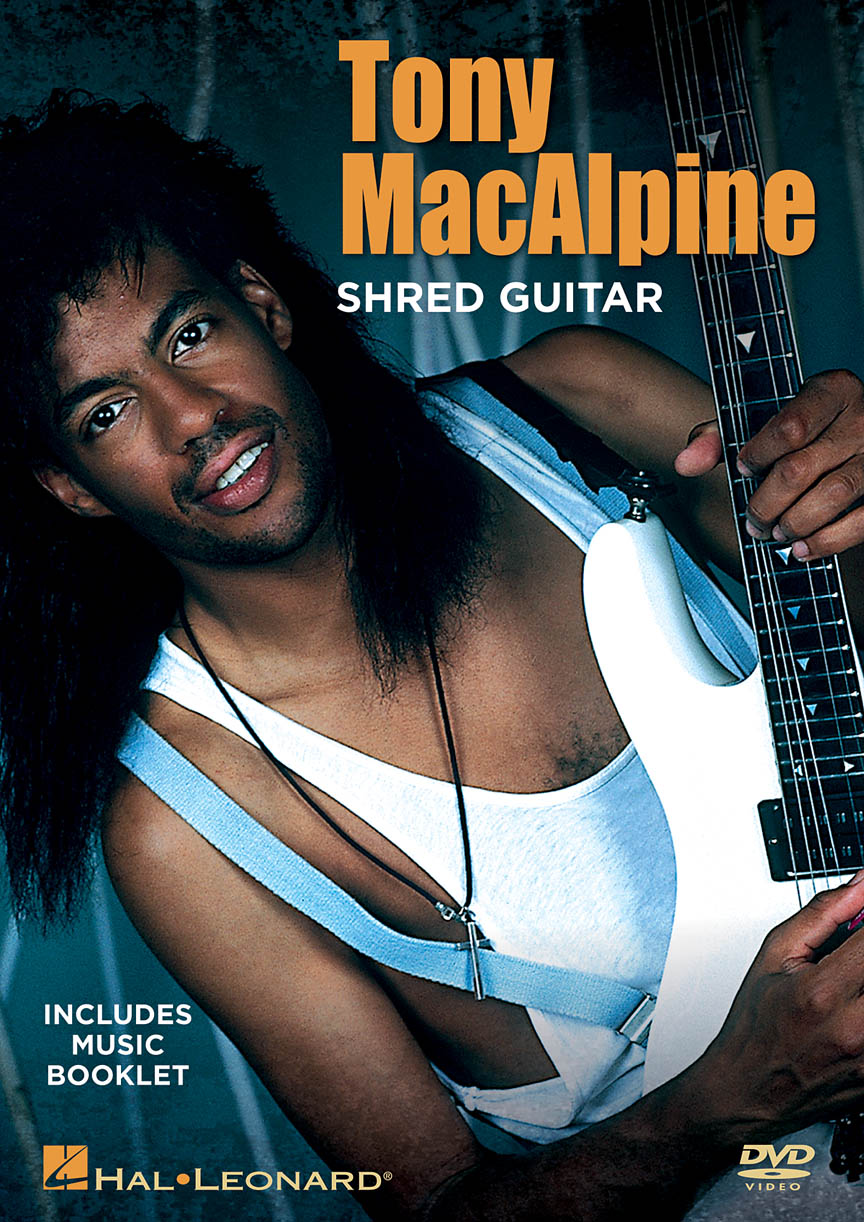
MACALPINE TONY, SHRED GUITAR. TABLATURE DVD -ecomony of motion technique-speed picking-slapping

MACALPINE TONY, SHRED GUITAR. TABLATURE DVD

Tony MacAlpine - Shred Guitar
Series: DVD
Format: DVD
Artist: Tony MacAlpine
Author: Tony MacAlpine

Tony MacAlpine is a standout on the prog metal/rock scene. Here he presents techniques to achieve the versatility and dynamic range that dominates his style. He teaches how to hone your skills through live performances and step-by-step demos, and speed picking using his “ecomony of motion” technique to create powerful riffs. He also covers using slapping, hammer-ons and pull-offs to create intense new sounds. By the end of this DVD, you'll see why Tony is one of the most outstanding guitarists in instrumental rock today. 53 minutes.
Inventory #HL 00320883
ISBN: 9781423483410
UPC: 884088411053
Width: 5.25"
Length: 7.5"
Run Time: 0:53:00

Tony MacAlpine is a standout on the prog metal/rock scene.

In this video filmed in 1992, Tony presents the techniques he uses to achieve the versatility and dynamic range that reflects his style. He explains how to improve and hone your guitar skills throught live performances and step-bystep demostrations, and how he achieves the melodic and expressive sounds on guitar as a lead rock instrument. 
Lear how Tony approaches speed picking, using his "ecomony of motion" technique to create powerful speed riffs, and how he uses slapping, hammer-ons and pull-offs to create intense new sounds. He also shows you how to use arpeggios, pentatonics and chord suspensions to create your own solos, using bending and sliding to add dimension and color. MacAlpine style lends itself to more freedom of motion for maximim reach and full sound that is one of the most outstanding in instrumental rock today.

This DVD demonstrates 4 songs: Sammy bone shuffle, Broken Dreams, More than a lot, Baloney pony blues.

You'll learn how he achieves melodic and expressive sounds on the guitar, how he approaches speed picking using.

Tony MacAlpine is one of the most versatile guitarist of progressiv metal rock music. He began his musical edication as classically-trained pianist and violinist at the Springfield Conservatory of Music in Massachusetts at age 5. He studied there for 12 years and becan to incorporate guitar into his studies. His talent soon became apparent and his reputation and popularity quickly rained nation attention.

He debuted in 1986 with the instrumental EDGE OF INSANITY. recorded with an all-star line-up including bassist Billy Sheehan and ex-Journey drummer Steve Smith. His subsequent rock recordings retained a pronounced classical influence, incorporing elements of Jazz and Fusion as well. He has performed and recorded with his own ban, MacAlpine, as well as M.A.R.S., CAB, Planet X, and touring member of Steve Vai's band, The Breed.


The name Tony MacAlpine is synonymous with modern musical virtuosity. Whether performing as a solo artist, band member, session player, touring hired-gun, or as a producer, Tony MacAlpine continues to prove that he truly is one of rock’s most amazing and versatile musicians. He incorporates classical, jazz and fusion influences into the hard rock/metal genre on both guitar and keyboards.

In his 25 year career he has produced, written and arranged eleven solo instrumental studio albums. Tony has also released four albums with his jazz-fusion band CAB, three albums with his progressive rock band Planet X, and a number of other band projects. In addition, MacAlpine has contributed both guitar and keyboards to a long list of records by other artists.
Tony was born and raised in Springfield Massachusetts, and in his early years was a classically trained pianist and violinist. He began his musical education at age 5 as a piano major at the Springfield Conservatory of Music, where he studied under the direction of Marion Jensen for twelve years. Tony furthered his studies at HARTT College under the tutelage of Professor Raymond Hanson at the University of Hartford, Connecticut.

At age 12, Tony picked up the guitar. He was later “discovered” in the pages of Guitar Player magazine by Mike Varney in 1984, and became a leader in the neoclassical guitar virtuoso movement of the mid to late 80s. MacAlpine was possibly the first new rock guitar instrumental artist of the 80s to break 100,000 units in the USA. His debut album Edge Of Insanity (1986) and sophomore release Maximum Security (1987) are cited by countless guitarists as major influences. Tony performed guitar and keyboards on Edge Of Insanity (with Billy Sheehan on bass and Steve Smith on drums), and all instruments (with the exception of drums by Deen Castronovo and Atma Anur) on Maximum Security, highlighting his musical dexterity.

MacAlpine continued his extraordinary output into the 90s, with critically acclaimed releases Freedom to Fly (1992), Madness (1993), Premonition (1994) and Evolution (1995), which all remain among his discography’s best sellers.

In the late 90s, Tony joined forces with Derek Sherinian (Dream Theater, Billy Idol) and Virgil Donati (Steve Vai, Scott Henderson) to form progressive rock band Planet X, regularly touring Europe and South America. In 1999, bassist Bunny Brunel (Chick Corea, Herbie Hancock) tapped MacAlpine to join his jazz-fusion band CAB, along with drummer Dennis Chambers (John McLaughlin, Carlos Santana) and keyboardist Brian Auger (Tony Williams, Jimi Hendrix). This lead to the release of their self-titled album in 2000, and their GRAMMY-nominated CAB2 album in 2001. Two further CAB albums followed and the band toured the world, including Europe, Asia and Russia.

Shortly after, Tony was invited to join the band of fellow guitar virtuoso Steve Vai (along with Billy Sheehan on bass) where he played both guitar and keyboards, often doubling Vai’s formidable leads on both instruments. Tony performed and toured the world with Vai for seven years, playing to hundreds of thousands of people, and appearing on the certified double-platinum DVD Live At The Astoria, London, along with the G3’03 Live In Denver and G3 Live In Tokyo DVDs.

In 2006, Shrapnel Records celebrated Tony’s 20 year career with “Collection - The Shrapnel Years” - an album containing some of his hottest musical moments — comprised of aggressive rock and fusion compositions which highlight Tony’s incredible technique and melodic flair. These tracks contain standout performances by some of the greatest musicians in progressive music, including drummers Steve Smith and Deen Castronovo as well as bassists Billy Sheehan and Tony Franklin and other world class players.

In 2007, Tony was the featured guitarist for French pop legend Michel Polnareff’s highly successful comeback tour in France, playing to over half a million people during the tour’s three month run. A special performance of this event was televised across France. He also appeared in the 2008 award-winning motion picture Crazy: The Hank Garland Story making a cameo as Wes Montgomery.

His new self-titled album is due out on June 21, 2011 and marks a highly anticipated return to solo work. It features 12 blistering tracks of MacAlpine on 7 and 8-stringed guitars, keyboards, bass and programming, along with appearances from drum legends Virgil Donati and Marco Minnemann. Described by MacAlpine as his best work to date, the album is destined to again set the bar for guitarists everywhere.

Tony endorses Ibanez guitars, Hughes & Kettner amplifiers, DiMarzio pickups and cables, Ernie Ball strings, Source Audio pedals, and Toontrack software. Tony likes motorcycles. He lives in Pasadena, CA. 

Prezzo: €23,99
€23,99

LOFGREN NILS ELECTRIC AND ACOUSTIC ROCK GUITAR TABLATURE DVD keith richard style bruce springsteen

LOFGREN NILS, ELECTRIC AND ACOUSTIC ROCK GUITAR. TABLATURE DVD

SOTTOTITOLI IN ITALIANO

A master class in rock guitar from the much sought after guitarist from Bruce Springsteen's E Street Band. Electric guitar lessons include Nils on Keith Richards-style rhythm, lead over constant bass, fingerpicking, rolling the notes, volume swells and more. An acoustic section covers dropped D tuning, open tuning, chord positions and patterns and a host of advanced techniques. Running time 73 minutes.
Language: English / French / German / Italian / Spanish

Nils Lofgren – Electric & Acoustic Guitar
Series: Music Sales America
Publisher: Hot Licks
Format: DVD
Artist: Bruce Springsteen
Artist: Nils Lofgren

Inventory #HL 14023012
UPC: 752187437635
Publisher Code: HOT161
Width: 5.5"
Length: 7.5"


Nils Lofgren: Keith Richards Style, Rock Rhythm Guitar Instrumental Tutor (Guitar Video Lesson)

Nils Lofgren: Acoustic Guitar Chords And Rhythm Instrumental Tutor (Guitar Video Lesson)

Nils Lofgren: Melodies And Scales Instrumental Tutor (Guitar Video Lesson)

Nils Lofgren: Lap Slide Instrumental Tutor (Guitar Video Lesson)

Nils Lofgren: Riff From Silver Lining Instrumental Tutor (Guitar Video Lesson)

Nils Lofgren: Fingerpicking, Chicken Picking Instrumental Tutor (Guitar Video Lesson)

Nils Lofgren: String Bending Instrumental Tutor (Guitar Video Lesson)

Nils Lofgren: Drop D Tuning Instrumental Tutor (Guitar Video Lesson)

Nils Lofgren: Harmonics Instrumental Tutor (Guitar Video Lesson)

Nils Lofgren: Electric Picking And Rhythm Instrumental Tutor (Guitar Video Lesson)

Nils Lofgren: Electric Lead Harmonics, Hammering (Guitar Video Lesson)

Prezzo: €27,00
€27,00

LUKATHER STEVE TOTO MASTER SESSION GUITAR TABLATURE DVD SPARTITI CHITARRA VIDEO DIDATTICO

STEVE LUKATHER, MASTER SESSION. TABLATURE DVD

DVD DI MUSICA ROCK.

LEZIONE PER CHITARRISTI DAL CHITARRISTA DEI TOTO, LUKATHER.
SPARTITI CON PENTAGRAMMA E TABLATURE.

For the first time on DVD, here is a step-by-step guide to the guitar of Steve Lukather, taught by the man himself. Generally regarded as one of America's original rock guitar heroes, Lukather gives you an intimate masterclass discussing the best riffs and solos from the legendary Toto recordings. Includes a 24-page booklet of examples in notation with a shorthand fingering and string placement guide. 45 minutes.

STEVE LUKATHER
Instructional DVD for Guitar
Series: DVD
DVD - TAB
Artist: Steve Lukather

Steve Lukather, the Grammy Award-winning lead guitarist with the super group Toto, is considered one of the foremost rock guitarists of today. Steve has performed or recorded with a plethora of top artists like Carlos Santana, Larry Carlton, Les Paul, Elton John, Paul McCartney, and Michael McDonald, to name a few. He has won several Grammy Awards as a songwriter, producer and guitarist. On this DVD Steve takes you step by step through a spectacular assortment of his best licks and solos in this video session recorded in 1985. You'll learn the licks and leads to such hits as -Rosanna, -Carmen, -hold the Line, and -Lovers in the Night. He also shares important tips and techniques in speed picking, position shifting, traveling scales, false harmonics, and melodic phrasing, as well as equipment and effects demonstrations. You're carefully taken through every lick, which you can follow in the accompanying instructional booklet. However, there's no need to read music, because the booklet comes with fretboard diagrams. This is truly a unique opportunity to receive a private guitar lesson from one of the most influential and versatile guitarists today, whose musical compositions have helped shape the sound of popular music.


In January 2005 Omnibus Media re-released the 1984 instructional Lukather video on DVD. The DVD includes a 24-page booklet of examples in notation with a shorthand Tab guide.

The Steve Lukather Master Session (a volume in the Star Licks guitar video-tutor series), made in 1984 after the release of the fifth Toto album Isolation, is the only instructional Lukather video. It's a great tutorial, not only for (future) guitarists but also for those Lukather fans who frequently asked themselves 'how the hell did he do it'. Lukather turns out to be a fetching tutor, showing a lot of information, technique and humor in 35 minutes.
This video was originally released under the title Starlicks Master Series in 1984. The re-issue in 1993 is still available on Omnibus Records and Tapes.
 
After a one minute show-case intro, Lukather demonstrates his equipment (Mesa Boogie) and guitar (custom made by Valley Arts) at that time. As I already wrote in my essay it's obvious that Lukather is always in control of the possibilities of his equipment and his guitar, in combination with his outstanding technique.
 
In the heart of the video Lukather tutors (once slowly and once at regular speed) the solo's from nine songs. Meanwhile he reveals his personal tips on techniques like double-picking, speed picking, wang bar effects, chromaticism, bending, position shifting, false harmonics, travelling scales and melodic phrasing, all merged into the final solo of this video.
 
Tracklist : 
Rosanna (Toto IV)
Lovers in the night (Toto IV)
Carmen (Isolation)
Lion (Isolation)
Angel don't cry (Isolation)
Girl goodbye (Toto I)
Breakdown dead ahead (Bozz Scags - Middle man)
Hold the line (Toto I)
Mama (Hydra)
Prezzo: €34,99
€34,99

LYNCH'S GEORGE GUITAR BIBLE TABLATURE BOOKLET VIDEO DIDATTICO CHITARRA

LYNCH'S GEORGE, GUITAR BIBLE. NTSC VIDEO STEREO WITH SHEET MUSIC AND GUITAR TABLATURE .

VIDEO DIDATTICO DI MUSICA ROCK .

LIBRETTO PER CHITARRA CON TABLATURE .


LESSONS:

WARM-UP

PICKING

VIBRATO

BENDING

WHAMMY BAR

TAPPING

GEORGE'S SPECIAL TECHNIQUE


STUDIO LIVE RECORDINGS:

VOODOO CHILE

MR. SCARY

Prezzo: €139,99
€139,99

KOTZEN RICHIE-HI TECH ROCK GUITAR Pentatonic licks arpeggio cambination DVD TABLATURE CHITARRA

KOTZEN RICHIE, HI TECH ROCK GUITAR. INSTRUCTIONAL DVD & BOOKLET WITH GUITAR TABLATURE . 

DVD VIDEO LEZIONE PER CHITARRA. 

VIDEO DIDATTICO, STUDIO, METODO, 

LIBRETTO CON ACCORDI, PENTAGRAMMA, TABLATURE . 

Pentatonic licks, arpeggio licks, scale licks, cambination licks, favorite licks, licks from "flashback", Richie studio, and more. booklet with 36 pages, running time: 120 minuts.

DVD

Main Menu
PLAY ALL
OPENING DEMO PERFORMANCE
PART 1: Pentatonic Based Licks
PART 2: Arpeggio Based Licks
PART3: Scale Based Licks
PART 4: Combination Licks
PART 5: Favorite Licks
PART 6: Licks from "Flashback"
ENDING/CREDITS
INTERVIEWS
BONUS 1: RICHIE'S STUDIO TOUR
BONUS 2: "DONT WANNA LIE"MUSIC VIDEO

PLAY ALL: OPENING DEMO PERFORMANCE
ENDING/CREDITS
INTERVIEWS-PART (7)
MENU
Licks. INTERVIEWS
MENU
BONUS
BONUS 2
PLAY ALL
VWD-231 

Prezzo: €199,99
€199,99

STANLEY JORDAN TABLATURE INSTRUCTIONAL DVD GUITAR TWO-HANDED TAPPING due-mani tecnica

JORDAN STANLEY, MASTER SESSION. Fenomeno del tapping a 8 dita! Suonare la chitarra come un pianoforte. Suonare 2 o 3 chitarre simultaneamente. 

VIDEO DVD METODO DI MUSICA FUSION. 

VIDEO DI TECNICA TAPPING PER CHITARRISTI.

LIBRETTO DI SPARTITI CON TABLATURE.


Stanley Jordan
Series: Instructional/Guitar/DVD
Format: DVD
Artist: Stanley Jordan

Discover the secret to Stanley's perfected two-hand tapping with this DVD. Learn how to: improvise melodies that will keep audiences on the edge of their seats o utilize a full range of dynamics to develop a rich, colorful sound o use electronics to create unique, alluring sounds o develop practice techniques to minimize mistakes and maximize your performance potential o increase your flexibility and dexterity for two-handed tapping. 79 minutes. Booklet 27 pages.

Inventory #HL 00320477
ISBN: 9780634093593
UPC: 073999204773
Width: 5.25"
Length: 7.5"
Run Time: 1:19:00


A special close-up examination of the unique virtuoso techniques of guitar maestro Stanley Jordan. Jordan's multi-layered guitar sounds have created albums that defy conventions and catagorisations. He has taken the technique of two-handed tapping and developed a method of playing that pushes the technique to the limit, creating the impression of two or three simultaneous guitars. This style of playing allows Jordan to perform otherwise impossible melodic lines. arrangements and chords that embrace the full range of the fretboard at once. The technique has given Jordan a unique Jazz voice and an unmistakable sound that is both captivating and thrilling to witness.


This DVD covers all aspects of his tapping technique and how to develop the idea into full improvisations and solos, including:

Aspects of melody and the extended range offered by this technique

Dynamics and creating rich, expressive guitar tones

Utilizing electronics to create alluring and unusual sounds

Practice methods to minimise mistakes and boost your dexterity

Discover a whole new world of possibilities with this indispensable DVD from a true virtuoso. Includes a 28-page booklet of examples and exercises.


by Stanley Jordan

THE TOUCH, OR TWO-HANDED TAPPING TECHNIQUE can provide limitless possibilities for exploration on the guitar. The earliest documented guitarist using this approach was Jimmy Webster in the 1950s. It has now begun to enjoy considerable use among guitarists. The essence of tapping is this: By hammering the string against the fretboard with your finger, you can produce a note with one hand. You don't need to pluck or strum, because the impact of the string hitting the fret causes the string to vibrate. Either hand works, and you can even use both hands tapping simultaneously on the fingerboard, performing independent parts.

Producing the sound in this way is easy. But mastering its awesome and unexpected possibilities is another matter! It gives you a level of musical and orchestral complexity previously possible only on keyboard instruments. You can create bass and chord accompaniment to your own leads as a self-contained soloist. You can also perform complex counterpoint, such as Bach two and three-part inventions. With a band, you can use your hands together to play leads with undreamed-of speed and agility.

Many of your first experiments are likely to be expansions of what you already do on the guitar, and adaptations of pianistic possibilities. But you'll soon learn that you hold in your hands a whole new instrument with its own unique and unlimited potentials.

Chances are, you can apply the touch technique to your own guitar with just a few minor adjustments. I have used it successfully on Fender Stratocasters, Gibson Les Pauls and ES-175s, Travis Beans, and others. I have even used it on various brands of acoustic steel-and nylon-string guitars. Ideally, an instrument used for touch playing should be an electric with an accurate neck, frets in good condition, strong pickups, and good sustain. Of all these characteristics, the neck and frets are the most critical.

The lack of proper adjustment is the main reason people say to me, "I tried it on my guitar, and it didn't work." The most important single factor is low action; the strings should practically touch the frets. This is absolutely crucial for ease of playing, clarity, and sustain. If you have tried tapping with normal action, you probably heard a weak, dull tone, because a large portion of the attack was the sound of the finger hitting the string. But with low action, a very light tap unites string and fret immediately, giving you a crisp tone.

How low must you set your action ? Extremely low! If the distance between a string and the 12th fret is greater than the thickness of a penny, it is probably too high. After you become more proficient with tapping, you may decide to bring your action back up a bit for a fuller sound. But for now, get it as low as possible.

The fingerboard and the height and contour of the frets must be accurate to get the required action without buzzing at certain points. If you have a problem, sight along the neck to check the straightness. The instrument may need a truss rod adjustment. [Ed. Note: If you aren't sure how to adjust a truss rod, take your instrument to a repair person. Incorrect adjustment can result in permanent damage to your guitar.] However, electric guitars have an advantage, because some buzzes aren't picked up and therefore don't reach the amp. Check the condition of your frets; if they are unevenly worn, you won't be able to get the required action. Consider getting a fret job. If the frets are worn, it may be a good idea anyway--regardless of how you play. It could make all the difference in the world for setting your guitar up for the touch technique. If you decide to get a fret job, ask around to find out who does the best work in your area. Then explain to the repair person about your special requirements, because this fret job must be more accurate than usual. Set the action where you want it, take your instrument to the shop, and say, "I'd like to be able to tap with my action this low without buzzing."

There is an advantage to having a bridge with individual height-adjustable saddles for all six strings: It allows you to set each string where you want it, to compensate for differences in string tension and volume. (There is also an advantage to the bridge with just two height adjustments, one at each end: It allows you to change your action quickly, facilitating a single guitar's use should you employ both conventional and touch techniques on the same gig.)

Intonation is also critical because your new freedom allows you to play at opposite ends of the neck simultaneously, thereby spotlighting any inaccuracies in the intonation. Your two-handed harmonies will sound much sweeter and the voices of your chords will sing more clearly if the intonation is properly adjusted.

As if there weren't enough to think about already, here is yet another problem to overcome. With "normal" techniques, you rely on the energy from right-hand plucking or strumming to sound the notes, while your left hand merely holds down strings. You probably employ left-hand fingers to mute strings not in use, preventing accidental extraneous sounds. But with the touch technique, that can be hard to do. Because of the low action, you can easily hit notes on strings you don't want to play: All it really takes is a touch. I recommend bringing the fingers straight down, trying to touch only the strings you want to play.

Even with clean, direct fingering, you will still get sympathetic vibrations in the strings you're not touching, so you will probably need some kind of damper near the nut to prevent vibrations in the untouched strings. On the stick, for example, this is accomplished by a strip of felt permanently attached to the fingerboard, lying under the strings at the 1st fret. You may want to experiment with a similar attachment, or if you want something quicker and less permanent, you can put a loose-fitting capo at the 1st fret to act as a damper. Not just any capo will work, though, because you must be able to put it on without pushing the strings all the way to the frets. I get good results with Jim Dunlop 14 FD and 14 CD capos, as well as the Golden Gate GC-8. Also, you might get good results with the George van Eps or Kleen-Axe String Dampers. When choosing a capo, it must match the contour of your fingerboard, so take note whether it's curved or flat. Incidentally, if you do happen to use an acoustic, the damper is essential to prevent string vibrations between your finger and the nut.

Before you try the touch technique, change your strings; old ones can be more debilitating with touch than with other techniques. Prepare to increase your budget for strings. They must always be clean and true to tuning. As far as their gauges are concerned, use some discretion. When I first started, I used .008 and .009 high E's. Now I use .010s on my Travis Bean and .009s on my Vigier. Sometimes I'll take a set of .009s but replace the .009 with a .010 for more punch and sustain in my leads. There is a tradeoff here, because lighter strings and lower action make the technique easier, but the sound is less full and the dynamic range is reduced.

It is also a good idea to wash your hands and trim your fingernails before playing. When your fingers come straight down onto the strings, fingernails really get in the way. I recommend warming up with conventional techniques before attempting touch, and if you happen to be a keyboardist, it may help to do a keyboard warmup. Naturally, the spacings are different, but the strength and agility you develop playing keyboards can be a big help. Since the touch system results in a certain amount of volume loss, electric guitars tend to be more suitable; strong pickups are also helpful. Turn up your volume, and learn to play sensitively in order to increase your range of dynamic control. If your pickups have pole pieces, screw them in, and/or move the pickups as close to the strings as possible for maximum sensitivity.

So, here you are with your guitar set up for the touch technique. Your strings are adjusted and your hands are clean. You're ready to get down. How should you hold the guitar? Start with whatever you're used to, whatever feels most comfortable. You can stand up, sit down with the guitar on your left or right leg, or you could even set the guitar on a stand. A very important thing to remember: Stay relaxed, especially in your hands. The key to relaxing your hands is keeping your thumbs loose. Both hands are stabilized on the neck by means of the thumbs. However, in time you will learn to not always stabilize your right hand in this way, depending on what you're playing.

Your fingers should come down between the frets in the same places they would using normal techniques. Your right hand is more nearly perpendicular to the neck, and therefore you may want to hold the guitar with the nut tipped up so that you don't have to bend your right wrist too much. Moving your right elbow forward a few inches can help straighten your right wrist. To avoid tendonitis and carpal tunnel syndrome, try not to bend your right wrist more than about 10 degrees. Make sure to keep your right shoulder down to minimize shoulder tension and to keep your overall posture in balance.

The basic finger action to sound a note is tap and hold. Your finger comes straight down and taps the string against the fret, holding it there for as long as you want the note to last. To cut off the note, lightly pull your finger straight off the string with as little side-to-side motion as possible. This movement must be very light. You barely even try to release your finger; mainly relax it, and let the string push it back up.

This hammering action should come primarily from your fingers--not your wrists. If you get into the habit of using your wrists too much, your fingers may get stiff and you will never develop much speed. You can use all four fingers on both hands. You can even use your right thumb, but I recommend starting with just the fingers.

And now for a big surprise: The words "tap" and "touch" are oversimplifications, because we're really talking about a whole cluster of related techniques. You'll need other techniques to make your articulation more interesting and to add some real expression to your music. One useful technique is the "slide," which is used to create glissandi (glides between notes on a single string; see bar 11 in the A section of "Touch Of Blue," which follows). Tap the string and slide your finger along it while holding it down. Make sure your finger comes straight down on the string, avoiding adjacent strings.

Slurs and legato lines (hammers and pulls) are easiest when all the notes are on the same string (example: the opening figure of two sixteenth-notes and a quarter-note in the first bar of the A section of "Touch Of Blue"). To play an ascending line, tap the first note normally, but after that, tap each note without releasing your finger from the previous note. Just hammer each note in turn, leaving all the fingers on the string.

To descend along a string, use pulloffs. Again, the first note is tapped normally, but before you release it, have the finger for the next note already down. Then pull the releasing finger off sideways, so that it plucks the string on its way off. Generally, right-hand fingers pull off toward the sixth string, and left hand fingers toward the first string. As always, be careful not to hit adjacent strings.

When crossing from one string to another, whether ascending or descending, release the first note late so that it overlaps the next one for an instant (see bar 3, first beat, part A). This eliminates gaps of silence between notes, and blurs differences in timbre and volume between strings. The overlapping technique takes practice. After all, it's hard to make perfectly seamless legato runs, because crossing strings is still different from playing along a single string. For a legato run to be as smooth as possible, all of the notes must be located on the same string.

The lower your action, the less you need the overlapping technique, because differences between strings are reduced and there is less time between hitting the string and hearing the sound. This reduces the likelihood of gaps between the notes, and single-string legato techniques become easier. When your strings are really down low, you can play runs with great speed and fluidity.

If a legato run involves more than four notes in either direction or contains wide interval skips, you can use both hands together, "handing off" the series from one hand to the other or back and forth, as necessary. This opens up a wealth of cool possibilities.

One more thing before we start playing: Although you can use the touch technique with any tuning you please, most guitarists will probably want to start with standard tuning. However, I usually tune in fourths: E A D G C F, low to high. The first and second strings are raised a half-step higher than standard tuning. Thus, any pair of adjacent strings is a perfect fourth apart. I find that this simplifies the fingerboard and makes it more logical--an advantage that can really be appreciated when you have two hands going all over the neck. The exercise and song that follow are written in standard tuning, but as you'll see, it is easy to convert to the fourths tuning if you are feeling adventurous.

There is a lot more to the touch technique, but now you know the basics. The exercise should get your hands working. Both hands play the same thing an octave apart. Practice the exercise until you feel comfortable with it and are producing clear tones with even dynamics.

A few words on notation: The exercise and song are written at actual pitch on double staves employing both the treble and bass clefs, in order to accommodate the extended range facilitated by the technique. (Most guitar music is written an octave higher than it sounds.) The top staff is for the right hand, while the lower staff is for the left hand. Numbers next to the notes indicate fingerings using standard Arabic numbering for both hands. The numbers in parentheses show the fingerings you would use in fourths tuning.

Under the double staves is a tablature staff written for standard tuning. If you want to try the fourths tuning, simply retune your first and second strings up a half-step and play one fret lower on those strings (subtract one from all the numbers on the top two tablature lines). The exercise demonstrates the advantage of the fourths tuning, since both hands play exactly the same patterns, merely transposed to a different part of the neck.

Prezzo: €23,99
€23,99

JOHNSON ERIC THE FINE ART OF GUITAR TABLATURE BOOKLET & DVD CHITARRA METODO LIBRO

JOHNSON ERIC, THE FINE ART OF GUITAR. BOOKLET WITH GUITAR TABLATURE DVD

DVDV VIDEO METODO PER CHITARRA DI MUSICA ROCK. 

SPARTITI PER CHITARRA : 

ACCORDI, PENTAGRAMMA , TABLATURE. 

SOTTOTITOLI IN ITALIANO !


Table of contents:

Six Important Guitar Techniques

Tuning

Picking Ex. 1-2
Fingering Ex. 3-5
Dampening Ex. 6-10
String Stretching Ex. 11-19
Vibrato Ex. 20-24
Four Major Aspects of Playing
Projection Ex. 25
Taking Chances Ex. 26-31
Strength and Focus 
Signature
HarmonicsEx. 32-33
Slide Guitar
Left-hand Thumb Punctuation
Thinking Creatively
Acoustic Guitar Technique Ex. 34
How to Get a Good Sound and Tone
Chords and Chording Ex. 35
Leads and Solos Ex. 36-38
 
For the first time the legendary HOT LICKS classic video titles are available on DVD, making it even easier to learn with top players ... right in your own home! These brilliant new DVD transfers make them look better than ever, giving you improved navigation, many extra features and some newly recorded introductions.
 
Here is the follow-up to Eric's classic instructional DVD Total Electric Guitar. Building on the foundations of that DVD, Eric goes on to show you: tempered tuning, pick and finger techniques, his famous "Koto" technique, slide guitar, volume swells for lead and slide plus a host of technical tips including multi-amp setup, action and string tension adjustments. The DVD also includes several exclusive live performances by Eric playing with his band! It all adds up to the ultimate electric guitar lesson!
 
You'll never miss a note !
You see the music and the tablature on screen as i'ts beging played!
All right and left hand techniques are shown in close-up and with helpful split-screen effects to make learning easy.
 
Slow-motion segments with standard pitch sound
artist biography
suggested listening
booklet with music examples included
 
Produced by Arlen Roth with a new introduction by Jeff Golub
 
COVER PHOTO: MAX CRACE
TRANSCRIPTION: DAVE WHITEHILL
INSCRIPTION: CHARYLU ROBERTS
 
 
Description

Here is the follow-up to Eric’s classic instructional DVD Total Electric Guitar. Building on that DVD, Eric goes on to show you: tempered tuning, pick and finger techniques, his famous 'Koto' technique, slide guitar, volume swells for lead and slide plus a host of technical tips including multi-amp setup, action and string tension adjustments. The DVD also includes several exclusive live performances by Eric playing with his band! It all adds up to the ultimate electric guitar lesson!


SOTTOTITOLI IN ITALIANO

SUBTITLES: English / French / German / Italian / Spanish

Prezzo: €59,99
€59,99

GILBERT PAUL TERRIFYING GUITAR TRIP TABLATURE DVD CHITARRA RACER X MR. BIG

GILBERT PAUL, TERRIFYING GUITAR TRIP. DVD TABLATURE

DVD DI MUSICA, LEZIONE PER CHITARRA CON TABLATURE. 

Terrifying Guitar Trip, Paul Gilbert
CATEGORY: Guitar DVD
FORMAT: DVD
Learn to play with intensity, speed and finesse! Paul Gilbert's Terrifying Guitar Trip takes you from the studio to the stage, with lots of thoroughly explained guitar music in between. Paul gives advice for beginners as well as plenty of challenging licks for intermediate and advanced players.

About Terrifying Guitar Trip
By Paul Gilbert. Instructional video: DVD for guitar. DVD format: Region 0 for use in all regions. With rare footage of Paul in concert and the studio and a printable companion booklet. Instructional and Rock.
At the age of 19, Paul Gilbert recorded his first album with his fast, clean, and intense rock guitar style. After two more psycho-speed-guitar albums with Racer X, Paul left to form Mr. Big with monster musicians Eric Martin, Billy Sheehan, and Pat Torpey. Mr. Big's debut established Paul as a seasoned player, able to combine ripping guitar licks with dynamics and feel. If you've seen his first instructional DVD, 'Intense Rock: Complete,' you know not to expect the ordinary. Paul Gilbert's 'Terrifying Guitar Trip' takes you from the studio to the stage, with lots of thoroughly explained guitar music in between. Paul gives advice for beginners as well as plety of challenging licks for intermediate and advanced players. If you wish to learn to play with intensity, speed, and finesse - without getting bored - grab you guitar and journey with Paul on the Territying Guitar Trip!
Learn to play with intensity, speed and finesse! Paul Gilbert's Terrifying Guitar Trip takes you from the studio to the stage, with lots of thoroughly explained guitar music in between. Paul gives advice for beginners as well as plenty of challenging licks for intermediate and advanced players.

Prezzo: €39,99
€39,99
Condividi contenuti