ACCORDI - PENTAGRAMMA - TABLATURE / CHORDS - STANDARD NOTATION - TABLATURE

JUMP 'N' BLUES BASS KEITH Rosier LIBRO CD TABLATURE Willie Dixon-Duck Dunn-Tommy Shannon

JUMP 'N' BLUES BASS. Keith Rosier. Esempi da Willie Dixon, Blues Brothers, e tanti altri bassisti blues. 22 play along. CD TABLATURE

LIBRO METODO DI MUSICA BLUES / SWING, CON CD.  

SPARTITI PER CHITARRA BASSO CON:

ACCORDI, PENTAGRAMMA E TABLATURE.

TECNICA, MANUALE, 

Series: Bass Builders
Softcover with CD - TAB
Author: Keith Rosier
Essential jump/swing and modern blues bass lines for electric and upright players. Includes lessons and music in the style of Willie Dixon, Larry Taylor, Edgar Willis, Duck Dunn, Tommy Shannon, and more! The CD includes a lives blues band with over 20 play-along tracks. 56 pages.

Prezzo: €19,99
€19,99

FINGERBOARD HARMONY FOR BASS Gary Willis BOOK & CD LIBRO METODO SPARTITI BASSO ISBN 0-7935-6043-8

FINGERBOARD HARMONY FOR BASS. Gary Willis, 100 esempi e esercizi; posizione della mano, e molto altro. Con diagrammi. CD

LIBRO METODO DI MUSICA.

SPARTITI PER BASSO CON:

ACCORDI, PENTAGRAMMA, DIAGRAMMA. 

Per basso a 4 corde, 5 corde e 6 corde. Non ha la TABLATURE ma per quasi tutti gli esercizi c'è il disegno della tastiera che la sostituisce e è indicato il valore dell'intervallo armonico dalla fondamentale. Cosa molto utile per memorizzare modelli armonici e per una visualizzazione completa della tastiera.    


FINGERBOARD HARMONY FOR BASS
Series: Bass Instruction
Format: Softcover Audio Online
Author: Gary Willis

A comprehensive source for learning the theory and geometry of the bass fingerboard by one of today's leading players and instructors. Includes: 99 audio examples and exercises, hand positions, key centers, the linear approach, and more! Audio features Gary Willis demonstrating 99 examples and exercises. It's accessed online for download or streaming and includes PLAYBACK+, a multi-functional audio player that allows you to slow down audio without changing pitch, set loop points, change keys, and pan left or right. 

Inventory #HL 00695043
ISBN: 9780793560431
UPC: 073999950434
Width: 9.0"
Length: 12.0"
72 pages


In high school I was always awful at math (I still am), but when the semester on geometry came around, I got straight As, Fortunately, for me, the bass fingerboard is a very consistently geometric instrument. From day one I've always associated any sound on the bass with its corresponding shape. For instance, a major third is a string and a fret away That shape (the diagonal line drawn between the two notes on the fingerboard) will result in a major third from any other note on the neck (as long as you've got a string and a fret left to recreate it). By contrast, a major third on a keyboard can be two white notes, two black notes, a white note then a black note, or a black note then a white note. The fingering combinations (shapes) required to play major thirds on any woodwind instrument are even more varied. My approach to fingerboard harmony has always been based on these symmetric shapes. There are two ways to create harmony on the bass. One way is to play chords. The design and tuning of the bass makes playing and studying chords a fairly inefficient process, even on a 6-string. The other way to create harmony on the bass is to playa series of notes (a line) that reinforce or compliment the sound of the chord. In just about every style of music you're going to need to create a line at some point. Hopefully, this book will give you a consistent way of looking at harmony on the neck so you can play these lines freely. 

How to Use This Book 

The exercises and examples in this book are cumulative. Each idea or concept is based on the previous exercise and example. I wouldn't recommend skipping too far ahead without making sure you can confidently perform ail the previous exercises. It's a very "hands-on" approach. While the exercises may seem easy to understand, be honest with yourself and make sure you can execute them with ease before you're tempted to move on. As with any new concept, it may take a while before this way of looking at harmony becomes "subconscious." At first, be very deliberate and "hyper-conscious" take the time to make sure both your hands and mind understand what's going on with each exercise. Eventually you'll be able to visualize harmony clearly anywhere on the neck


Gary Willis.

After more than a decade of co-leading Tribal Tech with guitarist Scott Henderson, and their eight CDs, GARY WILLIS has launched his solo career with the September I996 release of No Sweat. He has performed with Wayne Shorter, Allan Holdsworth, Hubert Laws,Joe Diorio, Robben Ford, and Wayne Johnson. A Texas native, Willis studied composition and improvisation at North Texas State University. After moving to Los Angeles in 1982 he became a course leader at Musicians Institute in Hollywood and later taught at California Institute of the Arts in Valencia, California. Since Willis' move to Colorado in 1993, he has become one of the instrument's leading educators, releasing three books and one video. In addition to this fingerboard harmony book, Hal Leonard will release his composition/solo book in 1997. He currently lives, writes, teaches, and mountain bikes (not necessarily in that order) with his wife Pamela and their two labrador retrievers, Buster and Jose, in Colorado Springs, Colorado. 


Introduction


How to Use this Book

About the Author


Intervals

Interval Fads

Triads

Second Finger Position

Inversions

Seventh Chords

The Linear Approach

Passing Tones

Chord Tones Instead of Roots

The Minor Thirds Rule

Eighth Notes

Extensions

Review

Hand Positions

Second Finger Position

Fourth Finger Position

The Connection

Choosing a Key Center

Finding More than One Key

The "Three" Chord

The "Four" Chord

Minor

The "Two" Chord

The "Five" Chord

Shifting

Memorizing

Secondary Dominants

Three / Four

Other Chords

Putting It All Together


Special thanks to Mitch Sams, John Flitcraft and David Tyree for their help in the development of this book.


ISBN 0-7935-6043-8


HAL-LEONARD CORPORATION, 7777 W. BLUEMOUND RD. MILWAUKEE, WI 53213

Prezzo: €24,99
€24,99

BLUES AND RHYTHM & BLUES BASS TECHNIQUES The mastery-Soul-Funk styles Jerry Jemmott book CD TABLATURE

BLUES AND RHYTHM & BLUES BASS TECHNIQUES. The mastery of Blues, Soul, and Funk styles. Jerry Jemmott. CD TABLATURE

LIBRO PER BASSO CON CD E TABLATURE


JEMMOTT JERRY, BLUES AND RHYTHM & BLUES BASS TECHNIQUE

Series: Bass Builders
Softcover with CD - TAB
Author: Jerry Jemmott

Jerry Jemmott wrote the book on R&B bass, and here it is! This book/CD pack examines Jerry's personal philosophy of music and teaches the secrets to mastering blues, soul and funk bass. Includes a CD with new compositions that demonstrate the techniques he used with legendary performers such as Aretha Franklin, King Curtis, B.B. King and Freddie King. Includes note-for-note transcriptions, comprehensive perfor-mance notes, an in-depth bio, and rare photos. 80 pages

JERRY JEMMOTT wrote the book oh rhythm & Blues bass -and here it is !

Share his personal philosophy of music and learn the secrets to mastering blues, soul, and funk bass.

- CD WITH NEW COMPOSITIONS 

- NOTE FOR NOTE TRANSCRIPTIONS IN STANDARD NOTATION & TABLATURE

- COMPREHENSIVE PERFORMANCE NOTES, IN DEPTH BIOGRAPHY, RARE PHOTOS

- GROOVE ALONG IN THE STYLE OF THE GREATEST HITS OF ARETHA FRANKLIN, KING CURTIS, B.B. KING, FREDDIE KING.


In collaboration with Dave Rubin

Jerry Jemmott has had the singular experience of playing with a veritable Who's WHO of blues and Rhythm & Blues illuminaries. Here are a selection of his candid memories from this all-star group:

ARETHA FRANKLIN: "Being exposed to her creative process has had a profound effect on my writing, producing and playing. Performing with her and King Curtis at the same time has to be among the greatest of good fortunes that I have encountered. Her combining of gospel and jazz to form a Rhythm & Blues style really locked with my jazz and Rhythm & Blues styles. My style came out of playing dance music and jazz. I guess I h;1(jthe groove and the beat from playing dance music, and she had that soul and e1.'Pressionfrom playing gospel and jazz. It was quite an experience playing together, like lightening striking.
We met when King Curtis had me come down, with my bass, to be a paid observer at her sessions for Atlantic Records in New York in 1968. I sat in the control room and watched the Muscle Schoals rhythm section Gimmy Johnson, guitar, Tommy Cogbill, bass and Roger Hawkins, drums) play tills one song over and over. As soon as I heard it, I fclt the groove was a country kind of thing, you know, a country "two" feel. They went all around the world with different things, and never really hit that particular groove. They took a break, and when they carne back producer Jerry Wexler told me to go in the studio and take a shot.
Two takes later "Think" was finished.
In 1971 I was on the road with the King Curtis band backing up Aretha. After being out a while, the band had developed a thing of trying to outdo each other. We had really gotten tight in three months and we used to see how far we could push Aretha, because we loved playing with her, and she would always rise to the occflsioll, even if she was sick. One time in Paris things got so intense that Aretha almost passed out onstage."

KING CURTIS: "Starting at the Pine Grill in Buffalo, New York in 1967, the interplay between Curtis and myself was very personal. I never experienced that before or since. It was almost like two people feeding each other and never dropping a crumb of food. He hClda lot of faith and confidence in my style of playing.
That made me feel free to do whatever I wflnted to do, which helped me to grow quite a bit, and which he himself enjoyed.
He was a tough bandleader, particularly in regard to guitarists and drummers. He had trouble with Jimi Hendrix when he was in ills band, but he did not have a problem with me. The only problem I had with rum was when he would not give me the recording work I thought I should have! That's when I left the band from 1967 to 1971. But then he recognized that I wanted to stay in the studio, so he would just call on me to make records. However, when he got a good tour, like the one with Aretha, he would call me. At firstT did not want to do thflt one, but after thinking about it for a couple of days, I said okay, I'll do it, because I liked working with both of them. I actually tried to rationalize why I should stay in New York, where I had plenty of studio jobs, but then I thought I should do it for the fun of it. Billy Preston was going to be there, along with Cornell Dupree and Bernard Purdie, so it was going to be a great band.
The audiences were fantastic. Every place was sold out. The Fillmore West was something else! There were no seats in the place! They took all the chairs out and everybody stood up for two hours. I had never seen anything like that, because usually you have seats in a concert hall. Everybody stood right up against the stage as there was no barrier to keep them back. Their heads were right at stage level.


Istant groove
When the spirit of King Curtis appeared in my kitchen the morning after his death, I became a believer in the existence of a higher power. This power had been a force in my life all along, but I had never acknowledged it. The "instant groove" or "God is talking to you" is that phenomenon that reveals itself, thus enabling you to rf'cognize in a micro-second the true essence and direction of what could possibly happen.
You can then deal with the situation at that moment to achieve a positive result when you come into
the presence of another person, place or thing.
All through my life I have experienced many "instant grooves." These include coming in contact with the mllsir of P,lUJ C:hamhers along with all the other great musicians, singers, artists and philosophers who have affected me. Also, my introduction to Nichiren Shoshu Buddhism (Nam Myoho Renge Kyo) and the love and support of my mother, father, sister and my children Jeanine, Tishiro and Isis. Another time was my refusal to give Lionel ("Hey Gates") Hampton my place in line for the bathroom at the Pazant brothers home in Bufford, South Carolina. This resulted in "Gates" firing me, thereby sending me back to New York to begin my studio career full time in 1968. Lastly, there was the return of my dream girl, Miss Constance Bailey, back into my life after a twenty-three year absence to become my fiancee.
You've got to "recognize" and make it happen with courage, confidence and conviction. You rarely get a second chance unless, as they say in Egypt, "Insha-AllaJ1," which means "If God wills it."


Michael Bloomfield: "A great guitarist. We developed a friendship after meeting at the Fillmore East. I had already known his buddy Al Kooper from the "Well" session of B.B. King's Live and Well (1969). I arranged a telephone conversation between Michael and Cornell Dupree (who Michael was anxious to meet) when Michael and I were working together at My Father's Place on Long Island. I got to do a few more gigs with him just before he died. He was an incredible player."

DUANE ALLMAN : "Another great player, innovative, a real hard worker. He was very personable and we got along well together. Being with Duane was the first time I had played with a slide guitarist. This occurred on the Aretha Franklin sessions when she did a cover of "The Weight" by the Band.
The last time I saw him he was going home to start a band with his brother Greg. The Allman Brothers Band was formed and the next thing I remember was travelling through Georgia on the way to a gig and hearing about the accident on the radio." (Note: Duane Allman died in a motorcycle crash on October 29, 1971, in Macon, Georgia.)

FREDDIE KING : "He was great to work with and could really play and sing. Curtis brought Freddie to the Atlantic studios to record and that was the first time I heard him. He was really something. He knew what he wanted and we would just follow him. Freddie King IsA Blues Master(l969) gave us a chance to spice up some of his old instrumentals. Also, it was the first time that I got to record "Get Out Of My Life, Woman," (Allen Toussant), which I had played all my Rhythm & Blues life. My Feeling For The Blues (1970) had more traditional blues on it.
Freddie was from Texas, like Curtis, and he could play in a big way. He had a good set of chops and he had a very lyrical way of playing, almost like he was singing. I have heard that Freddie was also influenced by Louis Jordan, just like Curtis."

Robeta Flack and the jingle scene: "Another woman who played piano and sang. A different style
than Aretha, more of a jazz piano player. She was very similar to ina Simone, her whole persona and playing. I grew up listening to Nina Simone and had the good fortune to record with her, so playing with Roberta Flack was just one more extension of that experience, to a great degree.
She only worked on weekends because that's where the money was. During the week she took care of her dogs, cats, mother and her music business. She wouldn't do any recording then, and she took her time about doing stuff. She had it so she only worked on weekends, gigs at venues that held 20,000 or more people. The small group that backed her had Terry Plumeri, Eric Gale, Ralph MacDonald and Grady Tate. I loved working with Grady. We used to do a lot of jingles together with Herbie Hancock, with maybe Vincent Bell or Eric Gale on guitar. One company, Grant and Murtaugh, would hire the three of us a lot. The thing about it was that if you couldn't get one of us, you could get another. It was rare that we could guarantee all three of us showing up together at the same time. If I couldn't make it, Ron Carter would be there; if Grady wasn't there maybe Ed Shaughnessy or Herb Lovelle would be there. If Herbie couldn't make it, Dick Hyman or Keith Jarrett would be there. They would also use all the hip horn players like Hubert Laws, George Coleman, Jon Faddis, Joe Newman, Seldon Powell, Ernie Royal, Snooky Young, Heywood Henry, nothing but the best, the cream of the crop. It was like looking at Count Basie's Band and Duke Ellington's Orchestra all at once. I had come up with hom players and big bands, so I was in heaven!"

Wilson PIckett: '''The Wicked Pickett,' a piece of work, so to speak. I had always admired him, but did not get a chance to work with him until around January, 1968, at Atlantic studios in ew York. The bassist they had booked for the session did not show up so they called me at my house to come down. It ....


PREFACE
I want to let you in on a little secret. I was not born in Macon, Georgia, with a bass inIllYhands, as King Curtis once stated, butIllYpredilection to create hip, funky bass lines led him and others to think so. I was actually born in the South Bronx, New York, and after I heard Paul Chambers play I could not keep the bass out of my hands!
In addition to this secret, for those who want to know, a "few" choruses of biography follow to set the record straight, and a "few" Jines about my experiences with the extraordinary artists I have had the good fortune to record and/or perform with over the last five decades.
For you who want to groove, within these pages and on the accompanying CD there is a detailed account of what I do and the techniques I lise to do it. With the permission of Reel Souler Energy Music Publishing, I have written a set of music similar to the records I made with Aretha Frankl in, King Curtis, RB. King and Freddie King. I hope you enjoy playing them as much as I enjoyed creating them for you.

Jerry Jemmott
It has never been easy being Gerald Joseph Stenhouse Jemmott. I would like to acknowledge the love and support I have received along the way from my Higher Power, family and friends: Richard Davis, Fred Paterno, the Pazant brothers, Richard Otto, Agnes Hall, King Curtis, Cornell Dupree, Paul Gaulden, Don Covay, Arlen Roth, Constance Bailey, Paul Conway, Yoko Yamabe, MerrH Roberts, Daisy White, James Bailey, Rebecca Thomas, Robert Bailey, Gwendolyn Jones, Z Cookie, Mercer Ellington, my students, Seldon Powell, Paul Griffin, B. R King, Stewart Moore, Sam Leon, Alfie Wade, Herb Lavelle, Richard Dubin, Brent Owens, Kirk urock, Bill "Junior" Linton, George Naha, Chuck Raney, Phil Coco, Gordon Edwards, Roy Hicks, Joan White, Al Fontaine, Frankie Paris, Michael Moore, Bill Dawson, Dr. Janet Moses, Bob Moses, Miriam Citron, Dr. Joel Beddard, Charlie Kellam. Shad Polier. Abe Rivera, ESP, Vantage, Murphy's Music, Andre-audio-tronics, Carl Thompson, P Vine Non Stop Records and Hot Licks Tapes and Videos.


PAGE CD TRACK

What is "Instant Groove"
Preface and Acknowledgements
Foreward
Biography
My Biggest Influence
Jerry Remembers
Playing in a Big Band Versus an R&B Combo
Getting Down and Going Deeper
You Too, Will Groove
The Different Aspects of My Bass Technique

Recordings
TRANSCRIPTIONS WITH PERFORMANCE NOTES
In the Moonlight
Until The Day I Die
Big Maybelle
Sweet Mr. Soul
Sweet Trippin' 
In Every Way He Treats Me Right
Jubilee Jam One on One
My Papa Always Treats Me Right
You Know I Know 
Sableline 
Ooh Scooby Doo
Good Cookin'
Always on the Way
Love Light in the Daylight
Jerry's Bass Equipment
Jerry Jemmott Selected discography
CD Production Credits
Bass Notation Legend 

Prezzo: €21,99
€21,99

CLARKE STANLEY, COLLECTION. Bass Recorded Versions TABLATURE -rock 'n' roll jelly -school days

CLARKE STANLEY, COLLECTION BASS. Bass folk song -christmas in rio -dayride -east river drive -i wanna play for you -life is just a game -lopsy lu -the magician -rock 'n' roll jelly -school days -silly putty -song to john (part ll) -stories to tell -time exposure -vulcan worlds -what if i forget the champagne. TABLATURE
 

16 MASTERPIECES

Bass Recorded Versions
Series: Bass Recorded Versions TAB
Artist: Stanley Clarke

Features authentic, note-for-note transcriptions with tab for 16 super tunes from this eclectic bass master, 96 pages.

Stanlev Clarke
Performer, Bandleader, Arranger,
Producer and Composer
Stanley Clarke is one of the most celebrated bassists in the world today. During his career, he has received virtually every honor that can be bestowed upon a musician, including Rolling Stone's "Jazzman of the Year," Playboy magazine, "Jazz Bassist of the Year" for ten consecutive years, and Guitar Player magazine's "Gallery of Greats." A seven-time Grammy nominee, Clarke received a Grammy for his critically-acclaimed album No Mystery in 1975 and his score for Boyz N The Hood received an Oscar nomination. In 1989, he returned to his native Philadelphia where his name was placed in cement on the "Walk of Fame," and where Mayor Wilson Goode presented him with a Philadelphia Music Foundation Hall of Fame award.
His albums continue to top a variety of charts; not only Jazz, but the R&B, New Adult Contemporary and Top Pop charts. Born in 1951, Clarke was encouraged from an early age to study music by his mother, who sang opera. Though he initially studied violin and cello, he literally outgrew both instruments. With his long, lean frame, he was a natural to play the acoustic bass. Equally interested in jazz, classical, and rock music, Clarke started playing in bands in junior high. By the time he'd reached the twelfth grade he became a serious student of the bass, practicing and playing for eight hours a day. At 16, he bought an electric bass for $29.00, a Kent hollow body, so he could get after-school jobs playing bass. His jobs ranged from a blues combo, a country group and a Top-40 band that rolled into the Holiday Inn circuit. He then enrolled in the prestigious Philadelphia Musical Academy, studying string bass and composition, but continuing to be influenced by Jimi Hendrix, Jack Bruce and Charles Mingus, as well as Bach, Beethoven and Wagner. In 1970, Clarke moved to New York City where he played with such jazz greats as Horace Silver, Stan Getz, Dexter Gordon, Art Blakey, and Gil Evans. He came into international prominence as a founding member of the groundbreaking jazz rock fusion band, Return to Forever. Though initially a jazz purist devoted exclusively to the acoustic bass, Clarke went electric and electrified the music world during his eight-album collaboration with members Chick Corea, Lenny White and AI Di Meola. In 1975, Return to Forever's No Mystery album won the Grammy for Best Jazz Performance by a Group. His slap and pop playing with this group had a powerful influence on the jazz-funk styles to come.
Clarke remembers those times: "The Return to Forever years were important for me... RTF was really one of the only times in my playing career that I got to use some of the skills I'd worked on in college-through composition, writing for orchestra and things like that. Because before we did an album, we'd always take off for a month or so to compose music."
During his tenure with Return to Forever, Clarke launched his highly-successful solo career. On his 1972 solo album, Children of Forever, he played acoustic exclusively. The 1975 release of Stanley Clarke with Tony Williams and Jan Hammer put him into the fusion scene. His 1976 album School Days became a crossover hit. His crossover R&B/pop Clarke/Duke Project in collaboration with keyboardist George Duke resulted in three best-selling albums and a Top 20 single, "Sweet Baby." Their 1990 album 3 garnered the duo an NAACP Image Award nomination for Best Jazz Artists. His solo East River Drive featured an all-star ensemble including Duke, Hubert Laws, Jean-Luc Ponty, Poncho Sanchez and Gerald Albright, plus big names in bass: Abe Laboriel, Armand Sabal-Lecco, Alphonso Johnson and Jimmy Earl. Clarke's independent label, Slamm Dunk Records, has released a variety of recordings including his own Live at the Greek, and the soundtrack album for Passenger 57. Live at the Greek features Clarke with Larry Carlton, Billy Cobham and Najee. Clarke's rock projects included working with Jeff Beck, Stewart Copeland, and Deborah Holland with the group Animal Logic, the New Barbarians (which featured The Rolling Stones' Ron Wood and Keith Richards) and scoring the opening sequence of Michael Jackson's video Remember the Time, which was directed by John Singleton. He has co-written with Paul McCartney, recorded with Quincy Jones, Carlos Santana and Aretha Franklin, and produced records for Brenda Russell, Ramsey Lewis, Shalamar, and Natalie Cole. In the television arena Clarke has received three Emmy nominations for television scoring. He started out by sending tapes to everyone in the field, and got his first break doing Pee- Wee's Playhouse. That's when he bought his first Mac and MIDI keyboard, and got his first Emmy nomination. It was while scoring an episode of Tales from the Crypt that his desire to score was fueled, when he became aware of how powerful music can be in a scene. With this turn in composing, Clarke has been in constant demand to score films and television since the mid '80s. His films include John Singleton's Boyz N The Hood, Panther, Passenger 57, Book of Love, Poetic Justice, Higher Learning, Little Big League, Tap, Dangerous Ground, Cherokee Kidd, and the acclaimed score for What's Love Got To Do With It, the drama based on the life of Tina Turner. He loves the challenge of composition and orchestration, the exposure to rapidly changing music technology, and the new sense of freedom, noting that "Underscoring, in particular, takes away all the constraints of producing music that must have commercial potential." Clarke claims that film composing has influenced his solo writing-"When you do as much film composing as I've done lately, you just kind of get oiled as far as writing melodically is concerned." 


TITLES:
Bass Folk Song - STANLEY CLARKE - 1973
Christmas In Rio - STANLEY CLARKE - 1993
Dayride - STANLEY CLARKE - 1977
East River Drive - STANLEY CLARKE - 1993
I Wanna Play For You - STANLEY CLARKE - 1979
Life Is Just A Game - STANLEY CLARKE - 1976
Lopsy Lu - STANLEY CLARKE - 1977
The Magician - STANLEY CLARKE - 1976 
Rock 'N' Roll Jelly - STANLEY CLARKE - 1978
School Days - STANLEY CLARKE - 1980
Silly Putty - STANLEY CLARKE - 1977
Song To John - STANLEY CLARKE - 1975
Stories To Tell - STANLEY CLARKE - 1988
Time Exposure - STANLEY CLARKE - 1983
Vulcan Worlds - STANLEY CLARKE - 1974
What If I Forget The Champagne - STANLEY CLARKE - 1993

Prezzo: €19,99
€19,99

BASS TAB WHITE PAGES TABLATURE BASSO VOCE LIBRO SPARTITI All Apologies-Day Tripper-MARIA

BASS TAB WHITE PAGES.

LIBRO DI MUSICA ROCK, 

SPARTITI PER VOCE  E BASSO CON: 

TESTI DELLE CANZONI, ACCORDI, NOTE, PENTAGRAMMA E TABLATURE


A must-have for any bass player! This outstanding 200-song collection features note-for-note bass transcriptions with tab, straight from the original recordings. All styles of music are represented in this massive, 1024-page compilation. Includes:

Contents:

Killing In The Name performed by Rage Against The Machine
Fly Away performed by Lenny Kravitz
All Apologies performed by Nirvana
Into The Great Wide Open performed by Tom Petty
No Excuses performed by Alice In Chains
Mr. Jones performed by Counting Crows
Breadfan performed by Metallica
She performed by KISS
Come Out And Play performed by The Offspring
Woke Up This Morning performed by B.B. King
Ain't Nothing Like The Real Thing performed by Marvin Gaye, Tammi Terrell
Get Ready performed by Rare Earth
Time performed by Pink Floyd
Astronomy performed by Metallica
See all contents
Walk On The Wild Side performed by Lou Reed
Seventeen performed by Winger
Hey Man Nice Shot performed by Filter
One Thing Leads To Another performed by The Fixx
Hide Away performed by Freddy King
Pure Massacre performed by Silverchair
Thunderbird performed by ZZ Top
Lonesome Whistle Blues performed by Freddie King
Wonderwall performed by Oasis
Crossfire performed by Stevie Ray Vaughan
Got To Hurry performed by The Yardbirds
The Story In Your Eyes performed by Moody Blues
All I Wanna Do performed by Sheryl Crow
Bulls On Parade performed by Rage Against The Machine
Led Boots performed by Jeff Beck
Sugar performed by System Of A Down
Counting Blue Cars performed by Dishwalla
Smoke On The Water performed by Deep Purple
All Shook Up performed by Elvis
Pride And Joy performed by Stevie Ray Vaughan
I Just Want To Celebrate performed by Rare Earth
Love Rollercoaster performed by Red Hot Chili Peppers
Sitting On Top Of The World performed by Cream
Semi-Charmed Life performed by Third Eye Blind
The Impression That I Get performed by Mighty Mighty Bosstones
If You Could Only See performed by Tonic
That's All Right performed by Elvis
Can't You See performed by Marshall Tucker Band
Monkey Wrench performed by Foo Fighters
Down performed by Stone Temple Pilots
Blue On Black performed by Kenny Wayne Shepherd
I Want You Back performed by Jackson 5
Iris performed by Goo Goo Dolls
No More Tears performed by Ozzy Osbourne
My Own Worst Enemy performed by Lit
What's My Age Again? performed by Blink 182
Crush 'Em performed by Megadeth
When Worlds Collide performed by Powerman 5000
Smooth performed by Santana, Rob Thomas
Wait And Bleed performed by Slipknot
Learn To Fly performed by Foo Fighters
Come Original performed by 311
In 2 Deep performed by Kenny Wayne Shepherd
Meet Virginia performed by Train
Jerry Was A Race Car Driver performed by Primus
Never Let You Go performed by Third Eye Blind
Come As You Are performed by Nirvana
Maria Maria performed by Santana
Take A Look Around (Theme From 'M:I-2') performed by Limp Bizkit
I Wish It Would Rain performed by Phil Collins
(Bang Your Head) Metal Health performed by Quiet Riot
Everything To Everyone performed by Everclear
Another One Bites The Dust performed by Queen
Baby Love performed by The Supremes
Bad Medicine performed by Bon Jovi
Badge performed by Cream
Barracuda performed by Heart
Beast Of Burden performed by Rolling Stones
Blue Suede Shoes performed by Carl Perkins
Blueberry Hill performed by Fats Domino
Boom Boom (Out Go The Lights) performed by Little Walter
California Girls performed by Beach Boys
(They Call It) Stormy Monday (Stormy Monday Blues) performed by Allman Brothers Band
Carry On Wayward Son performed by Kansas
Change It performed by Stevie Ray Vaughan
Cherry Pie performed by Warrant
Come Together performed by The Beatles
Couldn't Stand The Weather performed by Stevie Ray Vaughan
Crazy Little Thing Called Love performed by Queen
Crazy Train performed by Ozzy Osbourne
Crosscut Saw performed by Eric Clapton
Dancing In The Street performed by Martha & The Vandellas
Day Tripper performed by The Beatles
Detroit Rock City performed by KISS
Don't Be Cruel (To A Heart That's True) performed by Elvis
Down Boys performed by Warrant
Dream On performed by Aerosmith
Drive My Car performed by The Beatles
Eight Days A Week performed by The Beatles
Emotional Rescue performed by Rolling Stones
Far Beyond The Sun performed by Yngwie J. Malmsteen
Free Ride performed by Edgar Winter Group
Great Balls Of Fire performed by Jerry Lee Lewis
Gypsy Road performed by Cinderella
Hair Of The Dog performed by Nazareth
Heart Shaped Box performed by Nirvana
Hello Mary Lou performed by Ricky Nelson
Hey Joe performed by Jimi Hendrix
Higher Ground performed by Red Hot Chili Peppers
Hound Dog performed by Elvis Presley
The House Is Rockin' performed by Stevie Ray Vaughan
I Can See For Miles performed by The Who
I Can't Help Myself (Sugar Pie, Honey Bunch) performed by The Four Tops
I Can't Quit You Baby performed by Led Zeppelin
I Fought The Law performed by Bobby Fuller Four
I Heard It Through The Grapevine performed by Marvin Gaye
I Love Rock 'N Roll performed by Joan Jett & The Blackhearts
I Second That Emotion performed by Smokey Robinson & The Miracles
I Want You To Want Me performed by Cheap Trick
I'm Your Hoochie Coochie Man performed by Muddy Waters
Iron Man performed by Black Sabbath
Jessica performed by Allman Brothers Band
Killing Floor performed by Howlin' Wolf
Lady Madonna performed by The Beatles
Lay Down Sally performed by Eric Clapton
Little Miss Strange performed by Jimi Hendrix
Living After Midnight performed by Judas Priest
The Loco-Motion performed by Grand Funk Railroad
Look At Little Sister performed by Stevie Ray Vaughan
Love Struck Baby performed by Stevie Ray Vaughan
Maggie May performed by Rod Stewart
Mama Kin performed by Aerosmith
The Man Who Sold The World performed by David Bowie
Matchbox performed by Carl Perkins
Message In A Bottle performed by Police
Miss You performed by Rolling Stones
Money performed by Pink Floyd
My Generation performed by The Who
My Girl performed by The Temptations
Mystery Train performed by Elvis
One Way Rider performed by Ray Flacke
Over The Mountain performed by Ozzy Osbourne
Owner Of A Lonely Heart performed by Yes
Oye Como Va performed by Santana
Paperback Writer performed by The Beatles
Paranoid performed by Black Sabbath
Peggy Sue performed by Buddy Holly
Ramblin' Man performed by Allman Brothers Band
Reach Out, I'll Be There performed by The Four Tops
Rock And Roll All Nite performed by KISS
Rock Around The Clock performed by Bill Haley & His Comets
Rock Me Baby performed by Johnny Winter
Route 66 performed by Rolling Stones
Roxanne performed by Police
Say It Isn't So performed by Hall & Oates
School's Out performed by Alice Cooper
Shake Me performed by Cinderella
Shake, Rattle And Roll performed by Bill Haley & His Comets
She's So Fine performed by Jimi Hendrix
Shy Boy performed by David Lee Roth
Sir Duke performed by Stevie Wonder
Sixteen Candles performed by The Crests
Smells Like Teen Spirit performed by Nirvana
Somebody To Love performed by Queen
Space Oddity performed by David Bowie
Start Me Up performed by Rolling Stones
Stone Cold Crazy performed by Metallica
Stop! In The Name Of Love performed by The Supremes
Strutter performed by KISS
Suffragette City performed by David Bowie
Sultans Of Swing performed by Dire Straits
Sunshine Of Your Love performed by Cream
Surfin' U.S.A. performed by Beach Boys
Sweet Child O' Mine performed by Guns N Roses
Sweet Emotion performed by Aerosmith
Sweet Little Angel performed by B.B. King
Synchronicity II performed by Police
Takin' Care Of Business performed by Bachman-Turner Overdrive
That'll Be The Day performed by Buddy Holly
The Things That I Used To Do performed by Guitar Slim
Turn! Turn! Turn! (To Everything There Is A Season) performed by The Byrds
Two Princes performed by Spin Doctors
Under Pressure performed by Queen
Walk Of Life performed by Dire Straits
Walk This Way performed by Aerosmith
Welcome To The Jungle performed by Guns N Roses
What's Going On performed by Marvin Gaye
White Room performed by Cream
Hard To Handle performed by Black Crowes
Riding With The King performed by B.B. King & Eric Clapton
Addicted To That Rush performed by Mr. Big
Would? performed by Alice In Chains
I Don't Believe In Love performed by Queensryche
Hangar 18 performed by Megadeth
Mississippi Queen performed by Mountain
Tragic Comic performed by Extreme
Brass In Pocket performed by Pretenders
Are You Gonna Go My Way performed by Lenny Kravitz
You Give Love A Bad Name performed by Bon Jovi
You Really Got Me performed by Van Halen
You Shook Me performed by Led Zeppelin
You've Got Another Thing Comin' performed by Judas Priest
Statesboro Blues performed by Allman Brothers Band
Bombtrack performed by Rage Against The Machine
War Pigs (Interpolating Luke's Wall) performed by Black Sabbath
Eat The Rich performed by Aerosmith

Prezzo: €36,99
€36,99

BERKLEE PRACTICE METHOD BASS CD TABLATURE JOHN REPUCCI GET YOUR BAND TOGETHER comping-improvisation-rhythm

BERKLEE PRACTICE METHOD: BASS. GET YOUR BAND TOGETHER. CD TABLATURE

Berklee Practice Method: Bass
Series: Berklee Methods
Publisher: Berklee Press Publications
Format: Softcover with CD - TAB
Author: John Repucci
Author: Rich Appleman

Make your band better, or prepare yourself to join one! This sensational series lets you improve your intuitive sense of timing and improvisation, develop your technique and reading ability, and master your role in the groove. Play along with a Berklee faculty band on the accompanying CD, then play with your own band!

Inventory #HL 50449427
ISBN: 9780634006500
UPC: 073999494273
Width: 9.0"
Length: 12.0"
176 pages


Foreword
Berklee College of Music has been training musicians for over fifty years. Our graduates go onto successful careers in the music business, and many have found their way to the very top of the industry, producing hit records, receiving the highest awards, and sharing their music with millions of people.
An important reason why Berklee is so successful is that our curriculum stresses the practical application of musical principles. Our students spend a lot of time playing together in bands. When you play with other musicians, you learn things that are impossible to learn in any other way. Teachers are invaluable, practicing by yourself is critical, but performing in a band is the most valuable experience of all. That's what is so special about this series: it gives you the theory you need, but also prepares you to play in a band.
The goal of the Berklee Practice Method is to present some of Berklee's teaching strategies in book and audio form. The chairs of each of our instrumental departments-guitar, bass, keyboard, percussion, woodwind, brass, string, and voice-have gotten together and discussed the best ways to teach you how to play in a band.
They teamed with some of our best faculty and produced a set of books with play-along audio tracks that uniquely prepares its readers to play with other musicians.
Students who want to study at Berklee come from a variety of backgrounds. Some have great technique, but have never improvised. Some have incredible ears, but need more work on their reading skills. Some have a very creative, intuitive sense of music, but their technical skills aren't strong enough, yet, to articulate their ideas.
The Berklee Practice Method teaches many of these different aspects of musicianship. It is the material that
our faculty wishes all Berklee freshmen could master before arriving on our doorstep.
When you work through this book, don't just read it. You've got to play through every example, along with the recording. Better yet, play them with your own band.
Playing music with other people is how you will learn the most. This series will help you master the skills you need to become a creative, expressive, and supportive musician that anyone would want to have in their band.
Gary Burton
Executive Vice President,
Berklee College of Music


Preface
Thank you for choosing the Berklee Practice Method for bass. This book/CD package, developed by the faculty of Berklee College of Music, is part of the Berklee Practice Method series-the instrumental method that teaches how to play in a band.
The recording included with this method provides an instant band you can play along with, featuring great players from Berklee's performance faculty. Each tune has exercises and practice tracks that will help prepare you to play it. Rock, blues, and funk are just some of the styles you will perform.
The lessons in this book will guide you through developing reading skills and playing basic grooves, walking bass lines, and other standard bass techniques. This book is for bass players who are just beginning lessons with their teacher, though players learning on their own will also find it invaluable. You should have some knowledge of fingering on the low part of the neck and a sense for how to play the bass notes. These are reviewed in the "Basics" chapter.
Most importantly, you will learn the skills you need to play bass in a band. Play along with the recording, and play with your friends. This series coordinates methods for many different instruments, and all are based on the same tunes, in the same keys. If you know a drummer, guitarist, hom player, etc., have them pick up the Berklee Practice Method for their own instruments, and then you can jam together.
Work hard, make music, have fun!
Rich Appleman
Chair of the Bass Department
Berklee College of Music
John Repucci
Assistant Chair of the Bass Department
Berklee College of Music


This series coordinates methods for many different
instruments, and all are based on the same tunes, in the same
keys. !fyou know a guitarist, drummer, keyboardist, vocalist,
horn player, etc., have them pick up the Berklee Practice
method for their own instrument, and jam together!

Lessons throughout this book guide you through playing basic
grooves, walking bass lines, and other standard bass
techniques. Daily practice routines are designed for practicing
by yourself or with other musicians. The accompanying CD
features outstanding Berklee players and covers a variety of
styles including rock, funk, jazz, blues, swing, and bossa nova.

Get Your Band Together
This is the first-ever method that teaches you how to play in a
rock band. learn what all the great musicians seem to know
intuitively-how to listen, interact and respond, improvise, and
become part of the groove. The book and play-along CDwill help
improve your timing, technique, and reading ability. Become the
great player that everyone wants to have in their band.

Topics include:
• learning by ear
• theory and technique
• rhythmic interpretation
• improvisation
• comping
• reading
• song form
• interpreting lead sheets

"THE BEST WAY TO LAUNCH YOUR PLAYING TO THE NEXT LEVEL IS BY PERFORMING REAL TUNES WITH SEASONED MUSICIANS. THIS BOOK/CD COMBO PROVIDES THAT KIND OF EXPERIENCE FOR ASPIRING BASSISTS, ALONG WITH A TREASURY OF MUSIC-THEORY KNOWLEDGE AND PRACTICAL INSIGHTS."
RICHARD JOHNSTON, EDITOR, BASS PlAYER MAGAZINE

"By FAR THE MOST INFORMATIVE BOOK I'VE EVER SEEN. GREAT FOR BASSISTS OF BEGINNER OR ADVANCED STAGES. FROM TUNING AND HOLDING THE BASS, TO TRANSPOSING AND IMPROVISING BASS LINES, IT COVERS EVERYTHING. THE WAY THAT THE DIFFERENT BASS
STYLES ARE THOROUGHLY BROKEN DOWN ALONG WITH DIFFERENT PRACTICE TIPS IS FANTASTIC. " CHRISTIAN McBRIDE

"AN EFFECTIVE WAY FOR YOU TO READ CHARTS AND PLAY ALONG WITH OTHER MUSICIANS IN A REAL-TIME PLAYING ENVIRONMENT. THE BOOK WIll KEEP YOUR NOSE IN THE MUSIC AND THE CD WIll KEEP YOUR EARS OPEN TO THE GOINGS-ON OF THE OTHER MUSICIANS WHO ARE PLAYING. HAVE FUN, PRACTICE REGULARLY, ANO ENJOY THIS FINE BOOK."
JEFF BERLIN

"TRUE TO THE TRADITION OF BERKLEE COLLEGE OF MUSIC TO THOROUGHLY TRAIN STUDENTS TO BE PROFESSIONAL MUSICIANS, THIS METHOD IS A GREAT WORKOUT. AN EXCELLENT PRACTICE BOOK COVERING MANY STYLES, WHICH WIll HELP YOU LEAR THE NECESSITIES OF WORKING IN THE RHYTHM SECTION CREATIVELY. "
CAROL KAYE, BASS RECORDING LEGEND, PIONEER IN AUTHORING TUTORS FOR THE ELECTRIC BASS, EDUCATOR AT THE HENRY MANCINI INSTITUTE-UCLA

"THE PRACTICE METHOD RULES! IT's A GREAT WAY TO LEARN RIFFS, LATCH ONTO SOME BASIC SONG STRUCTURES, AND SEE HOW TUNES ARE PUT TOGETHER. THIS LETS YOU FOCUS ON PLAYING IN A BAND, AND ON CREATING YOUR OWN INTERPRETATIONS IN ANY STYLE. "
JOE STUMP, SHRED GUITAR MASTER, ASSISTANT PROFESSOR, BERKLEE COLLEGE OF MUSIC

Berklee Practice Method is also available for:
• drum set • alto sax
• guitar • tenor sax
• Keyboard • trombone
• voice • trumpet
• Vibraphone ·violin

"TEACHERS ARE INVALUABLE, PRACTICING BY YOURSELF IS CRITICAL, BUT PERFORMING IN A BAND IS THE MOST VALUABLE EXPERIENCE OF ALL. THAT's WHAT IS SO SPECIAL ABOUT IS SERIES: IT GIVES YOU THE THEORY YOU NEED, BUT ALSO PREPARES YOU TO PLAY IN A BAND.
THIS SERIES WILL HElP YOU MASTER THE SKILLS YOU NEED TO BECOME A CREATIVE, EXPRESSIVE, AND SUPPORTIVE MUSICIAN THAT ANYONE WOULD WANT TO HAVE IN THEIR BAND."
GARY BURTON, EXECUTIVE VICE PRESIDENT, BERKLEE COLLEGE OF MUSIC

Berklee Press, a publishing activity of Berklee College of Music, is a not-for-profit educational publisher. Available proceeds from the sales of our products are contributed to the scholarship funds of the college.
Cover design: mooremoscowitz
Berklee Press


Contents
CD Tracks
Foreword
Preface
Basics .
Chapter I. Playing Rock ("Sweet") .
Lesson 1. Technique/Theory .
Lesson 2. Learning the Groove .
Lesson 3. Improvisation .
Lesson 4. Reading .
Daily Practice Routine .
Chapter II. Playing Blues ("Do It Now") .
Lesson 5. TechniquelTheory .
Lesson 6. Learning the Groove .
Lesson 7. Improvisation .
Lesson 8. Reading .
Daily Practice Routine .
Chapter III. Playing Blues Swing ("I Just Wanna Be With You") .
Lesson 9. Technique/Theory .
Lesson 10. Learning the Groove .
Lesson 11. Improvisation .
Lesson 12. Reading .
Daily Practice Routine .
Chapter IV. Playing Funk ("Leave Me Alone") .
Lesson 13. TechniquelTheory .
Lesson 14. Learning the Groove .
Lesson 15. Improvisation .
Lesson 16. Reading .
Daily Practice Routine .


Chapter V. Playing Light Funk ("Affordable") .
Lesson 17. Technique/Theory .
Lesson 18. Learning the Groove
Lesson 19. Improvisation .
Lesson 20. Reading .
Daily Practice Routine .
Chapter VI. Playing Hard Rock ("Don't Look Down") .
Lesson 21. Technique/Theory .
Lesson 22. Learning the Groove .
Lesson 23. Improvisation .
Lesson 24. Reading .
Daily Practice Routine .
Chapter VII. Playing Bossa Nova ("Take Your Time") .
Lesson 25. Technique/Theory .
Lesson 26. Learning the Groove .
Lesson 27. Improvisation .
Lesson 28. Reading .
Daily Practice Routine .
Chapter VIII. Playing Stop Time ("Stop It") .
Lesson 29. Technique/Theory .
Lesson 30. Learning the Groove .
Lesson 31. Improvisation .
Lesson 32. Reading .
Daily Practice Routine .
Final Remarks .


Prezzo: €16,00
€16,00

BASS MASTER CLASS, GLENN LETSCH'S. CD TABLATURE

BASS MASTER CLASS, GLENN LETSCH'S. 5 Lessons from Jaco, Prestia, Mike Chapman, ecc. CD TAB.

Prezzo: €29,99
€29,99

BASS BIBLE: A WORLD HISTORY OF STYLES AND TECHNIQUES. Paul Westwood. 2 CD TABLATURE

BASS BIBLE: A WORLD HISTORY OF STYLES AND TECHNIQUES. 286 Pagine. 2 CD TABLATURE

Bass Bible - La Bibbia del Basso

Autore Paul Westwood

Per il Basso, la vera Bibbia. Un dizionario di frasi musicali, che può essere aperto e consultato in qualsiasi punto di maggior interesse. Uno strumento indispensabile per captare l'essenza di ogni stile, esplorare i propri interessi e allargare i propri orizzonti, ideato per tenere sempre desta l'attenzione del lettore e rifuggire quindi la noia della ripetitività. Frasi, riff, ritmi e patterns per imparare un linguaggio utile a poter suonare all'interno di un gruppo musicale. I 2 cd allegati sono stati pensati dall'autore anche per tutti i bassisti che non leggono la musica.

Introduzione
Il ruolo principale del basso è quello di fornire un supporto musicale alla sezione ritmica e, in particolar modo, insieme alla batteria, quello di riuscire ad ottenere un groove interessante che si fondi in un tutt’uno con la band. Al fine di mantenere il pubblico sempre coinvolto, le linee di basso dovranno essere sempre molto variegate. Di conseguenza, se si suona una linea di Walking bass, un riff, se improvvisiamo, oppure un semplice pattern, lo scopo fondamentale del basso è quello di produrre frasi più o meno ripetitive, in modo solido e con un buon senso del tempo. L’apprendimento di uno strumento musicale può avvenire in modo analogo a quello di imparare una lingua. Il primo passo consiste di solito nell’acquisire familiarità con frasi brevi, ad orecchio. Quindi si impara a parlare, utilizzandole il più accuratamente possibile. Più frasi impari, più il tuo vocabolario diventerà sempre più vario e sofisticato. La lettura, di solito, viene dopo. Ma l’entusiasmo può venire inizialmente offuscato dall’assorbimento di troppa teoria. Questo libro è concepito come un dizionario di frasi musicali, che può essere aperto ad ogni punto che ti interessa. Pertanto, nel mettere insieme questo manuale, ho lavorato seguendo la premessa che, se imparerai tutta una serie di frasi musicali, riff, ritmi e patterns, questo ti fornirà il linguaggio di base per poter suonare all’interno di un gruppo musicale. Ho evitato gli esercizi eccessivamente ripetitivi, perché ciò, a lungo andare, può diventare

noioso e, esercitarsi in modo noioso, può essere pericoloso se si vuole imparare a intrattenere la gente. All’interno troverai frasi più interessanti e pratiche, che non mancheranno di tenere costante la tua attenzione e che ti forniranno una buona tecnica, solida e fluente. Una volta che avrai assorbito tutta una serie di frasi in un certo stile, le varie alternative ti verranno successivamente in mente. È qui che il tutto diventa veramente affascinante. Solo dopo aver sperimentato molte alternative si potranno elaborare le proprie idee originali. Un’improvvisazione convincente fa seguito all’apprendimento delle frasi di base. Quello che ho cercato di raggiungere con ogni sezione è il cercare di captare l’essenza di ogni stile. Questo non è da considerarsi affatto completo o definitivo. È semplicemente il punto di partenza, o un trampolino da cui iniziare. In molti casi ho incluso le idee che mi hanno destato interesse in prima persona. Queste possono essere tanto semplici quanto complesse, ma sono tutte funzionali e ciascuna di esse ha costituito la base di tutta una nuova serie di idee personali. Questo libro può essere utilizzato in vari modi. Se sei interessato a suonare il basso Slap, apri il libro in quel punto. Troverai delle frasi adatte sia ai principianti che ai livelli più avanzati. Scoprirai inoltre che le idee in stile Slap sono basate su vecchie linee Boogie, che si trovano nel capitolo precedente. Studiare linee di basso Walking ti porterà ad esaminare alcune scale ed arpeggi che sono connessi con queste. In questo modo sarà possibile esplorare i propri interessi ed, al contempo, espandere i propri orizzonti. Molti bassisti suonano ad orecchio e non leggono la musica, quindi tenendo a mente anche loro, ho preparato i CD che accompagnano il libro. Ciò nonostante, consiglio, anche ai lettori che non leggono la musica, di tenere sotto mano la trascrizione della frase che stanno ascoltando, così alla fine impareranno anche loro a riconoscerla. Noi tutti leggiamo sulla base del riconoscimento dei vari patterns. Allo stesso modo, per esempio, non leggiamo le singole lettere di una parola, ma il gruppo di lettere nel suo complesso. 
Il manoscritto è un metodo utile per memorizzare le idee. Quando si impara a leggere, si ha accesso ad un nuovo mondo di musica, informazioni e di esperienze che un non-lettore non può condividere. Si basa tutto sull’entusiasmo e sull’impegno. Infine, devo spiegare che non avevo in mente di scrivere un libro. Il tutto si è evoluto come un modo per aiutare i miei allievi, che ho scoperto essere disperatamente a corto di idee e di modi di esprimersi musicalmente. Ogni allievo ha una sua serie di problemi. Solo dopo aver accumulato un mucchio di esempi musicali, mi sono reso conto che avevo effettivamente sviluppato un sistema che avrebbe potuto aiutare anche altri. Il mio obiettivo è diventato quindi quello di fornire ad ogni studente una sorta di arsenale di frasi, un arsenale di armi musicali. In questo modo, si può essere preparati per la maggior parte delle eventualità. Il tuo vocabolario sarà ampio a sufficienza da poter essere in grado di esprimerti al meglio attraverso il linguaggio della musica. P.S. Gli editori a volte utilizzano una nuova versione modificata della notazione musicale. Essendo questa ampiamente conosciuta, può rendere più facile la lettura in determinate circostanze.
 
Sommario 
Introduzione ....................................................................................................................6
 
LIBRO PRIMO.................................................................................9
Tecniche.....................................................................................................................10
Finger Style .........................................................................................................10 
Soft / Hard Playing ..............................................................................................10 
Il suono...............................................................................................................10 
Spanish Style.......................................................................................................11 
Il Plettro ..............................................................................................................11 
Suonare con l’unghia ..........................................................................................11 
Slap Bass .............................................................................................................11 
Lo Squeeze .........................................................................................................12 
Il Tapping della mano destra ...............................................................................12 
Il Damping..........................................................................................................12 
Walking in 4 e Damping......................................................................................12 
Il Patting .............................................................................................................12 
Gli armonici ........................................................................................................13 
Effetti e pedalini ..................................................................................................13
49 passaggi di Teoria di livello base.................................................................14
Linee di basso in stile Walking ...........................................................................19
Scale, Arpeggi ed Esercizi sulle scale................................................................20
Scale Maggiori ....................................................................................................20 
Scale Minori ........................................................................................................23 
Modi Diatonici ....................................................................................................25 
Arpeggi (Maggiori) .............................................................................................26 
Arpeggi (Minori) .................................................................................................29 
Esercizi sulle scale ................................................................................................32 
Swing in 4 - cambi di base ..................................................................................36 
Swing in 4 con estensioni di accordi....................................................................42 
Swing in 4 con note di passaggio........................................................................44  
Fills in terzine ......................................................................................................46 
Successioni di Accordi e Improvvisazione ......................................................47
Contemporary Pop .............................................................................................47 
Latin ...................................................................................................................52 
Ballad..................................................................................................................56 
Jazz .....................................................................................................................59
 
LIBRO SECONDO..................................................................61
Groove di base ........................................................................................................62
Groove di base in ottavi ......................................................................................62 
Groove di base in sedicesimi ...............................................................................63
Groove di base in 12/8 Shuffle ............................................................................65
Blues e R & B............................................................................................................66
Blues in 12/8 e R & B (Portamento Shuffle) .........................................................67
Blues in 4/4 e R & B ............................................................................................69 
Soul ...........................................................................................................................73
JAMES JAMERSON e la Motown ........................................................................79
Bass Fills ..............................................................................................................84
CHUCK RAINEY e l’Atlantic Records.................................................................86
JAMES BROWN e il Funk.......................................................................................90
STANLEY CLARKE....................................................................................................96
Rock ...........................................................................................................................99
Portamento dritto in ottavi................................................................................101 
Portamento Sincopato in ottavi.........................................................................105 
Portamento in sedicesimi ..................................................................................109 
Portamento Shuffle ...........................................................................................113
 
LIBRO TERZO..............................................................................115
Musica latina ..........................................................................................................116
Stili latini .................................................................................................................118
Riffs latini ................................................................................................................127
Double Time latin riffs ........................................................................................130
Riffs latini - Salsa...................................................................................................132
Flamenco spagnolo..............................................................................................136
Mariachi messicano .............................................................................................139
Mambo cubano.....................................................................................................143
Rock cubano...........................................................................................................148
Reggae giamaicano..............................................................................................154
Portamento costante.........................................................................................154 
Portamento costante - Nessun Battere...............................................................163 
Portamento Shuffle ...........................................................................................166 
Portamento Shuffle - Nessun Battere .................................................................168
Colombia .................................................................................................................170
Samba brasiliana...................................................................................................172
Perù, Ecuador, Cile, Bolivia................................................................................176
 
LIBRO QUARTO......................................................................179
Musica africana .....................................................................................................180
Riffs africani............................................................................................................181
Nord Africa e Medio Oriente............................................................................191
Somalia ....................................................................................................................194
Mali .........................................................................................................................197
Guinea......................................................................................................................202
Camerun..................................................................................................................207
Repubblica del Congo (Zaire) ..........................................................................210
Zimbabwe ...............................................................................................................214
Sud Africa & Soweto............................................................................................218
 
LIBRO QUINTO.......................................................................225
Linee Boogie ..........................................................................................................226
Larry Graham & Mark King - Slap Bass .........................................................229
Slap (Principianti) ..............................................................................................230 
Larry Graham - Slap (Boogie) ............................................................................232 
Mark King - Slap (Popping) ...............................................................................237
Jaco Pastorius - Basso fretless...........................................................................240
Riffs...................................................................................................................241 
Fretless Bass Solos .............................................................................................245 
Armonici naturali..................................................................................................250
Chordal Harmonics ...........................................................................................250 
Arpeggio Chord Progressions con Armonici ......................................................252  
Synthesizer Bass....................................................................................................254
Riffs moderni - Fraseggi Jazz e Progressive .................................................259
Riffs moderni.....................................................................................................260 
Fraseggi Jazz e Progressive ................................................................................268
Prezzo: €39,00
€39,00

THRASH GUITAR METHOD TROY STETINA BOOK & CD TABLATURE LIBRO METODO SPARTITI CHITARRA

THRASH GUITAR METHOD. Per ritmi precisi, un cucchiaino di Stetina tutti i giorni. SHEET MUSIC BOOK WITH CD & GUITAR TABLATURE.

LIBRO METODO DI MUSICA METAL, CON CD. 

SPARTITI PER CHITARRA CON: 

ACCORDI, TABLATURE. 

TECNICA, 

Series: Stylistic Method
Medium: Softcover with CD
Author: Troy Stetina

Let the mosh begin! Learn the techniques and principles used by today's heaviest bands including Metallica, Anthrax, Testament, and others. This truly radical method book takes you from slow grinding metal up to the fastest thrashing. Syncopation, shifting accents, thrash theory, progressions, chromatic 'ear-twisting ' melodic dissonances, shifting time signatures, harmony, and more. CD features bull band accompaniment for all musical examples so that you can play along with the band. Fully transcribed in tablature! 64 pages

Anvil Head (Stetina/Burton)
Bug Guts (Stetina/Burton)
Megadirt (Stetina/Burton)


Thrash Guitar Method

1 "Bug Guts" 3:06

2 "Megadirt" 3:00

3 "Anvilhead" 3:59

4 Chapter1 - Tuning Notes 0:43

5 The Beat 1:01

6 Muting 0:35

7 Accenting Chords 1:30

8 Syncopation and Upbeats 2:46

9 Shifting Accents 2:01

10 "All things Repulsive" 2:17

11 Chapter2 - Alternate Picking 1:05

12 Gallop and Reverse Gallop 2:57

13 Syncopation and Offbeats 0:54

14 Triplets 1:45

15 "Worm Juice and Bat's Heads" 3:15

16 Chapter3 - Common Scales 1:43

17 Chord Progressions and Riffs 0:14

18 Melodic Principles 1:35

19 Harmony 2:49

20 Time Signatures 2:35

21 Shifting Time Signatures 1:44

22 "The Sound of Music!!" 1:53

Prezzo: €29,99
€29,99

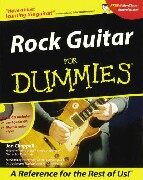
ROCK GUITAR FOR DUMMIES CHAPPELL BOOK CD TABLATURE CHITARRA LIBRO SPARTITI

ROCK GUITAR FOR DUMMIES. Chappell. CD TABLATURE

LIBRO METODO DI MUSICA ROCK, POP , CON CD. 

SPARTITI PER CHITARRA CON: 

ACCORDI, PENTAGRAMMA E TABLATURE. 


Description:
Whether you're contemplating a career as a heavy metal superstar or you just want to jam with friends, this friendly book / CD package makes it easy to master the fundamentals of rock guitar. From simple chord progression to smokin' rock riffs, Rock Guitar for Dummies delivers just what you need to get down and groove! Learn to strum power chords and rhythm figures, improve solos and play lead guitar, play licks, from rockabilly to rap rock, explore the mechanics of guitars, amps, and effects, care and maintain all your gear. Play-along companion CD includes blues and early rock-based lead passages, a variety of rock styles, including classic rock, heavy metal, southern rock, and progressive rock, rock licks using techniques such as hammer-ons, pull-offs, bends, slides and more!

Product Number: 0764553569
Format: Book/CD Set
ISBN: 0764553569
UPC: 785555061064
ISBN13: 9780764553561
Series: Dummies
Publisher: Wiley Publishing, Inc.
384 PAGES

Contents:
Foreward
Introduction
About This Book
Not-So-Foolish Assumptions
Conventions Used in This Book
How This Book Is Organized
Part I: So You Wanna Be a Rock-and-Roll Star
Part II: Basic Playing Techniques
Part III: Beyond the Basics: Sounding Like a Rock and Roller
Part IV: Master Different Rock Styles
Part V: Becoming a Gearhead
Part VI: The Part of Tens
Appendix
Bonus Web Chapter
Icons Used in This Book
Where to Go from Here

Part I: So You Wanna Be a Rock-and-Roll Star

Chapter 1: It's Only Rock Guitar. . . But I Like It
Differentiating Between Rock and Acoustic Guitar. . .It
Ain't Just Volume
Sound quality, or timbre
Signal
Distortion and sustain
Oh yes, and volume
Listening examples
Knowing the Essentials: The Power Trio
The electric guitar
The amplifier
Effects
Getting a Grasp on How Electric Guitars Work
String vibration and pitch
Tension vs. length
Your hands
Pickups and amplification
Accessorizing Your Guitar
Picks
Straps
Cords
Tuners

Chapter 2: Holding Your Own
Getting a Hold of the Guitar
Sitting position
Standing position
Forming a Left-Hand Position
Fretting
Getting some action

Striking a Right-Hand Position
Playing with a pick
Using your fingers

Gearing Up to Tune Up: Electric Tuners
What they are
How they work
Looking at Music Notation: Not Enough to Hurt
Reading chord diagrams
Reading rhythm slashes
Reading tablature
Making Music: How to Play a Chord
Fingering a chord
Strumming a chord

Chapter 3: The Other Half: The Guitar Amp
Discovering How Amps Work
Following the Signal Chain
Preamp
Tone controls
Effects
Power amp
Taking a Guided Tour of the Amp
Boxing It In: The Cabinet
Taking Control: The Control Panel
Channel inputs
Preamp and power amp controls
Tone controls
Amp effects
Making a Graceful Exit
Speaker out
Headphone out
Direct out
Effects loop
Power amp in
Various other "holes"
Sounding Out: The Speaker
Plugging In and Turning On
Safety first
The six-step program
Getting a Sound
Setting the controls
Channel switching
Making Do If You Don't Have an Amp
Plugging into a home stereo or boom box
Headphone amps
Demystifying the Gizmology

Part II: Basic Playing Techniques

Chapter 4: What the Left Hand Is Doing: Chords
You Gotta Have Chords
Playing Open-position Chords
Putting Power Chords into Play
Moving power chords
Pulling the power together
Getting Behind the Barre
Getting a grip on barre chords
Playing E-based barre chords
Moving the E-form barre chord around the neck
Other E forms: Minor, dominant 7, minor 7, and 7sus
Playing A-based barre chords
Moving the A-form barre chord
A forms: Minor, dominant 7, minor 7, 7sus, and
Major 7

Chapter 5: The Right Stuff: Right-Hand Rhythm Guitar
Techniques
Strumming Along
Downstrokes
Upstrokes
Combining downstrokes and upstrokes
Mixing Single Notes and Strums
The pick-strum
Boom-chick
Moving bass line
Disrupting Your Sound: Syncopated Strumming
Syncopated notation: Dots and ties
Playing syncopated figures
Giving Your Left Hand a Break
Left-hand muting
Implying syncopation
Suppressing the Right Hand
Right-hand muting
Breaking Out of the Chord Box: Left-hand Movement within a
Right-hand Strum
Giving Your Fingers Some Style
Getting Into Rhythm Styles
Straight-four feel
Two-beat feel
16-feel
Heavy metal gallop
Three feel

Chapter 6: The Leading Edge: Introduction to Lead Rock
Guitar
Taking the Lead
Holding the Pick
Attacking the Problem
Striking the Downs and Ups of Lead Playing
Playing Single Notes
Single-note technique
Alternate picking in downstrokes and upstrokes
Playing melodies across strings
Scales
Skips
Combining steps and skips
Starting at the Bottom: Low-Note Melodies
Going to the Top: High-Note Melodies
Playing in Position
Open position
Moveable, or closed, position
Getting in Tune with Lower Register Riffs
Making It Easy: The Pentatonic Scale
Playing the Pentatonic Scale: Three Ways to Solo
Pentatonics over a Major key
Pentatonics over a minor key
Pentatonices over a blues progression
Improvising Leads
A Final Note

Chapter 7: Groovin' on Riffs
Getting Your Groove On: Basic Riffs
Half- and whole-note riffs
Eighth- and quarter-note riffs
16th-note riffs
Eighth-note syncopation
Playing Two Notes Can be Better than One: Double-Stops
Combining Single-Note Riffs and Chords
Discovering Your Own Style

Part III: Beyond the Basics: Sounding Like a Rock and Roller

Chapter 8: Playing Up the Neck
Beyond Open Position: Going Up the Neck
Choking up on the neck
Playing double-stops on the move
Playing Closed-position Lead Patterns
Playing in Position
Positions defined
A firm position
Using the Moveable Pentatonic Scale
Staying at home position
Going above home position
Dropping below home position
Moving between positions
Seeking Out the Five Positions of the Pentatonic Scale
Changing Your Position
Licks the transport
From the depths to the heights
Knowing Where to Play
Associating keys with positions
Placing positions
Putting the five positions into play

Chapter 9: Playing Expressively: Making the Guitar Sing
Bringing Down the Hammer-ons
Having Pull with Pull-offs
Slippin' into Slides
Bending to Your Will
Bend and release
Pre-bend
Sounding a Vibrato That Makes You Quiver
Adding Spice Through Harmonics
Passing the Bar Exam
Putting It All Together

Part IV: Mastering Different Rock Styles

Chapter 10: Rock and Roll: The Early Years
It Don't Mean a Thang If It Ain't Got That Twang
Sending R&B Mainstream: Bo Diddley
Giving Rock a Texas Twang: Buddy Holly
Bringing Doo-Wop Up Front
I-vi-ii-V: 12/8
I-vi-IV-V: Straight-eighth feel
I-vi-ii-V: Shuffle
Combining Country and Blues: Rockabilly Rhythm
Creating Rock and Roll Guitar Style: Chuck Berry
Surf's Up
The British Are Coming, The British Are Coming
The Beatles' "I Saw Her Standing There"
Melodic riffing a la the Beatles
Low- and high-note riffing

Chapter 11: The Golden Age of Classic Rock
Playing Advanced Riffs and Rhythm Figures
Riff-based rhythm figure
Chord-based rhythm figure
Studying the Classics: Classic Rock
The British Invasion
The Blues break through
Latin rock: Carlos Santana
Southern rock
Later blues influence: Stevie Ray Vaughan
Neo-classic rock: Aerosmith
Fusing Country and Rock Lead Styles: The Eagles
Going to the Edge: U2's Guitarist Brings Epic Textures

Chapter 12: Heavy Metal
Bring on the Metal
Black Sabbath's skull-crushing riffs
Ritchie Blackmore's baroque blast
Making Rock Stars: The Arena-Rock Era
KISS my axe!
Boston's FM-friendly riffs
Van Halen's sonic revolution
Angus Young's bar-room crunch
Introducing the Euro-Metal Invasion
Putting Fans in the Stands: Heavy Metal Hits the '80s
Randy Rhoads's metal attack
Yngwie Malmsteen, the Swedish speed demon
Metallica's thrashing riffs
Raging into the New Millennium
Dimebag Darrell's speed-metal frenzy
Alice in Chains
Korn-ography

Chapter 13: Progressive Rock and Jazz-Rock Fusion
Welcoming the First Wave of Progressive Rock
Just say Yes: Steve Howe's eclectic mastery
The spectral guitar of Genesis
Fripp's trip
Pink Floyd's space blues
Acoustic art-rock: Emerson, Lake & Palmer
Joining Two Rock Styles: Progressive Meets Heavy Metal
Into the limelight with Alex Lifeson of Rush
Songs from the wood: The riffs of Jethro Tull
Hitting the Charts with Jazz Rock
Steely Dan's elegant jazz-pop
The soulful jazz of George Benson
Pat Metheny's sophisticated jazz-pop
Toto's Steve Lukather: Rock monster
Looking at the Legends of Jazz-Rock Fusion
Pure virtuosity: John McLaughlin and Al Di Meola
Jeff Beck's jazz comeback

Part V: Becoming a Gearhead

Chapter 14: Gear Lust: Assembling Your Dream Rig
Getting What You Want Out of a Guitar
Checking out the body
Testing the neck and fingerboard
Tuning into the hardware
Trying out the pickups and electronics
Deciding among guitar variations
Choosing the Perfect Amp to Give Your Guitar Life
Configurations and features
Key features
Putting It All Together

Chapter 15: Wild and Crazy Sounds: Effects
Identifying Effects
Choosing an Effects Format
Stompboxes
Floor-mounted multi-effects
Rack-mounted effects
Built-in effects
Coming to Terms
Processing Gain-based Effects: Overdrive, Distortion, and
Fuzz
Overdrive
Distortion
Fuzz
Tuning It Up, or Down: Dynamic Effects
Compressors
Gates
Playing by Ear: Tone-based Effects
EQ
Filters
Getting Volume under Control: Other Volume Effects
Volume pedal
Tremolo
Making a Change: Modulation Effects
Chorus
Flanger
Phase shifter/phaser
Rotating speaker or Leslie
Pitch shifters and octave dividers
Putting Your Sound in Context: Ambient Effects
Delay or echo
Reverb
Designing a Signal Path
Organizing Your Effects: Pedalboards

Chapter 16: The Care and Feeding of Your Electric Guitar
Using the Tools of the Trade
The basics
Power user tools
Changing Strings
Choosing the right strings
Removing the old strings
Putting on the new strings
Cleaning the Part of Your Guitar
The strings
The body, fingerboard, and hardware
The frets
The electronics
Optimizing Your Guitar's Performance: The Setup
Warning signs
Bridge spring tension
Fixing minor wiring problems
Repairing Amps and Effects
Replacing the fuse
Cleaning and replacing the tubes
Speakers
Troubleshooting Guide
Storing Your Guitar

Part VI: The Part of Tens

Chapter 17: Ten Rock Guitarists Who Changed History
Chuck Berry
Eric Clapton
Jimi Hendrix
Jeff Beck
Jimmy Page
Eddie van Halen
Stevie Ray Vaughan
Eric Johnson
Steve Vai
Kurt Cobain

Chapter 18: Ten Must-Have Rock Guitar Albums
The Beatles, Rubber Soul (1965)
The Jimi Hendrix Experience, Are You Experienced? (1967)
Led Zeppelin, Led Zepellin II (1969)
The Who, Who's Next? (1971)
The Rolling Stones, Exile on Main Street (1972)
Jeff Beck, Blow by Blow (1975)
Van Halen, Van Halen (1978)
Joe Satriani, Surfing with the Alien (1987)
Metallica, Metallica (The Black Album) (1991)
Korn, Issues (1999)

Chapter 19: Ten Classic Guitars
Fender Telecaster
Gibson Les Paul
Fender Stratocaster
Gibson ES Series
Gibson Flying V
Mosrite Ventures Model
Rickenbacker 360/12
Ibanez Iceman
"Super Strats"
Paul Reed Smith
Appendix
Index

Prezzo: €23,00
€23,00
Condividi contenuti