Italiano
 English
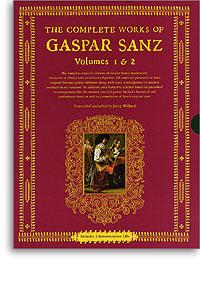
SANZ GASPAR THE COMPLETE WORKS OF Jerry Willard 2 CD TABLATURE LIBRI CHITARRA BAROCCA

SANZ GASPAR, THE COMPLETE WORKS OF. Jerry WILLARD. SHEET MUSIC BOOKS WITH 2CD & GUITAR TABLATURE .
LIBRI DI MUSICA CLASSICA CON 2 CD.
SPARTITI PER CHITARRA CON : PENTAGRAMMA E TABLATURE.
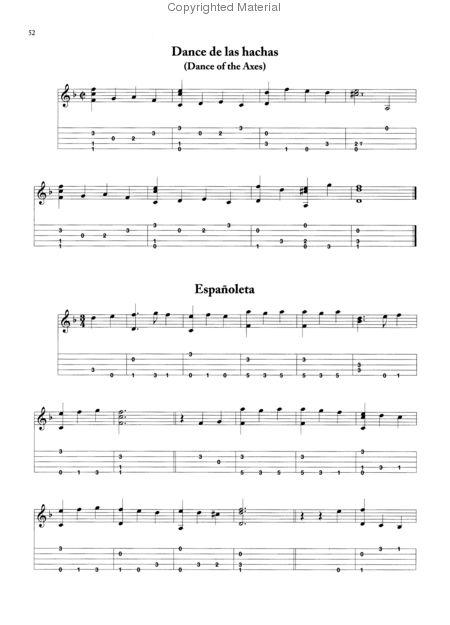
Available here is the complete manuscript of Sanz's legacy, which has been translated into English and the tablature arrangements now include standard music notation. Jerry Willard has also included arrangements for the modern guitar and performs selections from this body of work on both the baroque and modern guitar which can be found on the accompanying CDs. 280 pages.
By Gaspar Sanz. Arranged by Jerry Willard. For Guitar TAB. Renaissance, Medieval. Level: Intermediate-Advanced. Sheet Music and Audio CDs. 280 pages.
Gaspar Sanz was one of the most celebrated guitarists and composers of his time. In 1674 he published a method for the baroque guitar. This method has been lauded by guitar aficinados and serves as a significant historic work. Written in Old Spanish with the tablature system of its day, this method has only been available to the few who would meticulously research and decipher its hidden meanings. Available here is the complete manuscript of Sanz's legacy, which has been translated into English and the tablature arrangements now include standard music notation. Jerry Willard has also included arrangements for the modern guitar and performs selections from this body of work on both the baroque and modern guitar which can be found on the accompanying CDs.
Introduction
Biography
On April 4, 1640, Francisco Bartolome Sanz y Celma
was born in the tiny town of Calanda, near Saragossa,
Spain, into an old and well-to-do family. It was later
that he took the name Gaspar. He was educated at the
University of Salamanca, where he studied literature
and music and received a degree in theology. Sanz was
well traveled and spent much time in Italy, where he
studied guitar with Cristoforo Carisani and Lelio
Colista. He also studied the guitar works of Foscarini
and Corbetta. After returning to Spain, Sanz had
acquired such a great reputation as a guitarist and
composer that he was appointed guitar teacher to Don
Juan of Austria.
Baroque Guitar
The baroque guitar was popular primarily in Spain,
France, and Italy, and has a distinguished history
spanning 150 years, with only minor changes in tuning
and technique. Corbetta, Foscarini, and Montesardo in
Italy, de Visee in France, and Gaspar Sanz and Santiago
de Murcia in Spain championed the baroque guitar.
The baroque guitar was smaller than the modern
classical guitar, with more of an oblong shape, and had
wooden tuning pegs and tied-on gut frets. The
movable frets gave the baroque guitarist more
flexibility in tuning and pitch control.
There were many different tunings in vogue during
Sanz's time, the most popular of which is used and
explained in his method. The first string was single,
the second course (a set of multiple strings played as
one) was doubled unisons, the third course wa
doubled unisons, the fourth course was doubled in
octaves with the high octave on the thumb or bass
side, and the fifth course was doubled unisons an
octave higher than standard (modern) tuning. This
type of tuning, with the high octave on the thumb
or what would be the bass side of the strings,
enabled the guitarist to use the thumb as a melodic
finger, often playing high melody notes with the
thumb and achieving bell-like cross-string passage
called eampanellas.
Tablature
Tablature is a schematic that represents the five strings
of the guitar, with the bottom line representing the
highest string.
The frets are then represented by the numbers 1-9,
with 0 being an open string, and X indicating the
tenth fret. (Ed Note-Although indicated as a fret
marking in the original manuscript, an "X" in
conventional notation represents a muted string. This
edition will conform to conventional notation.) The
dots next to the numbers indicate the left-hand
fingering: one dot=index, two dots=middle, three
dots=ring, four dots=the little finger. Juan Carlo
Amat wrote the earliest publication for baroque guitar
and devised the alphabeto, a series of letters indicating
predetermined chords to be strummed during the
composition or dance. In the tablature, only the fretted
notes were indicated-the open strings were assumed.
(Ed Note- The diagram below illustrates the open
strings in this manner. However, conventional openstring
indications will be observed throughout the
remainder of this edition.)
Contents:
Allemande La Serenissima
Another Ducal
Another French Saraband
Another Granduque
Another Passacaglia
Another Villano
Ballet
Batalla (Battle)
Bugle From the French King's Musketeers
Canarios (Sanz)
Chaconne
Dance of Mantua
Dance of the Axes
Dance of the Torches
Espa–oleta
Folias
Four Voices and Chromatics
French Ballet
French Saraband
Fugue I
Fugue II
Gallarda
Gallardas
Gigue
Gigue in the English Style
Granduque (Great Duke)
Great Duke of Florence
Jacara From The Coast
Jacaras
Labyrinth
Lantururu (Sanz)
Maricapolos
Mariona (Sanz)
Paradetas (Sanz)
Passacaglia
Passacaglia In A Minor
Passacaglia in E Minor
Passacaglia in F
Passacaglia In G Minor
Passacaglias
Passacaglias in B Flat
Passacaglias in D
Passacaglias in D Minor
Passacaglias in E Minor and B Flat Minor
Passage
Pavane
Pavane In A Minor
Prelude and Fantasy
Promenades in C
Rujero Gaspar Sanz
Saltaren
Tarantela
The Catalonian Mi-ena
The Enfachata of Naples
The French Shellfish
The Garzona
The Knights of Naples With Bugles
The Portuguese Minima
The Return
Torneo
Two Passacaglias
Two Trumpets of the Swedish Queen
Villano