ACCORDI - PENTAGRAMMA - TABLATURE / CHORDS - STANDARD NOTATION - TABLATURE

BASS BIBLE: A WORLD HISTORY OF STYLES AND TECHNIQUES. Paul Westwood. 2 CD TABLATURE

BASS BIBLE: A WORLD HISTORY OF STYLES AND TECHNIQUES. 286 Pagine. 2 CD TABLATURE

Bass Bible - La Bibbia del Basso

Autore Paul Westwood

Per il Basso, la vera Bibbia. Un dizionario di frasi musicali, che può essere aperto e consultato in qualsiasi punto di maggior interesse. Uno strumento indispensabile per captare l'essenza di ogni stile, esplorare i propri interessi e allargare i propri orizzonti, ideato per tenere sempre desta l'attenzione del lettore e rifuggire quindi la noia della ripetitività. Frasi, riff, ritmi e patterns per imparare un linguaggio utile a poter suonare all'interno di un gruppo musicale. I 2 cd allegati sono stati pensati dall'autore anche per tutti i bassisti che non leggono la musica.

Introduzione
Il ruolo principale del basso è quello di fornire un supporto musicale alla sezione ritmica e, in particolar modo, insieme alla batteria, quello di riuscire ad ottenere un groove interessante che si fondi in un tutt’uno con la band. Al fine di mantenere il pubblico sempre coinvolto, le linee di basso dovranno essere sempre molto variegate. Di conseguenza, se si suona una linea di Walking bass, un riff, se improvvisiamo, oppure un semplice pattern, lo scopo fondamentale del basso è quello di produrre frasi più o meno ripetitive, in modo solido e con un buon senso del tempo. L’apprendimento di uno strumento musicale può avvenire in modo analogo a quello di imparare una lingua. Il primo passo consiste di solito nell’acquisire familiarità con frasi brevi, ad orecchio. Quindi si impara a parlare, utilizzandole il più accuratamente possibile. Più frasi impari, più il tuo vocabolario diventerà sempre più vario e sofisticato. La lettura, di solito, viene dopo. Ma l’entusiasmo può venire inizialmente offuscato dall’assorbimento di troppa teoria. Questo libro è concepito come un dizionario di frasi musicali, che può essere aperto ad ogni punto che ti interessa. Pertanto, nel mettere insieme questo manuale, ho lavorato seguendo la premessa che, se imparerai tutta una serie di frasi musicali, riff, ritmi e patterns, questo ti fornirà il linguaggio di base per poter suonare all’interno di un gruppo musicale. Ho evitato gli esercizi eccessivamente ripetitivi, perché ciò, a lungo andare, può diventare

noioso e, esercitarsi in modo noioso, può essere pericoloso se si vuole imparare a intrattenere la gente. All’interno troverai frasi più interessanti e pratiche, che non mancheranno di tenere costante la tua attenzione e che ti forniranno una buona tecnica, solida e fluente. Una volta che avrai assorbito tutta una serie di frasi in un certo stile, le varie alternative ti verranno successivamente in mente. È qui che il tutto diventa veramente affascinante. Solo dopo aver sperimentato molte alternative si potranno elaborare le proprie idee originali. Un’improvvisazione convincente fa seguito all’apprendimento delle frasi di base. Quello che ho cercato di raggiungere con ogni sezione è il cercare di captare l’essenza di ogni stile. Questo non è da considerarsi affatto completo o definitivo. È semplicemente il punto di partenza, o un trampolino da cui iniziare. In molti casi ho incluso le idee che mi hanno destato interesse in prima persona. Queste possono essere tanto semplici quanto complesse, ma sono tutte funzionali e ciascuna di esse ha costituito la base di tutta una nuova serie di idee personali. Questo libro può essere utilizzato in vari modi. Se sei interessato a suonare il basso Slap, apri il libro in quel punto. Troverai delle frasi adatte sia ai principianti che ai livelli più avanzati. Scoprirai inoltre che le idee in stile Slap sono basate su vecchie linee Boogie, che si trovano nel capitolo precedente. Studiare linee di basso Walking ti porterà ad esaminare alcune scale ed arpeggi che sono connessi con queste. In questo modo sarà possibile esplorare i propri interessi ed, al contempo, espandere i propri orizzonti. Molti bassisti suonano ad orecchio e non leggono la musica, quindi tenendo a mente anche loro, ho preparato i CD che accompagnano il libro. Ciò nonostante, consiglio, anche ai lettori che non leggono la musica, di tenere sotto mano la trascrizione della frase che stanno ascoltando, così alla fine impareranno anche loro a riconoscerla. Noi tutti leggiamo sulla base del riconoscimento dei vari patterns. Allo stesso modo, per esempio, non leggiamo le singole lettere di una parola, ma il gruppo di lettere nel suo complesso. 
Il manoscritto è un metodo utile per memorizzare le idee. Quando si impara a leggere, si ha accesso ad un nuovo mondo di musica, informazioni e di esperienze che un non-lettore non può condividere. Si basa tutto sull’entusiasmo e sull’impegno. Infine, devo spiegare che non avevo in mente di scrivere un libro. Il tutto si è evoluto come un modo per aiutare i miei allievi, che ho scoperto essere disperatamente a corto di idee e di modi di esprimersi musicalmente. Ogni allievo ha una sua serie di problemi. Solo dopo aver accumulato un mucchio di esempi musicali, mi sono reso conto che avevo effettivamente sviluppato un sistema che avrebbe potuto aiutare anche altri. Il mio obiettivo è diventato quindi quello di fornire ad ogni studente una sorta di arsenale di frasi, un arsenale di armi musicali. In questo modo, si può essere preparati per la maggior parte delle eventualità. Il tuo vocabolario sarà ampio a sufficienza da poter essere in grado di esprimerti al meglio attraverso il linguaggio della musica. P.S. Gli editori a volte utilizzano una nuova versione modificata della notazione musicale. Essendo questa ampiamente conosciuta, può rendere più facile la lettura in determinate circostanze.
 
Sommario 
Introduzione ....................................................................................................................6
 
LIBRO PRIMO.................................................................................9
Tecniche.....................................................................................................................10
Finger Style .........................................................................................................10 
Soft / Hard Playing ..............................................................................................10 
Il suono...............................................................................................................10 
Spanish Style.......................................................................................................11 
Il Plettro ..............................................................................................................11 
Suonare con l’unghia ..........................................................................................11 
Slap Bass .............................................................................................................11 
Lo Squeeze .........................................................................................................12 
Il Tapping della mano destra ...............................................................................12 
Il Damping..........................................................................................................12 
Walking in 4 e Damping......................................................................................12 
Il Patting .............................................................................................................12 
Gli armonici ........................................................................................................13 
Effetti e pedalini ..................................................................................................13
49 passaggi di Teoria di livello base.................................................................14
Linee di basso in stile Walking ...........................................................................19
Scale, Arpeggi ed Esercizi sulle scale................................................................20
Scale Maggiori ....................................................................................................20 
Scale Minori ........................................................................................................23 
Modi Diatonici ....................................................................................................25 
Arpeggi (Maggiori) .............................................................................................26 
Arpeggi (Minori) .................................................................................................29 
Esercizi sulle scale ................................................................................................32 
Swing in 4 - cambi di base ..................................................................................36 
Swing in 4 con estensioni di accordi....................................................................42 
Swing in 4 con note di passaggio........................................................................44  
Fills in terzine ......................................................................................................46 
Successioni di Accordi e Improvvisazione ......................................................47
Contemporary Pop .............................................................................................47 
Latin ...................................................................................................................52 
Ballad..................................................................................................................56 
Jazz .....................................................................................................................59
 
LIBRO SECONDO..................................................................61
Groove di base ........................................................................................................62
Groove di base in ottavi ......................................................................................62 
Groove di base in sedicesimi ...............................................................................63
Groove di base in 12/8 Shuffle ............................................................................65
Blues e R & B............................................................................................................66
Blues in 12/8 e R & B (Portamento Shuffle) .........................................................67
Blues in 4/4 e R & B ............................................................................................69 
Soul ...........................................................................................................................73
JAMES JAMERSON e la Motown ........................................................................79
Bass Fills ..............................................................................................................84
CHUCK RAINEY e l’Atlantic Records.................................................................86
JAMES BROWN e il Funk.......................................................................................90
STANLEY CLARKE....................................................................................................96
Rock ...........................................................................................................................99
Portamento dritto in ottavi................................................................................101 
Portamento Sincopato in ottavi.........................................................................105 
Portamento in sedicesimi ..................................................................................109 
Portamento Shuffle ...........................................................................................113
 
LIBRO TERZO..............................................................................115
Musica latina ..........................................................................................................116
Stili latini .................................................................................................................118
Riffs latini ................................................................................................................127
Double Time latin riffs ........................................................................................130
Riffs latini - Salsa...................................................................................................132
Flamenco spagnolo..............................................................................................136
Mariachi messicano .............................................................................................139
Mambo cubano.....................................................................................................143
Rock cubano...........................................................................................................148
Reggae giamaicano..............................................................................................154
Portamento costante.........................................................................................154 
Portamento costante - Nessun Battere...............................................................163 
Portamento Shuffle ...........................................................................................166 
Portamento Shuffle - Nessun Battere .................................................................168
Colombia .................................................................................................................170
Samba brasiliana...................................................................................................172
Perù, Ecuador, Cile, Bolivia................................................................................176
 
LIBRO QUARTO......................................................................179
Musica africana .....................................................................................................180
Riffs africani............................................................................................................181
Nord Africa e Medio Oriente............................................................................191
Somalia ....................................................................................................................194
Mali .........................................................................................................................197
Guinea......................................................................................................................202
Camerun..................................................................................................................207
Repubblica del Congo (Zaire) ..........................................................................210
Zimbabwe ...............................................................................................................214
Sud Africa & Soweto............................................................................................218
 
LIBRO QUINTO.......................................................................225
Linee Boogie ..........................................................................................................226
Larry Graham & Mark King - Slap Bass .........................................................229
Slap (Principianti) ..............................................................................................230 
Larry Graham - Slap (Boogie) ............................................................................232 
Mark King - Slap (Popping) ...............................................................................237
Jaco Pastorius - Basso fretless...........................................................................240
Riffs...................................................................................................................241 
Fretless Bass Solos .............................................................................................245 
Armonici naturali..................................................................................................250
Chordal Harmonics ...........................................................................................250 
Arpeggio Chord Progressions con Armonici ......................................................252  
Synthesizer Bass....................................................................................................254
Riffs moderni - Fraseggi Jazz e Progressive .................................................259
Riffs moderni.....................................................................................................260 
Fraseggi Jazz e Progressive ................................................................................268
Prezzo: €39,00
€39,00

THRASH GUITAR METHOD TROY STETINA BOOK & CD TABLATURE LIBRO METODO SPARTITI CHITARRA

THRASH GUITAR METHOD. Per ritmi precisi, un cucchiaino di Stetina tutti i giorni. SHEET MUSIC BOOK WITH CD & GUITAR TABLATURE.

LIBRO METODO DI MUSICA METAL, CON CD. 

SPARTITI PER CHITARRA CON: 

ACCORDI, TABLATURE. 

TECNICA, 

Series: Stylistic Method
Medium: Softcover with CD
Author: Troy Stetina

Let the mosh begin! Learn the techniques and principles used by today's heaviest bands including Metallica, Anthrax, Testament, and others. This truly radical method book takes you from slow grinding metal up to the fastest thrashing. Syncopation, shifting accents, thrash theory, progressions, chromatic 'ear-twisting ' melodic dissonances, shifting time signatures, harmony, and more. CD features bull band accompaniment for all musical examples so that you can play along with the band. Fully transcribed in tablature! 64 pages

Anvil Head (Stetina/Burton)
Bug Guts (Stetina/Burton)
Megadirt (Stetina/Burton)


Thrash Guitar Method

1 "Bug Guts" 3:06

2 "Megadirt" 3:00

3 "Anvilhead" 3:59

4 Chapter1 - Tuning Notes 0:43

5 The Beat 1:01

6 Muting 0:35

7 Accenting Chords 1:30

8 Syncopation and Upbeats 2:46

9 Shifting Accents 2:01

10 "All things Repulsive" 2:17

11 Chapter2 - Alternate Picking 1:05

12 Gallop and Reverse Gallop 2:57

13 Syncopation and Offbeats 0:54

14 Triplets 1:45

15 "Worm Juice and Bat's Heads" 3:15

16 Chapter3 - Common Scales 1:43

17 Chord Progressions and Riffs 0:14

18 Melodic Principles 1:35

19 Harmony 2:49

20 Time Signatures 2:35

21 Shifting Time Signatures 1:44

22 "The Sound of Music!!" 1:53

Prezzo: €29,99
€29,99

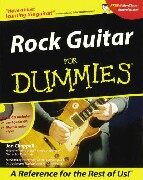
ROCK GUITAR FOR DUMMIES CHAPPELL BOOK CD TABLATURE CHITARRA LIBRO SPARTITI

ROCK GUITAR FOR DUMMIES. Chappell. CD TABLATURE

LIBRO METODO DI MUSICA ROCK, POP , CON CD. 

SPARTITI PER CHITARRA CON: 

ACCORDI, PENTAGRAMMA E TABLATURE. 


Description:
Whether you're contemplating a career as a heavy metal superstar or you just want to jam with friends, this friendly book / CD package makes it easy to master the fundamentals of rock guitar. From simple chord progression to smokin' rock riffs, Rock Guitar for Dummies delivers just what you need to get down and groove! Learn to strum power chords and rhythm figures, improve solos and play lead guitar, play licks, from rockabilly to rap rock, explore the mechanics of guitars, amps, and effects, care and maintain all your gear. Play-along companion CD includes blues and early rock-based lead passages, a variety of rock styles, including classic rock, heavy metal, southern rock, and progressive rock, rock licks using techniques such as hammer-ons, pull-offs, bends, slides and more!

Product Number: 0764553569
Format: Book/CD Set
ISBN: 0764553569
UPC: 785555061064
ISBN13: 9780764553561
Series: Dummies
Publisher: Wiley Publishing, Inc.
384 PAGES

Contents:
Foreward
Introduction
About This Book
Not-So-Foolish Assumptions
Conventions Used in This Book
How This Book Is Organized
Part I: So You Wanna Be a Rock-and-Roll Star
Part II: Basic Playing Techniques
Part III: Beyond the Basics: Sounding Like a Rock and Roller
Part IV: Master Different Rock Styles
Part V: Becoming a Gearhead
Part VI: The Part of Tens
Appendix
Bonus Web Chapter
Icons Used in This Book
Where to Go from Here

Part I: So You Wanna Be a Rock-and-Roll Star

Chapter 1: It's Only Rock Guitar. . . But I Like It
Differentiating Between Rock and Acoustic Guitar. . .It
Ain't Just Volume
Sound quality, or timbre
Signal
Distortion and sustain
Oh yes, and volume
Listening examples
Knowing the Essentials: The Power Trio
The electric guitar
The amplifier
Effects
Getting a Grasp on How Electric Guitars Work
String vibration and pitch
Tension vs. length
Your hands
Pickups and amplification
Accessorizing Your Guitar
Picks
Straps
Cords
Tuners

Chapter 2: Holding Your Own
Getting a Hold of the Guitar
Sitting position
Standing position
Forming a Left-Hand Position
Fretting
Getting some action

Striking a Right-Hand Position
Playing with a pick
Using your fingers

Gearing Up to Tune Up: Electric Tuners
What they are
How they work
Looking at Music Notation: Not Enough to Hurt
Reading chord diagrams
Reading rhythm slashes
Reading tablature
Making Music: How to Play a Chord
Fingering a chord
Strumming a chord

Chapter 3: The Other Half: The Guitar Amp
Discovering How Amps Work
Following the Signal Chain
Preamp
Tone controls
Effects
Power amp
Taking a Guided Tour of the Amp
Boxing It In: The Cabinet
Taking Control: The Control Panel
Channel inputs
Preamp and power amp controls
Tone controls
Amp effects
Making a Graceful Exit
Speaker out
Headphone out
Direct out
Effects loop
Power amp in
Various other "holes"
Sounding Out: The Speaker
Plugging In and Turning On
Safety first
The six-step program
Getting a Sound
Setting the controls
Channel switching
Making Do If You Don't Have an Amp
Plugging into a home stereo or boom box
Headphone amps
Demystifying the Gizmology

Part II: Basic Playing Techniques

Chapter 4: What the Left Hand Is Doing: Chords
You Gotta Have Chords
Playing Open-position Chords
Putting Power Chords into Play
Moving power chords
Pulling the power together
Getting Behind the Barre
Getting a grip on barre chords
Playing E-based barre chords
Moving the E-form barre chord around the neck
Other E forms: Minor, dominant 7, minor 7, and 7sus
Playing A-based barre chords
Moving the A-form barre chord
A forms: Minor, dominant 7, minor 7, 7sus, and
Major 7

Chapter 5: The Right Stuff: Right-Hand Rhythm Guitar
Techniques
Strumming Along
Downstrokes
Upstrokes
Combining downstrokes and upstrokes
Mixing Single Notes and Strums
The pick-strum
Boom-chick
Moving bass line
Disrupting Your Sound: Syncopated Strumming
Syncopated notation: Dots and ties
Playing syncopated figures
Giving Your Left Hand a Break
Left-hand muting
Implying syncopation
Suppressing the Right Hand
Right-hand muting
Breaking Out of the Chord Box: Left-hand Movement within a
Right-hand Strum
Giving Your Fingers Some Style
Getting Into Rhythm Styles
Straight-four feel
Two-beat feel
16-feel
Heavy metal gallop
Three feel

Chapter 6: The Leading Edge: Introduction to Lead Rock
Guitar
Taking the Lead
Holding the Pick
Attacking the Problem
Striking the Downs and Ups of Lead Playing
Playing Single Notes
Single-note technique
Alternate picking in downstrokes and upstrokes
Playing melodies across strings
Scales
Skips
Combining steps and skips
Starting at the Bottom: Low-Note Melodies
Going to the Top: High-Note Melodies
Playing in Position
Open position
Moveable, or closed, position
Getting in Tune with Lower Register Riffs
Making It Easy: The Pentatonic Scale
Playing the Pentatonic Scale: Three Ways to Solo
Pentatonics over a Major key
Pentatonics over a minor key
Pentatonices over a blues progression
Improvising Leads
A Final Note

Chapter 7: Groovin' on Riffs
Getting Your Groove On: Basic Riffs
Half- and whole-note riffs
Eighth- and quarter-note riffs
16th-note riffs
Eighth-note syncopation
Playing Two Notes Can be Better than One: Double-Stops
Combining Single-Note Riffs and Chords
Discovering Your Own Style

Part III: Beyond the Basics: Sounding Like a Rock and Roller

Chapter 8: Playing Up the Neck
Beyond Open Position: Going Up the Neck
Choking up on the neck
Playing double-stops on the move
Playing Closed-position Lead Patterns
Playing in Position
Positions defined
A firm position
Using the Moveable Pentatonic Scale
Staying at home position
Going above home position
Dropping below home position
Moving between positions
Seeking Out the Five Positions of the Pentatonic Scale
Changing Your Position
Licks the transport
From the depths to the heights
Knowing Where to Play
Associating keys with positions
Placing positions
Putting the five positions into play

Chapter 9: Playing Expressively: Making the Guitar Sing
Bringing Down the Hammer-ons
Having Pull with Pull-offs
Slippin' into Slides
Bending to Your Will
Bend and release
Pre-bend
Sounding a Vibrato That Makes You Quiver
Adding Spice Through Harmonics
Passing the Bar Exam
Putting It All Together

Part IV: Mastering Different Rock Styles

Chapter 10: Rock and Roll: The Early Years
It Don't Mean a Thang If It Ain't Got That Twang
Sending R&B Mainstream: Bo Diddley
Giving Rock a Texas Twang: Buddy Holly
Bringing Doo-Wop Up Front
I-vi-ii-V: 12/8
I-vi-IV-V: Straight-eighth feel
I-vi-ii-V: Shuffle
Combining Country and Blues: Rockabilly Rhythm
Creating Rock and Roll Guitar Style: Chuck Berry
Surf's Up
The British Are Coming, The British Are Coming
The Beatles' "I Saw Her Standing There"
Melodic riffing a la the Beatles
Low- and high-note riffing

Chapter 11: The Golden Age of Classic Rock
Playing Advanced Riffs and Rhythm Figures
Riff-based rhythm figure
Chord-based rhythm figure
Studying the Classics: Classic Rock
The British Invasion
The Blues break through
Latin rock: Carlos Santana
Southern rock
Later blues influence: Stevie Ray Vaughan
Neo-classic rock: Aerosmith
Fusing Country and Rock Lead Styles: The Eagles
Going to the Edge: U2's Guitarist Brings Epic Textures

Chapter 12: Heavy Metal
Bring on the Metal
Black Sabbath's skull-crushing riffs
Ritchie Blackmore's baroque blast
Making Rock Stars: The Arena-Rock Era
KISS my axe!
Boston's FM-friendly riffs
Van Halen's sonic revolution
Angus Young's bar-room crunch
Introducing the Euro-Metal Invasion
Putting Fans in the Stands: Heavy Metal Hits the '80s
Randy Rhoads's metal attack
Yngwie Malmsteen, the Swedish speed demon
Metallica's thrashing riffs
Raging into the New Millennium
Dimebag Darrell's speed-metal frenzy
Alice in Chains
Korn-ography

Chapter 13: Progressive Rock and Jazz-Rock Fusion
Welcoming the First Wave of Progressive Rock
Just say Yes: Steve Howe's eclectic mastery
The spectral guitar of Genesis
Fripp's trip
Pink Floyd's space blues
Acoustic art-rock: Emerson, Lake & Palmer
Joining Two Rock Styles: Progressive Meets Heavy Metal
Into the limelight with Alex Lifeson of Rush
Songs from the wood: The riffs of Jethro Tull
Hitting the Charts with Jazz Rock
Steely Dan's elegant jazz-pop
The soulful jazz of George Benson
Pat Metheny's sophisticated jazz-pop
Toto's Steve Lukather: Rock monster
Looking at the Legends of Jazz-Rock Fusion
Pure virtuosity: John McLaughlin and Al Di Meola
Jeff Beck's jazz comeback

Part V: Becoming a Gearhead

Chapter 14: Gear Lust: Assembling Your Dream Rig
Getting What You Want Out of a Guitar
Checking out the body
Testing the neck and fingerboard
Tuning into the hardware
Trying out the pickups and electronics
Deciding among guitar variations
Choosing the Perfect Amp to Give Your Guitar Life
Configurations and features
Key features
Putting It All Together

Chapter 15: Wild and Crazy Sounds: Effects
Identifying Effects
Choosing an Effects Format
Stompboxes
Floor-mounted multi-effects
Rack-mounted effects
Built-in effects
Coming to Terms
Processing Gain-based Effects: Overdrive, Distortion, and
Fuzz
Overdrive
Distortion
Fuzz
Tuning It Up, or Down: Dynamic Effects
Compressors
Gates
Playing by Ear: Tone-based Effects
EQ
Filters
Getting Volume under Control: Other Volume Effects
Volume pedal
Tremolo
Making a Change: Modulation Effects
Chorus
Flanger
Phase shifter/phaser
Rotating speaker or Leslie
Pitch shifters and octave dividers
Putting Your Sound in Context: Ambient Effects
Delay or echo
Reverb
Designing a Signal Path
Organizing Your Effects: Pedalboards

Chapter 16: The Care and Feeding of Your Electric Guitar
Using the Tools of the Trade
The basics
Power user tools
Changing Strings
Choosing the right strings
Removing the old strings
Putting on the new strings
Cleaning the Part of Your Guitar
The strings
The body, fingerboard, and hardware
The frets
The electronics
Optimizing Your Guitar's Performance: The Setup
Warning signs
Bridge spring tension
Fixing minor wiring problems
Repairing Amps and Effects
Replacing the fuse
Cleaning and replacing the tubes
Speakers
Troubleshooting Guide
Storing Your Guitar

Part VI: The Part of Tens

Chapter 17: Ten Rock Guitarists Who Changed History
Chuck Berry
Eric Clapton
Jimi Hendrix
Jeff Beck
Jimmy Page
Eddie van Halen
Stevie Ray Vaughan
Eric Johnson
Steve Vai
Kurt Cobain

Chapter 18: Ten Must-Have Rock Guitar Albums
The Beatles, Rubber Soul (1965)
The Jimi Hendrix Experience, Are You Experienced? (1967)
Led Zeppelin, Led Zepellin II (1969)
The Who, Who's Next? (1971)
The Rolling Stones, Exile on Main Street (1972)
Jeff Beck, Blow by Blow (1975)
Van Halen, Van Halen (1978)
Joe Satriani, Surfing with the Alien (1987)
Metallica, Metallica (The Black Album) (1991)
Korn, Issues (1999)

Chapter 19: Ten Classic Guitars
Fender Telecaster
Gibson Les Paul
Fender Stratocaster
Gibson ES Series
Gibson Flying V
Mosrite Ventures Model
Rickenbacker 360/12
Ibanez Iceman
"Super Strats"
Paul Reed Smith
Appendix
Index

Prezzo: €23,00
€23,00

YOU CAN DO IT... PLAY GUITAR DAMMIT! Scharfglass 2CD TABLATURE LIBRO SPARTITI-CC Rider-

YOU CAN DO IT... PLAY GUITAR DAMMIT! Matt Scharfglass. 2CD TABLATURE


LIBRO DI MUSICA ROCK CON CD.

SPARTITI PER CHITARRA. ACCORDI, PENTAGRAMMA E TABLATURE.

CON BASI E ARRANGIAMENTI PER 2 CHITARRE DI ALCUNE CANZONI NOTE.

Description
This is the book for you if you always wanted to learn but somehow kept putting it off, if you’ve played guitar before and given up or if you’re determined to crack it this time.
The no-nonsense guide that will soon have you playing great chords, riffs and even solos with as little pain as possible!

Some basic musical knowledge is handy, but the 2 CDs included feature a demonstration and backing tracks for each exercise. Chord boxes and how-to-play photos make the tricky stuff easy.

Arranged by Matt Scharfglass who is a New York-based songwriter, bassist and multi-instrumentalist. He does session work, leads his own band and performs extensively in the New York City area.

CC Rider - PER 2 CHITARRE
I Ain't Got Nobody - PER 2 CHITARRE
St James Infirmary - PER 2 CHITARRE
The House Of The Rising Sun - PER 2 CHITARRE
This Train - PER 2 CHITARRE

Prezzo: €27,99
€27,99

REGGAE GUITAR HOW TO PLAY Ray Hitchins CD TABLATURE CHITARRA LIBRO METODO SPARTITI

REGGAE GUITAR, HOW TO PLAY. Manuale per imparare a suonare all'ombra di una palma di Kingstone, nutrendosi di cocco. Una chitarra sempre al sole, in stile Bob Marley. Semplici esercizi sugli accordi, le pennate in alto e in basso, i ritmi, gli accordi staccati e muti, lo stile percussivo. SHEET MUSIC BOOK WITH CD & GUITAR TABLATURE .

Series: Fretted
Medium: Softcover with CD
Artist: Ray Hitchins

Learn to play authentic reggae guitar. Here's a complete guide to this unique style of music, including an explanation of the rhythms used, construction of guitar parts, exercises, examples, amplifier settings, and much more. The recording contains all the examples in the book, so you can learn to hear and play correctly from the very beginning. 56 pages


BY RAY HITCHINS

CONTENTS
Acknowledgements .
About The Author .
Introduction .
Introduction To The Recording .
THE FUNDAMENTALS
YourEquipment .
Rudiments .
Practice Schedule .
DOWN- & UPSTROKES (Theory and Practice)
Lesson 1 Downstroke Theory .
Lesson 2 Upstroke Theory .
Lesson 3 Downstroke Practice .
Lesson 4 Upstroke Practice .
Lesson 5 Stroke Changing .
BASIC TECHNIQUES
Lesson 6 String Grouping .
Lesson 7 Damping .
Lesson 8 Tenuto Downstrokes.Right-Hand Damping .
Lesson 9 Tenuto Upstrokes. Right-Hand Damping .
Lesson 10 Tenuto Down-and Upstrokes. Right-Hand Damping .
Lesson 11 Staccato Downstrokes,Right-Hand Damping .
Lesson 12 Staccato Upstrokes. Right-Hand Damping .
Lesson 13 Staccato Down-and Upstrokes. Right-Hand Damping .
Right-Hand Damping Summary Points .
Lesson 14 Left-Hand Damping .
NEW RHYTHMS
Lesson 15 Reggae Beats .
Lesson 16 Rhythm Fills .
Lesson 17 Rhythmic Patterns .
Lesson 18 Before Reggae .
FINAL STEPS
Lesson 19 Chords .
Lesson 20 Bass Lines & Riffs .
Lesson 21 Percussive Playing .
Lesson 22 Dummy Strokes .
Lesson 23 Sound Evaluation.
Conclusion

Prezzo: €19,99
€19,99

RHYTHM GUITAR ENCYCLOPEDIA BOOK & 2 CD JODY FISHER CHITARRA TABLATURE LIBRO METODO

RHYTHM GUITAR ENCYCLOPEDIA, Jody Fisher. SHEET MUSIC BOOK WITH FOR GUITAR WITH TABLATURE AND 2 CD .

LIBRO DI MUSICA, CON 2 CD. 

SPARTITI PER CHITARRA CON:

ACCORDI, PENTAGRAMMA, NOTE, TABLATURE. 


Ritmi intorno al mondo. Africa: Sikyi-Ashanti, adowa-Ashanti, akom-Ashanti, gahu-Ewe. Blues: shuffles, pinky patterns, slow (down home), dodici ottavi, feels. Country, Disco, folk: fingerstyle. Funk, Jazz: swing, four-bar phrases, jazzwaltz. Ballads, Dixie, Latin: afoxe-brazil, afro-cuban, baion-brazil, beguine, bolero, bossa-nova a 4, 5, 6, 7 quarti, calypso-Trinidad, Cataret-Brazil, cha cha-Cuba, charanga-Pachanga, choro-Rio, comparsa-Cuba, Conga-Cuba, Frevo-Brazil, guaguanco-Cuba, guajira-Cuba, Guaracha, joropa, Mabo-cuba, maracatu-Brazil, marcha-brazil, merengue-Haiti, montuno, mozanbique-Cuba, pasa doble, reggae-Jamaica, rhumba-Cuba, samba-Brazil, samba cruzado, samba marcha, samba de partido alta, samba in tre, sette quarti, songo-Cuba, spanish tango, tango. Rock. Bunny hop, charleston, greek, hora, Irish jig, Polka, can-can, reel, sher, turkish, two step, straightwaltz, viennese waltz, 5, 7, 15, 11, quarti. Più di 450 ritmi, il tempo, gli accenti, i cambi imprevedibili. Con questo libro migliorerete la vostra precisione ritmica. CD 2 TABLATURE

Rhythm Guitar Encyclopedia Music by Jody Fisher
CATEGORY: Guitar Method or Supplement
FORMAT: Book & 2 CDs

Includes over 450 rhythms in every musical style including rock, blues, jazz, folk, alternative, country and more. Examples are shown in an easy-to-read rhythmic notation, standard music notation and TAB. Fingerstyle accompaniment patterns are included. The CDs offer performances of examples.

introduction

Most guitarists want to become great improvisers. The image of the wailing guitar player, lost in the
moment, searching for the means te express him or herself is weil known - almost stereotypical. The
truth of the matter is that without great rhythmic backup the soloist has nothing to work with. To
a large extent, the success of a solo has a lot to do with how the rhythm section and the lead player interact.
Originally, the guitar (in non-c1assical circles) was strictly a rhythm instrument. The pulse provided
by the guitarist was the glue that held the rhythm section together. It was, and is, used to provide a
harmonie and rhythmic background for vocals as weil. With the advent of pickups and amplifiers,guitar
players were able te step out front and solo just like the other members of the band. This provided a
more balanced role for guitarists. Somehow, through the years, "rhythm playing" has taken a backseat
te soloing. As a result, many guitarists today are not hip to the benefits of becoming a great rhythm
player. This book is designed help remedy this.
This is a multipurpose book. There are several ways it can be helpful:
• First, it can be used as a reference source. You come home from the gig, embarrassed because
you didn 't know how to play an authemic Bossa Nova pattern, and look it up. Maybe
you had to play some Reggae or a Viennese Waltz. Perhaps you are a jazz player who has
limited rock rhythm chops, or a rocker who needs more funk ideas. Do you freelance, play
in a wide variety of styles? Inside you will find everything from Afro-Cuban rhythms to the
Bunny Hop!
• Second, if you are a songwriter, you should find plemy of material here to inspire new ideas
and help you break out of your old rhythmic habits.
• Third, working your way through each page is a great way to practice reading rhythmic notation.
If you are comfortable reading most of the rhythms here, you are probably ready to
handle anything you find in the professional world.
• Fourth, arrangers will find these ideas helpful for coming up with new ways te treat old,
worn-out material.
Becoming a knowledgeable rhythm guitarist will help you become a better improviser as weil. You will
become more musical in your approach and more in control of your ideas from a rhythmic perspective.
No book can say it ail or Iist every example of every style. This book surveys many styles, but be assured
that you could spend your life studying any one in depth. However you use this book, it is my
hope that you will create good music and find self-expression.
Thanks to my family,julie,josh, Shauna andTom,jennifer, Mom, Dad,jack and Yvonne Abels, Noah,
Maggie,jasper and ail of my teachers and friends for having supported my musical endeavors through
the years. Thanks to David Smolover and Nat Gunod for their friendship and for providing so many
opportunities te further my career - l've learned a lot.

The Author
Jody Fisher has worked professionally in virtually all styles of music during his career, from straight ahead and contemporary jazz to rock and roll, country, pop and show tunes. In the field of education, he taught Guitar and Jazz Studies at the University of Redlands in Southern California for eight years and at the Idyllwild School of Music and the Arts (ISOMATA) for two years. An active performer in the Southern California area, he still maintains a private teaching practice, and is an associate director of the National Guitar Summer Workshop's California, Nashville and Connecticut campuses. Jody Fisher is also the author of The Guitar Mode Encyclopedia, The Guitar Chord and Scale Finder. Jazz Guitar Christmas and The Complete Jazz Guitar Method. all published by the National Guitar Workshop and Alfred.


Content

ABOUT THE AUTHOR 
INTRODUCTION 

HOW TO USE THIS BOOK 
Tempo 
Downstrokes and Upstrokes 
Accents 
Chords and Practice 
Technique 
Using a Pick 
Fingerstyle 
 
AFRICAN 
Sikyi-Ashanti
Adowa-Ashanti
Akom-Ashanti 
Gahu-Ewe 
 
BLUES 
Shuffles 
Pinky Patterns 
Slow (Down Home) 
 
COUNTRY 
Country 
 
DISCO 
Disco 
 
FOLK 
Folk 
Fingerstyle 
 
FUNK 
Funk 
 
JAZZ  
Swing 
Four-Bar Phrases 
Jazz Waltz 
 
BALLADS 
Ballads 
 
DIXIE 
Dixie 
 
LATIN
Afoxe - Brazil 
Afro-Cuban 
Afro-Cuban 
Balon - Brazil 
Beguine 
Bolero
Bossa Nova - Brazil 
Bossa Nova 5/4 
Bossa Nova 6/4 
Bossa Nova 7/4
Calypso - Trinidad 
Cataret - Brazil
Cha Cha - Cuba .
Charanga (Pachanga) 
Choro - Rio 
Comparsa - Cuba 
Conga - Cuba 
Frevo - Brazil 
Guaguanco - Cuba 
Guajira - Cuba .
Guaracha .
Jaropa .
Mambo - Cuba .
Maracatu - Brazil. .
Marcha - Brazil .
Merengue - Haiti .
Mozambique - Cuba 
Pasa Doble 
Reggae - Jamaica 
Rhumba - Cuba 
Samba - Brazil 
Samba Cruzado - Brazil.. 
Samba Marcha - Brazil 
Samba de Partido Alto - Brazil 
Samba 2 Brazil. 
Samba 1 Brazil. 
Spanish Tango 
Songo - Cuba 
Tango - Argentina 

ROCK/POP
Rock 

MISCELLANEOUS
Bunny Hop .
Charleston .
Greek .
Hora .
Irish jig .
Polka .
Can-Can .
Reel .
Sher 
Turkish ,
Two Step ,
Straight Waltz '
Viennese Waltz .
Odd Time 5/4
OddTime - 7/4 
OddTime - 15/4
OddTime - 15/8
OddTime - 11/4
OddTime - 11/8.
 
There are two compact discs available for this book. Many of the examples in the book are performed on them. These CDs can make learning with this book easier and more enjoyable. Vou can use them to check your interpretations of the written rhythms and to make sure you are capturing the "feel" of each rhythm. One of these symbols will appear next to most section headings. The number in the upper left hand corner indicates the disk number. The track
numbers below the symbols correspond to the group of rhythms under that heading. In many cases, you will find additional examples in the book that are not included on the CD. These are in sections labeled "More ..." and are
provided for your further reference. Disk l, Track 1will help you tune to the CD. Have fun!
Prezzo: €34,99
€34,99

ROCK CHOPS FOR GUITAR technique guitarist Tobias Hurwitz CD CHITARRA METODO VOLO DEL CALABRONE

ROCK CHOPS FOR GUITAR, A Technique-Building Approach for the Dedicated Guitarist, Tobias Hurwitz. SHEET MUSIC BOOK WITH CD & GUITAR TABLATURE. 

LIBRO METODO DI MUSICA ROCK CON MP3 CD.  

SPARTITI PER CHITARRA CON:

ACCORDI, PENTAGRAMMA, TABLATURE. 

TECNICA, 


The Serious Guitarist: Rock Chops
A Technique-Building Approach for the Dedicated Guitarist
By Tobias Hurwitz

Series: The Serious Guitarist
Category: Guitar Method or Supplement
Format: Book & MP3 CD
Instrument: Guitar

Great musical ideas need a solid foundation of strong chops to back them up. Fill the gaps in your technique with this unique approach to rock guitar. Build your finger strength, flexibility, and independence with exercises and examples written especially for rock players. This book explores all the important soloing techniques such as speed picking, sweeping, tapping, harmonics, scale sequencing, and more. Develop your chops while practicing exercises in the style of the music you enjoy. The Serious Guitarist: Rock Chops provides the tools you need to become a better guitar player, but more importantly, it will help you become a better musician. The included companion MP3 CD features demonstrations of the examples in the book.


CONTENUTO: 
stretching the fingers
alternate picking
economy picking
sweep picking
mixing sweep picking and alternate picking
tremolo picking
pentatonic riffs and concepts
scale sequencing
single-string concepts
double stops
harmonized leads
finger tapping
whammy bar techniques
legato
long scales
exotic scales
harmonics, pinch harmonics
string skipping
arpeggio etudes
the flight of the bumble bee ( il volo del calabrone di Rimsky-Korsakov )
scale forms

https://content.alfred.com/catpages/00-40266.pdf

Prezzo: €24,99
€24,99

METAL RHYTHM GUITAR VOLUME 2 TROY STETINA CD TABLATURE CHITARRA LIBRO SPARTITI METODO

METAL RHYTHM GUITAR VOLUME 2. Stetina. CD TABLATURE

LIBRO METODO DI MUSICA METAL CON CD. 

SPARTITI PER CHITARRA, TABLATURE. 

Series: Stylistic Method
Medium: Softcover with CD
Author: Troy Stetina


Un metodo all'avanguardia per gli stili moderni della chitarra metal. Grunge. Alternative Rock. Pop-Punk. Thrash. Funk-MetaLClassic Metal. e altro.

VOLUME DUE continua il metodo del Volume Uno con ritmi ancora più avanzati. riff, teoria musicale. esplorando ulteriormente le tecniche ritmiche nello stile di...

Alice In Chains

Bush

Collective Soul

Guns 'N' Roses

Live

Metalluca

Ministry

Nirvana

Offspring

Ozzy Osbourne

Pantera

Pearl Jam

Soundgarden

Stone Temple Pilots

Van Halen

White Zombie

e molti altri

Troy Stetina è riconosciuto come autore di spicchio, insegnante, musicista e virtuoso della chitarra acclamato dalla critica. I suoi libri, i metodi e i video della serie hanno ricevuto ottime recensioni dalle riviste di settore e sono utilizzati da insegnanti e chitarristi di tutto il mondo. Troy è anche stato un editore importante di Guitar World, Guitar School, e Guitar One, ed ha creato programmi didattici per il rock e il metal, per seminari e per corsi di livello universitario al Conservatorio Musicale del Wisconsin. Per una lista dei libri, metodi e video relativi alla TROY STETINA SERIES, vedere le pagine finali di questo libro

CREDITI E RINGRAZIAMENTI

Chitarre e Basso: Troy Stetina Batteria: Brian Reidinger (tutti i brani nel Volume 1 e 2, ad eccezione di "Babylon") Tutti i brani e gli esempi sono stati scritti ed arrangiati da Troy Stetina Mixaggio effettuato presso "Gemini Studios", Faribault, MN (Eccetto "Babylon") Prodotto da Troy Stetina e Brian Reidinger Edizioni Digitali "In the Groove", Minneapolis MN

Strumentazione:

Chitarre: Jackson solista (con Sustainiac GA-2, Duncan Custom Pickup); Washburn MG-700

Amplificatori: Marshall 100 Watt, MkII; Marshall50 Watt, serie JCM 800; Casse Marshall4x12

Pedali: Boss PD-I (pedale Distorsione); Ibanez TSIO Tube Screamer Drum Machine Alesis HR-16 (su tutti gli esempi) Molte persone hanno contribuito o dato spunti per la realizzazione/ produzione di questo metodo per chitarra, e tutti meritano dei ringraziamenti. Grazie a tutti coloro che lavorano alla HaI Leonard Corporation. Un ringraziamento speciale all'amore della mia vita, Shauna. Grazie inoltre a Brian Reidinger, Don Dokken, chitarre Washburn, Wolf Marshall e alla rivista Guitar One, e grazie a tutti i pionieri della musica che creano curiosità e interesse, ci intrattengono, ma ci fanno anche pensare a dove siamo e a che cosa stiamo facendo. E infine, grazie a tutti voi, i chitarristi emergenti di domani. Alla fine siete voi che avete reso possibile tutto questo.


L'Autore

Crediti e Ringraziamenti

Benvenuto nella Troy Stetlna Series

Prefazione

Accordatura


Capitolo 7

Accordi Barre con la Forma del "Mi"

Accordi Barre con la Forma del "La"

Lo Strumming

GLI Armonid Naturali Stoppati

I Riff contro le progressioni

La Forma del Rlff

"Lucky Day (Canzone n° 7)


Capitolo 8

Teoria di Base

Costruire Accordi in Tonalità Maggiori

Progressioni in Mi Maggiore

Trasportare Progressioni Maggiori

La Variante bVIl

Accordi "Sus" e “Add”

Note Comuni e Frammenti Melodici

I Rivolti e gli Accordi Slash

Tempo Tagliato (Introduzione al Sedicesimi)

"In the Spirit" (Canzone n° 8)


Capitolo 9

Costruire Accordi in una Tonalità Minore

Progressioni in Mi Minore

Trasportare progressioni minori e i Rlff

V Maggiore, IV e I in tonalità Minori

Gli Accordi bV e bII

Figure con sedicesimi

Etensioni dei Power Chord

"Nervosa" (Canzone n. 9)


Capitolo 10

Gli Accenti in Levare con i Sedicesimi

Schemi Ritmici in Sedicesimi

Sedicesimi con Pennate In giù e Pennate Accentate

Ancoro nuove forme di Barre

Collegare I Punti

Utilizzo degli Armonlci Artificiali nei Riff

Accordi di Settimo e di Nona

Tempo Non-comune

"Monster-Funker" (Canzone n° 10)


Capitolo 11

Ancora Forme di Diadi

Le Terzine

Ritmi Shuffle e In 12/8

Terzine conSemiminime

Accordatura ln Re

Altre Accordature

"Demons Woltz" (Canzone nQ 11)


Capitolo 12

Note su Babylon

"Babylon" (Canzone n° 12)

Raccogliere sulle Tablature le tue frasi migliori

I nomi delle note sulla tastiera della chitarra

Guida alla notazione

Glossario


Because rhythm and timing lie at the foundation of everything you play, its importance can't be underestimated. This series will give you that solid foundation you need. Starts with simple upbeat rhythms for the beginner and moves step by step into advanced syncopations - all demonstrated with seriously heavy metal examples that have practical applications to today's styles. Tablature. Music and examples demonstrated on CD. 72 pages

Prezzo: €25,99
€25,99

MASTERS OF THE TELECASTER ARLEN ROTH'S BOOK & 2 CD TABLATURE B-BENDER SPARTITI CHITARRA COUNTRY

MASTERS OF THE TELECASTER, ARLEN ROTH'S. SHEET MUSIC BOOK WITH 2 CD & GUITAR TABLATURE .

LIBRO METODO DI MUSICA BLUES, COUNTRY, ROCK. CON 2 CD. 

SPARTITI PER CHITARRA CON : 

ACCORDI, NOTE PENTAGRAMMA E TABLATURE. 

STUDIO, METODO, MANUALE, 


185 Pagine, quasi 2 ore con 143 esempi di Blues, R&B, country, rockabilly, soul, R&R, rock, tutti dedicati a una delle chitarre più impiegate. Muddy Waters, Cornell Dupree, Albert collins, Elvis, Albert Lee, Steve Cropper, Roy Buchanan, Clarence White, James Burton, Danny Gatton, Jerry Donahue, Scotty Anderson, Keith Richards, Pete Townshend, Jeff Beck, Jimmy Page, Summers. I fondamentali: ritmi shuffle, piano-style blues, damping, pick and finger technique, costant bass, banjo rolls, double-stops, Memphis soul stew, chicken pickin', pedal steel-style e hawaiian stile, dissonanza country, tecnica telecasteriana. Falso armonico controllo del tono e del volume, B. bender, country bending, bending alla paletta, bending blues e doppio bending! Con fotografie a colori di alcuni modelli. 

CATEGORY: Guitar Method or Supplement
FORMAT: Book & 2 CDs
--------------------------------------------------------------------------------
Perhaps no other instrument in history has had such a profound effect on the history, style and development of popular music as the Fender Telecaster. This beautiful coffee table-style book includes color and black and white photos of vintage and custom shop models and the great "tele" artists. Plus, deep insights into the history and uses of this fantastic instrument, including licks, solos and techniques of all the great "Telemasters" and influences on blues, country, R&B, and rock. Also includes over 140 music examples--all demonstrated by Arlen Roth on the included CD. All examples are in standard notation, tablature.


La marcia in più delle Telecaster.
Il B-Bender è stato inventato nel 1967 da Gene Parsons dei Nashville West e Clarence White dei The Byrds. Originariamente chiamato Parsons White Pull-String, in seguito ribattezzato String Bender, oggi é meglio conosciuto come il B-Bender. I primi prototipi sviluppati da Parsons avevano incluso più dispositivi di bending per le corde E, B, G e D, ma White ha deciso che preferiva una bending per la singola corda B. La corda Si è alzata di un tono pieno tirando la cinghia della tracolla verso l'alto. Questa è attaccata ad una leva e a una molla alla base della corda. Il braccio della leva passa attraverso il corpo della chitarra ed è collegato alla corda B dietro il ponte. Il B bender è un marchingegno che ti permette di fare i bending, spingendo senza fatica verso il basso il manico della Telecaster. Albert Lee, il chitarrista Bernie Leadon degli Eagles, Jimmy Page dei Led Zeppelin hanno hatto fare installazioni personalizzate di B bender sulla loro Telecaster.

TELECASTER HISTORY

OVER 140 MUSIC EXAMPLES

Blues, Country, Rhythm Blues, Rock

8 PAGES OF COLOR PHOTOS

Possibly no other instrument has had such a profound effect on the history, style and development of popular music as the Telecaster ... From its impact on early Rock and Roll to its exclusive use by Keith Richards of The Rolling Stones, one of the most influential bands in rock history ... From the early electric country of Jimmy Bryant and James Burton to superpickers such as Albert Lee, Danny Gatton, author Arlen Roth and Jerry Donahue (of The Hellecasters, the triumvirate of Tele superstars named for their instrument of choice) ... From the pioneer electric blues of Muddy Waters to the "Iceman" himself, Albert Collins ... Masters of the Telecaster details the sounds, techniques, licks and solos of the artists, and the instrument, that helped shape the sound of popular music. Includes chapters on Telecaster History, Techniques, Blues, Country, R&B, and Rock. Techniques, licks and solos of all the great "Telemasters" are profiled throughout in standard notation and tablature and each example is contained on the included recordings.

I always felt that this book was a necessity, because no one had ever written a guitar book strictly on the direct effect that one instrument can have on its player. I think we can all agree that as guitar players, we certainly understand, or at least recognize this phenomenon. How many times do we refer to a certain guitarist as a "Strat" or "Les Paul" type of player? Well, Tele players are perhaps the most unique of the bunch, and certainly this "inner group" of players has really started to expand. This is probably due in most part to the rise in popularity of country music as of late. The Telecaster has always been a mainstay of country music since it was fust released, and today it's hard to imagine country without it. What a pleasure to be sitting here writing a book (now my eighth) about a subject and musical form that is so near and dear to my heart! I've been a Telecastef® fanatic since about 1965 when I first laid eyes on one, and I've been playing almost strictly "Tele"® since my tour with John Prine in 1975, when I purchased my 1953 Telecaster for a whopping $400! Shame I didn't have any money then-the guy had a car full of them, all about the same price. Telecasters are special. They seem to bring out something in guitarists that other guitars just don't. Not only that, but there seems to be an ever-growing affinity that we Tele players seem to have with each other that makes us a special brotherhood; a "club" of sorts. We know omething about our relationship to our Telecasters is special, and that we more than likely, all have similar feelings. One incredible fact to us all is how right Leo Fender got it the first time! After all, we are talking about the very first production solidbody guitar in the world here (introduced as the Broadcaster in 1948 by Fender), and an instrument of incredible simplicity and purity of design. Now, after almost 48 years and literally hundreds of new guitar experiments, the pure essence of the Telecaster shines through, and the original three: the Telecaster, the Stratocastef® and the Les Paul®,all still remain the "three wise men" of the guitar, and that by which all other guitars are measured. My feeling is that because these guitars were literally designed out of necessity, and were direct descendants of hollow-bodied instruments, their purity of design for both beauty and function was inevitable.


CONTENTS

INTRODUCTION

Intro Music CD 1

Tuning Notes

ABOUT THE AUTHOR

ABOUT THE TELECASTER

CHAPTER 1:

FOUNDATION TECHNIQUES

Shuffle Rhythms

Examples 1, 1A & 2

The Harmony Shuffle II

Examples 3 & 4

Piano Style Rhythm Grooves

Examples 5 & 6

Single-Note Rhythm Licks

Example 7

Heel Damping

Example 8

PICK AND FINGER TECHNIQUE

Example 9

The Constant Bass

Examples 10 & 11

Pick and Finger "Roll" Patterns"

Open G "Banjo" Rolls

Examples 12, 13 & 14

CHAPTER 2:

RHYTHM AND BLUES TELECASTER

Partial Chords in R&B Guitar

Examples 15 - 21

STEVE CROPPER

Example 22: The "Soul Man" Lick

CORNELL DUPREE

Examples 23 - 30

Example 31:

The "Memphis Soul Stew" Lick

CHAPTER 3:

TELECASTER BLUES

The Basic Blues Scales

Examples 32 & 33

Blues Passing Tones

Examples 34 & 35

First Position Licks

Examples 36 & 37

Adding The Major Third

Examples 38 - 41

BLUES STRING BENDING

Whole Step and Half Step Bends

VIBRATO

The "Bend and Release" Vibrato

Example 42

BLUES SOLOING

Examples 43 & 44

FALSE HARMONIC AND VOLUME CONTROL SWELL TECHNIQUES

Examples 45 - 47

Volume and Tone Control "Swells"

Examples 48 & 49

Tone Control Tricks

Examples 50 & 51

ROY BUCHANAN 66

Example 52: The "Haunted House" Lick

Examples 53 & 54: "Lonesome Fugitive"

Example 55: Soloing Buchanan Style

ALBERT COLLINS

Example 56

MUDDY WATERS

Example 57

CHAPTER 4:

COUNTRY AND ROCKABILLY TELECASTER

Basic Country Scales and Positions

Examples 58 - 60

Some Hot Country Licks

Examples 61 & 62

The Extended Country Pentatonic Scale

Examples 63 - 74


CD 2

COUNTRY STRING BENDING TECHNIQUES

String Bending as Substitution

Examples 75 - 83

Pedal Steel-Style "Banjo" Roll

Example 84

Advanced "Pedal Steel" Bend Positions

Example 85

Examples 86 - 88

CLARENCE WHITE

Examples 89 - 93

Example 94: Advanced String Bending Solo

Two-String Bends

Examples 95 - 98

JAMES BURTON: A TELE MAN FOR ALL SEASONS

Examples 99 - 103

Examples 104 & 105: The "Mystery Train" Lick

Chicken Pickin'

Example 106

DANNY GATTON: TELEMASTER

Examples 107 - 109

ALBERT LEE

Examples 110 & 111

BENDING BEHIND THE NUT

Examples 112 - 117

JERRY DONAHUE

Examples 118 & 119

HOT COUNTRY DOUBLE STOPS

Examples 120 & 121

Combining Double Stops with String Bending

Example 122 & 123

SCOTTY ANDERSON: KING OF THE DOUBLE-STOP.

Example 124

MARTY STUART: KEEPER OF THE FLAME

Example 125

VINCE GILL: FROM THE STUDIO TO SUPERSTAR

Example 126

PEDAL STEEL-STYLE "CARRY" LICKS

Examples 127 & 128

USING DISSONANCE IN COUNTRY PLAYING

Examples 129 - 132

HAWAIIAN LAP STEEL-STYLE

Example 133

JIMMY BRYANT: TELE PIONEER

Example 134

CHAPTERS:

THE TELECASTER IN ROCK

KEITH RICHARDS

Examples 135 - 137

PETE TOWNSHEND

Example 138

ANDY SUMMERS

Example 139

JEFF BECK

Example 140

JIMMY PAGE

Example 141

CLASSIC TELE ROCK LICKS

Example 142

Example 143: The Final Solo

CONCLUSION  

Prezzo: €109,99
€109,99

METAL LEAD GUITAR VOLUME 1 TROY STETINA LIBRO CD TABLATURE VIBRATO-BENDING-TAPPING-FRASEGGI

METAL LEAD GUITAR VOLUME 1. Stetina. BOOK WITH CD & GUITAR TABLATURE. 

LIBRO METODO DI MUSICA METAL, CON CD.

SPARTITI PER CHITARRA CON:  

ACCORDI, TABLATURE. 

Finalmente disponibile in italiano il 1° volume della serie di Troy Stetina, uno dei più grandi didatti e chitarristi metal. I suoi metodi, utilizzati da insegnanti e musicisti di tutto il mondo, forniscono un sistema completo per l’apprendimento e il perfezionamento del metal e per la costruzione di una solida preparazione musicale di livello professionale. Il cd guida allegato ad ogni volume costituisce un valido e prezioso supporto per lo studio individuale. 
Metal lead Guitar, volume 1 è il punto di partenza per chi è già in possesso dei rudimenti fondamentali della musica. Il sistema notazionale utilizzato non richiede l’apprendimento della lettura musicale, ma fa uso delle tablature, dove i simboli ritmici sono applicati direttamente sui numeri. Propone una breve panoramica sulle tecniche di base e sei assoli, accompagnati da una band e di difficoltà e velocità progressiva, che sintetizzano e applicano gli argomenti di ogni capitolo. 

Argomenti trattati:
utilizzo delle scale minori pentatoniche, blues, doriche e minori naturali nelle frasi e negli assoli; la varietà delle articolazioni dei suoni che comprendono tipi diversi di bending, vibrato, palm-muting, staccato, ecc.; concetti sul ritmo e sul fraseggio, la costruzione di una solida tecnica per la pennata alternata, una serie di esercizi per lo sviluppo della velocità, la teoria di base, le forme e il concatenamento delle scale, il tapping, gli armonici e l’utilizzo della leva per il vibrato.

Traduzione italiana di Manuel Consigli


Series: Stylistic Method
Medium: Softcover with CD
Author: Troy Stetina

This intense metal method teaches you the elements of lead guitar technique with an easy to understand, player-oriented approach. The metal concepts, theory, and musical principles are all applied to real metal licks, runs and full compositions. Learn at your own pace through 12 fully transcribed heavy metal solos from simple to truly terrifying! "One of the most thorough" and "one of the best rock series currently available" - Guitar Player magazine. Music and examples demonstrated on CD. 64 pages


FOREWORD

The Metal Lead Guitar Method is designed to bring you to top notch lead guitar playing. This book, Volume I, is most appropriate for intermediate level players who have already been playing guitar for a year or more. Beginners are directed to Metal Lead Guitar Primer. Keep in mind that the pace of this method is somewhat ambitious, challenging you with a realistically professional level by the end of Volume 2, so take your time with it. It'll be worthwhile! Volume I kicks off with a brief overview of the fundamentals in the first chapter, then launches into the first of six solos with full backing band. As the method progresses, these solos build in speed and level of difficulty. Specific highlights of Volume I include using various minor pentatonic, blues, dorian, and natural minor scale forms in licks and solos, a variety of articulations including different types of string bending, vibrato, palm-muting, staccato, etc., phrasing and rhythmic concepts, building a solid alternate picking format, a series of speed exercises, basic scale theory, sequencing and contouring scales, right-handed tapping, harmonics, and using the vibrato bar. By narrowing your focus to just the skills that you need, you'll master them more quickly. And that's how this method is designed to teach metal guitar-the fastest way possible, by tackling just what a guitarist must master in order to be successful in this style. In part, it accomplishes this through a simple tab-staff notational system which eliminates the need for learning standard musical notation by applying rhythm symbols directly to the tablature numbers. Also, grid diagrams complete the shape-oriented approach and speed the learning process. Of course, learning to read standard notation is a useful skill and I highly recommend that anyone interested should pursue it, but it is arguably unnecessary here. In the end, all that matters is the sound and attitude that comes through your speaker cabinet. That is where your attention should be, and that's what this method is all about. Good luck, and enjoy the method!


WELCOME TO THE TROY STETINA SERIES.

The "Troy Stetina Series" is a complete learning system for mastering metal and building solid musicianship. It is written by someone who specializes in metal-who plays it, lives it and breathes it, as well as teaches it-so the result is a genuine and direct approach, giving you the information and technique that you need to get playing quickly and correctly. Taken together, the methods of this series cover the full spectrum of guitar playing, from the very beginning up to the most advanced rhythm and lead concepts, fretboard pyrotechniques, theory, how to develop your own personal lead style, and more. And it even goes beyond guitar playing with a guide to metal songwriting to help you develop that vital skill. In short, this series is designed to take you to a professional level of playing. Brief descriptions of each of the books and videos of the "Troy Stetina Series" appear at the end of this book. Use this to help you navigate through the series, selecting what is best for you. Also, keep in mind that it is generally best to use two or three complementary books at a time, in order to have plenty of variety in your practice routine. Each book's accompanying audio enables you to use them effectively by yourself as well as under the guidance of a teacher.


CONTENTS

Welcome to the TROY STETINA SERIES

Foreword

Introduction

How to read music in this book

Timing and rhythm notation


Chapter 1

The Minor Pentatonic Scale

The Hammer-On and Pull-Off

The Two-Fret Bend

Rock Cliches

Finger Vibrato

Rests

Rhythmic Patterns

Minor Pentatonic Riffs

Special Articulations

Riffs Using the Special Articulations

"Open Fire" (Solo #1)


Chapter 2 

Notes on the Sixth String

Changing Keys

The Octave Position

The Diagonal Form

Alternate Picking and Sixteenth Notes

Speed Exercises

"To The Stage" (Solo #2)


Chapter 3

The Blues Scale

The One-Fret Bend

Triplets

Special Articulations

Quarter Note Triplets

Photos 

Improvisation and Phrasing 

"From the Heart" (Solo #3)


Chapter 4

Notes on the Fifth String

Minor Pentatonic (Fifth String Root)

Scale Tones

Minor Pentatonic Tones

The Natural Minor Scale and Tones

Speed Exercises .

"The Heavy Side" (Solo #4) .


Chapter 5

Cross-String Picking Mechanics .

Scale Sequencing and Contouring .

Scale Sequencing in Licks .

Rhythmic Patterns .

The Dorian Mode .

Sixteenth Note Triplets .

Overbendi ng .

Speed Exercises .

"Montezuma's Revenge" (Solo #5) .


Chapter 6

Natural Harmonics

The Vibrato Bar.

Right-Hand Fretting

Speed Exercises

"Into the Spotlight" (Solo #6)


Keeping Tabs on Your Own Killer Licks.

Notation Guide

Glossary of Terms

THE TROY STETINA SERIES

Prezzo: €24,99
€24,99
Condividi contenuti