ACCORDI - PENTAGRAMMA - TABLATURE / CHORDS - STANDARD NOTATION - TABLATURE

PASTORIUS JACO, ULTIMATE MINUS ONE LIBRO TABLATURE CD BASI Black Market-Cannonball-Slang-Teen Town-Three View Of A Secret

PASTORIUS JACO, ULTIMATE MINUS ONE. CD TABLATURE

LIBRO DI MUSICA, SPARTITI PER CHITARRA BASSO CON CD DI BASI E TABLATURE. 

Questo libro vi permetterà di imparare a suonare usando basi musicali di altissima qualità. Ogni canzone è trascritta in notazioni standard e in tablature per basso. Il Cd allegato contiene, per ogni canzone, la base completa, nota per nota, per imparare a suonare il pezzo e la base Minus One per affinare la vostra abilità e provare l'emozione di esibirsi con una band dal vivo.
Birdland - Black Market - Cannonball - Mercy, Mercy, Mercy - Slang - Teen Town - Three View Of A Secret

Prezzo: €23,00
€23,00

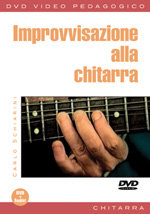
IMPROVVISAZIONE ALLA CHITARRA, Daniel "Pox" Pochon. In italiano. TABLATURE DVD

IMPROVVISAZIONE ALLA CHITARRA. In italiano. TABLATURE DVD

TRADUZIONE: Carlo Schiarini


Questo DVD mira a mettervi sulla via dell’improvvisazione in modo progressivo. Studierete quindi le nozioni essenziali seguendo il vostro ritmo in modo da assimilare progressivamente tutto quello di cui avete bisogno per improvvisare. La prima tappa consiste nel conoscere e capire i supporti melodici (scale, arpeggi, ecc.) che sono alla base dell’improvvisazione. Come suonarli, cantarli, ma anche come trasporli per poter improvvisare in tutte le tonalità. Ci interesseremo poi dell’armonia, del modo di metterla in risalto, specialmente attraverso l’analisi dei gradi. Verranno poi aggiunti i problemi di modulazione, i diversi contesti musicali, i modi Ogni argomento trattato è ovviamente illustrato con esempi d’improvvisazione. DVD + Booklet

SOTTOTITOLI IN ITALIANO


DIMOSTRAZIONE

PRESENTAZIONE & ACCORDATURA

INTEGRAZIONE DI UN SUPPORTO

SUPPORTI BASILARI

METTERE IN RISALTO L'ARMONIA

LA MODULAZIONE

IL CONTESTO BLUES

IL CONTESTO MINORE

RIASSUNTO

CONCLUSIONE & DIMOSTRAZIONE


Prezzo: €34,00
€34,00

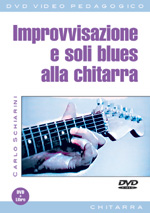
IMPROVVISAZIONE E SOLI BLUES ALLA CHITARRA, C. Schiarini. In italiano. TABLATURE DVD

IMPROVVISAZIONE E SOLI BLUES ALLA CHITARRA, C. Schiarini. In italiano. TAB. DVD

Respirazione, timing, punti di tensione e di stasi, canto, domanda/risposta ed effetto a sorpresa sono gli ingredienti indispensabili di un buon solo blues alla chitarra. Attraverso un’analisi completa e lo studio di numerosi soli, questo DVD vi aiuterà ad avere una perfetta padronanza di tutti questi elementi, ad utilizzare i supporti melodici secondo i movimenti armonici, ad inserire le note che occorrono al momento opportuno, ed anche le frasi sui diversi accordi del blues, i "turnaround" Come bonus, scoprirete numerose frasi complementarie, suscettibili di arricchire il vostro "vocabolario" blues, e quindi anche di facilitare le vostre improvvisazioni nello stile! DVD + Booklet

Prezzo: €36,99
€36,99

BOTTLENECK BLUES AND BEYOND 2 Mike Dowling GUITAR TABLATURE DVD booklet CHITARRA SLIDE

BOTTLENECK BLUES AND BEYOND 2. Mike Dowling. SHEET MUSIC BOOKLET WITH GUITAR TABLATURE DVD

DVD DIDATTICO DI MUSICA BLUES .

SUONARE LA CHITARRA con il BOTTLENECK . 

DVD E LIBRETTO CON TABLATURE .


Bottleneck Blues and Beyond
DVD 2
Series: Instructional/Guitar/DVD
Publisher: Homespun
Format: DVD - TAB
Author: Mike Dowling

This follow-up lesson to Mike Dowling's popular DVD brings a number of new slide techniques, musical ideas and great songs to bottleneck blues enthusiasts. Mike calls it a “grab bag toolbox of open tuning tricks and licks.” Songs include: Make Me a Pallet on Your Floor • Drop Down Mama • The Cuckoo • Railroad Bill • and Street Corner Rag. 100 MIN. • INCLUDES TAB • LEVEL 3


Nothing creates a sound quite like a bottleneck slide, which is why it is used in everything from Delta blues to finger style folk tunes and even ragtime. All well-rounded guitarists need to know this style, and Mike Dowling’s "Bottleneck - Blues And Beyond" is the best way we know to catch the spirit.
 
On his accessible, easy-to-comprehend follow-up lesson, Mike Dowling teaches precision bottleneck techniques designed to broaden your repertoire, textures and rhythms. Mike starts by teaching his unique version of Make Me A Pallet On Your Floor which uses a rumba beat in Open G tuning. His funky, irrepressible Drop Down Mama is an absolute classic, a fantastic lesson in syncopation and groove. From there, try D minor tuning for a haunting vocal and guitar version of The Cuckoo. After some tips on Open D tuning, Dowling launches into a study of his own tune Street Corner Rag. This fantastic piece includes finger picking, syncopation and slide enhancements for a true tour-de-force of bottleneck guitar work.
 
Along the way, Mike tosses in many tips on how to use the slide, as well as his alternating thumb, for maximum effect. His "toolbox tips" on turnarounds, strumming, arranging a tune like "Railroad Bill" and what Mike calls "ornamentation" rounds out this powerful lesson.
 
Chapters
Intro
Bottleneck Basics
Open G Tuning
“Make Me a Pallet On the Floor” / Rhythm and Chords
“Make Me a Pallet...” Demonstrated
“Make Me a Pallet...” Broken Down
“Make Me a Pallet...” Turnaround
“Make Me a Pallet...” Variations
“Make Me a Pallet...” More Rhythm Patterns and Tonal Techniques
“Drop Down Mama” Demonstrated
“Drop Down Mama” Broken Down
“Drop Down Mama” More Analysis
“Drop Down Mama” Performance
D Minor Tuning
“The Cuckoo”
“The Cuckoo” Demonstrated
“The Cuckoo” Broken Down
“The Street Corner Rag” Open D Tuning
“The Street Corner Rag” Demonstrated
“The Street Corner Rag” Broken Down
“The Street Corner Rag” From the “D” Section
“The Street Corner Rag” More Technique
Summary
Turnarounds
Rhythm Grooves
“Railroad Bill” Creating an Arrangement
“Railroad Bill” Demonstrated


Inventory #HL 00642075
ISBN: 9781597732475
UPC: 884088253561
Publisher Code: DVDDOWGT22
Width: 5.25"
Length: 7.5"
Run Time: 1:40:00
 

Prezzo: €39,99
€39,99

THE ART OF WALKING BASS A Method Acoustic Electric Bass Musicians Institute Magnusson CD TABLATURE

THE ART OF WALKING BASS, A Method for Acoustic or Electric Bass. Musicians Institute. B. Magnusson. CD TABLATURE

LIBRO METODO DI MUSICA PER TUTTI GLI STILI, CON CD. 

SPARTITI PER BASSO CON: ACCORDI, PENTAGRAMMA, TABLATURE. 

MANUALE, STUDIO, TEORIA, 

IN ITALIANO


Publisher: Musicians Institute Press
Softcover with CD - TAB
Composer: Bob Magnusson

This comprehensive source for learning to build melodic walking bass lines in all styles pulls together lessons from MI elective courses. The CD includes 31 full-band tracks and demonstrates the exercises in the book. Topics covered include: intervals, chord symbols, and key centers; passing tones, chromatic tones, surround tones, sequences, and bypassing changes; blues, rhythm changes, II-V-I progressions, and other common progressions. In standard notation and TABLATURE.
64 pages.

Magnusson Bob, L' ARTE DEL WALKING BASS.

Una fonte completa per imparare a costruire linee melodiche di walking bass in tutti gli stili. Comprendere gli intervalli, i simboli degli accordi e i centri tonali. Note di passaggio, note cromatiche, note di contorno, sequenze, cambi. Blues, variazioni ritmiche, progressioni II-V-I, e altre progressioni comunemente usate. Notazione standard e Tablatura. Il CD allegato include 31 tracce suonate dal vivo. IN ITALIANO


Una Fonte Completa per Imparare aCostruire Linee Melodiche di Walking Bass in Tutti gli Stili.

- Il CD allegato include 31 tracce suonate dal vivo
- Comprendere gli intervalli, i simboli degli accordi e i centri tonaIi
- Note di passaggio, note cromatiche, contorni cromatici, sequenze, cambi
- Blues, variazioni ritmiche, progressioni II-V-I, e altre progressioni comunemente usate
- Notazione standard e Tablatura

MUSICIANS INSTITUTE PRESS
È la serie ufficiale della rinomata scuola di
musica californiana. Gli insegnanti, alcuni
dei migliori al mondo, condividono la loro
conoscenza ed esperienza con voi, non
importa quale sia il vostro livello attuale.
Qualsiasi strumento voi suoniate (chitarra,
basso, batteria, tastiere o voce), MI PRESS
offre il miglior curriculum musicale per una
conoscenza avanzata attraverso una varietà
di serie:

Concetti Essenziali – studiato per i programmi di base MI

Master Class - studiato per i corsi superiori MI

Lezioni Private – comprendono una varietà di argomentazioni con gli insegnanti MI

Guida Tascabile - un riferimento portata di mano per i concetti base

Video - lezioni approfondite con alcuni degli insegnanti MI più conosciuti

Workshops - trascrizioni delle più belle canzoni, concepite per le classi MI nelle lezioni di
performance.


INTRODUZIONE
Le linee di "walking bass" sono i blocchi di costruzione o le fondamenta sulle quali si crea una
canzone. Il termine descrive la sensazione o il movimento della linea di basso. Molto simile alla
camminata fisica (cioè un passo dopo l'altro), il flusso continuo di semiminime crea una
sensazione di movimento in avanti:
Cma7 F7 Emi7 A7 Dmi7 G7 etc.
Le linee di walking bass sono legate all'esecuzione del jazz tradizionale, ma vengono anche
utilizzate in molte altre forme di musica, come il blues, il rock, l'R&B, il gospel, il country, la
classica, eccetera. Sviluppare l'abilità di costruire una buona linea di walking bass può perciò
migliorare la scelta di note per creare qualsiasi tipo di linee di basso. In tutti gli stili musicali,
la procedura usata per costruire queste linee di basso è essenzialmente la stessa: stabilita
un'armonia o una progressione di accordi, il bassista deve scegliere quali note suonare e in quale
ordine. L'obbiettivo specifico di questo libro è di aiutarvi a capire le varie tecniche usate per
costruire una buona linea di walking bassi con queste tecniche sarete quindi in grado di costruire
delle ottime linee di basso da soli, ed anche analizzarle e determinare cosa le rende forti o deboli.
Ed ecco come funziona il libro ...

La Forma
Durante i miei anni di insegnamento, ho notato che la forma di una canzone è spesso un'area
troppo trascurata dagli studenti; tuttavia è una parte essenziale in tutti gli stili di musica - così
come qualsiasi casa ha un disegno, qualsiasi canzone ha una forma. In questo libro impareremo
a suonare e scrivere delle linee di walking bass in contesti diversi, in forme di canzoni comunemente
usate. In maniera specifica, daremo un'occhiata a ciascuna delle seguenti forme e progressioni,
cercando di analizzarle:
- blues in tonalità maggiori
- blues in tonalità minori
- progressioni II-V-I
- variazioni ritmiche
altre progressioni armoniche comunemente usate

I Tre Elementi Tonali
Mano a mano che si imparano queste forme e progressioni, esamineremo anche dal punto di
vista tecnico la costruzione di una linea di walking basso Vedremo che qualsiasi linea di basso
può essere spezzata in tre elementi musicali basilari:
- note dell'accordo (arpeggi)
- note diatoniche (note della scala)
- note cromatiche (semitoni)
Esamineremo ciascuno di questi elementi individualmente, isolando gli esercizi e gli esempi per
vedere come funzionano. Attraverso questo approccio, costruiremo gradualmente un vocabolario
musicale, assimilando ciascun elemento individuale prima di muoverci al successivo, e infine
combineremo tutti gli elementi e i loro diversi aspetti in un unico approccio per creare delle linee
melodiche di walking basso


Come Cominciare ad Esercitarsi
Il nucleo di questo libro sono gli esercizi di linee di walking bass, ciascuna delle quali ha la
propria traccia audio sul cd allegato. Per ciascun esercizio dovreste analizzare dapprima la linea
di basso, comprendere come funziona, esercitarvi da soli, e infine suonare insieme al cd; in
q uesto modo fam iIiarizzerete megl io con gl i esercizi.
Vi chiederò poi di scrivere le vostre linee di basso per la stessa progressione. All'inizio, quando vi
esercitate per scrivere le linee di basso, raccomando vivamente che vi sediate con il basso e con
dei fogli di carta pentagrammata. Poi, usando il vostro orecchio, cercherete di costruire una, due,
tre o quattro misure sul basso usando il metodo di "prova ed errore". Quando avrete ottenuto un
segmento che vi piace, scrivetelo. Poi suonate la parte che avete scritto e continuate in questo
modo fino a quando le linee di walking bass saranno completate. In questo modo l'orecchio
diventa una parte attiva del processo, elemento cruciale per eseguire musica improvvisata.
Quando avrete completato la linea di basso, analizzate armonicamente le cose che avete suonato.
Con questo metodo, sarete in grado di stabilire un vocabolario nel linguaggio del walking basso
Costruirete gradualmente un gruppo di frasi, di licks o idee che suonano bene in diverse
situazioni armoniche ricorrenti. Mentre il vocabolario musicale cresce, il vostro orecchio allenato
prenderà il sopravvento e vi guiderà attraverso sorprendenti e divertenti escursioni.
Ogni improvvisatore ha del materiale tematico o dei licks per creare un assolo. Allo stesso modo,
potete sviluppare delle frasi o idee per le linee di basso che si adattano a diverse situazioni
armoniche. Con l'aiuto delle tracce registrate sul cd allegato, avrete l'opportunità di applicare
quest'idea ad una situazione musicale. Sarete inoltre in grado di sentire e percepire come
funziona la vostra linea personale di walking basso
Per ciascuna traccia audio sul cd, il basso si trova sul canale sinistro e la sezione ritmica sulla
destra; per improvvisare la vostra parte di basso, semplicemente ruotate il balance a destra e
suonate insieme alla sezione ritmica.
Buona fortuna e buon divertimento!
Bob Magnusson

A Proposito del CD
Quando ho registrato il cd per questo libro, il mio obbiettivo è stato quello di creare un ambiente
il più vicino possibile ad una situazione dal vivo. I tempi sono stati eseguiti a velocità medio-lenta
per dare allo studente il tempo sufficiente per sentire ed eseguire le linee scritte. Ad eccezione
degli esempi le 2, tutti gli altri sono ripetuti. L'esempio 23 ha una versione lenta e una media,
mentre la Sezione 6 include tempi medi per coincidere con il progresso dello studente nel
costruire le linee di basso.
Ciascun esempio è scritto semplicemente in semiminime per focalizzarsi direttamente sulla
tecnica necessaria alla costruzione delle linee di walking basso Sebbene sulla registrazione io legga
gli esempi scritti, l'ascoltatore attento noterà come utilizzo l'anticipazione ritmica ed altri trucchi
per aggiungere vitalità alla musica e facilitare l'interazione con la sezione ritmica.
Ciascuna traccia inizia con Peter Erskine che conta il tempo. Mike Wofford in genere compare
in modo sparso nel primo chorus e negli assoli sul secondo. Sarà divertente suonare con questi
due grandi musicisti di fama mondiale.
Per coloro i quali hanno poca o nessuna esperienza in teoria musicale, la seguente
sezione introduttiva intitolata "le fondamenta", fornisce un corso accelerato sugli
intervalli, le scale, gli accordi ed anche una discussione sulla linea di basso e
connessione degli accordi. Qualsiasi sia il vostro livello, principiante o professionista,
consiglio comunque di dare un'occhiata a questa sezione prima di cominciare...


L'Autore
Nato a New York il 24 febbraio 1947, Bob Magnusson è cresciuto in una famiglia di musicisti. Ha
iniziato a studiare il corno francese all'età di sei anni, e ha continuato per 12 anni fino a quando
ha scoperto la chitarra e il basso elettrico, suonando in gruppi rock. Nel 1965 ha fatto parte di una
band R&B di San Diego, dove è stato contaminato dal jazz di Miles Davis. Poco dopo ha comprato
un basso acustico ed ha iniziato ad imparare a suonarlo.
Nel 1968 ha fatto parte del gruppo di Buddy Rich per un anno, poi ha lavorato con il Sarah
Vaughan Trio nel 1971-72 e 1975-76, suonando con il famosissimo batterista Jimmy Cobb.
Trasferitosi a Los Angeles nel '75, ha suonato attivamente registrando anche per i seguenti gruppi:
Art Pepper Quartet, Benny Golson Quartet, e Joe Farrell Quartet.
Dopo una vasta carriera con diversi gruppi, in jazz clubs, e suonando in tutta America e all'estero,
è diventato famoso come insegnante e come seminarista (è stato membro del famosissimo Musician
Institute di Hollywood dal 1977-1996). È tornato a San Diego nell'83, dove attualmente risiede
con la moglie e la famiglia. Da quel momento ha registrato due dozzine di colonne sonore per
documentari jazz alla televisione, inoltre si tiene occupato suonando e registrando.
La sua discografia personale consiste di oltre 100 album al suo attivo, includendo registrazioni
di famosissimi artisti pop come Linda Ronstadt, Neil Diamond, Bonnie Raitt, 10,000 Maniacs,
e Madonna. Ha anche suonato con grandi del jazz come Hank Jones, Cedar Walton, Jimmy Heath,
Art Farmer, Kenny Barron, Freddie Hubbard, Slide Hampton, Billy Higgins, Cari Fontana, Tommy
Flanagan, Kenny Burrell, Roger Kellaway, Ernie Watts, Eddie "Cleanhead" Vinson, Lou Donaldson,
Joe Henderson, Clifford Jordan, Gorge Cables, Victor Lewis, Bud Shank, e moltissimi altri.
Nel 1983, Bob è stato insignito dalla San Diego Hall of Fame come "Musicista jazz dell'anno".

I Musicisti
Mike Wofford è entrato nella scena musicale di Los Angeles alla fine degli anni '50 e nei primi '60
con i leggendari Lighthouse AII-Stars e i gruppi di Shelly Manne, Teddy Edwards, Chet Baker, Zoot
Sims, Bud Shank, Sonny Criss e Shorty Rogers, per citarne alcuni. In tutti questi anni è apparso ed
ha registrato con artisti del calibro di Kenny Burrell, Stan Getz, Lee Konitz, Joe Henderson, Harry
"Sweet" Edison, Slide Hampton, Benny Golson, Art Farmer, Charlie Haden e Joe Passo È stato poi
pianista e direttore artistico del Sarah Vaughan trio nel 1979 e nel 1983. È stato anche il direttore
musicale e pianista di Ella Fitzgerald. Inoltre, ha registrato lO album solisti. La rivista musicale
"Downbeat" l'ha definito "uno dei più grandi pianisti del nostro tempo", e il famoso critico musicale
Leonard Feather ha scritto "Wofford occupa un posto di riguardo prezioso insieme a pochi altri".

Peter Erskine è stato per oltre 26 anni uno dei più grandi musicisti a livello mondiale con diversi
gruppi. Dal 1972 al 1975 ha suonato con la Stan Kenton Orchestra, nel 1976 e 1977 è stato
batterista della Maynard Ferguson Big Band; nel 1978 ha fatto parte dei Weather Report. L'eccellenza
della sua collaborazione con il grandissimo Jaco Pastorius è stata parte integrante del successo di quel gruppo. Dopo quattro anni con i Weather Report, Peter ha suonato con Michael Brecker nel gruppo Steps Ahead. Egli è stato in tour e ha registrato più di 300 album con artisti diversi, quali ad esempio Steely Dan, Chick Corea, Joe Henderson, Freddie Hubbard, Gary Burton, Pat Metheny, e Joni Mitchell.
Peter ha registrato 12 album come solista. Nel 1999 è entrato a far parte del gruppo Yellowjackets.
Egli ha inoltre realizzato tre video didattici, un video di performance intitolato "Peter Erskine Trio/Live at Jazz Baltica" (Hai Leonard Corporation), e anche due libri di metodo di batteria, il più recente dei quali intitolato "The Drum Perspective", anch'esso pubblicato dalla Hai Leonard Corporation.
Ho avuto il grande onore di suonare con questi due grandi e meravigliosi musicisti in varie situazioni in tutti questi anni, ed essi non smettono mai di stupirmi con la loro capacità musicale e col loro calore di esseri umani. Li ringrazio entrambi per il loro contributo a questo progetto.

MUSICIANS INSTITUTE

L'Arte del WALKING BASSO
di Bob Magnusson
Traduzione italiana di FrancescaVisentin e Marco Pontiroli

Indice
Introduzione
Le basi
1: Il blues - triadi
2: Il blues - note diatoniche di passaggio
3: Il blues - note cromatiche
4: Scale minori e blues minori
5: L'" Anatole"
6: Altre progressioni armoniche comuni
Glossario
L'autore.

Tutti gli esempi in questo libro sono da eseguire con accordatura standard, E-A-D-G,
dalla nota più grave alla più acuta. L'ultima traccia (32) fornisce le note per accordarvi. 

Prezzo: €22,99
€22,99

CHICAGO BLUES-Guitar Play-Along VOLUME 4-DVD TABLATURE CHITARRA BASI-Mary Had a Little Lamb

CHICAGO BLUES, Guitar Play-Along VOLUME 4. All Your Love (I Miss Loving) (Otis Rush) -Easy Baby (Magic Sam) -I Ain't Got You (Jimmy Reed) -I'm Your Hoochie Coochie Man (Muddy Waters) -Killing Floor (Howlin' Wolf) -Mary Had a Little Lamb (Buddy Guy) -Messin' with the Kid (Junior Wells) -Sweet Home Chicago (various artists). 81 minutes. GUITAR TABLATURE DVD

VIDEO DVD DIDATTICO DI MUSICA BLUES.

BASI PER CHITARRA.

SPARTITI PER CHITARRA CON TABLATURE 


Guitar Play-Along DVD
Publisher: Hal Leonard
Medium: DVD
Artist: Various Artists

The Guitar Play-Along DVD series lets you hear and see how to play songs like never before. Just watch, listen and learn! Each song starts with a lesson from a professional guitar teacher. Then, the teacher performs the complete song along with professionally recorded backing tracks. You can choose to turn the guitar off if you want to play along, or leave the guitar in the mix to hear how it should sound. You can also choose from three viewing options: fret hand with tab, wide view with tablature, pick & fret hands close-up. Each DVD includes great songs that all guitarists will want to know!

Volume 4 includes: All Your Love (I Miss Loving) (Otis Rush) - Easy Baby (Magic Sam) -I Ain't Got You (Jimmy Reed) -I'm Your Hoochie Coochie Man (Muddy Waters) -Killing Floor (Howlin' Wolf) -Mary Had a Little Lamb (Buddy Guy) -Messin' with the Kid (Junior Wells) -Sweet Home Chicago (various artists). 81 minutes.

Prezzo: €21,99
€21,99

CREEDENCE CLEARWATER REVIVAL-Guitar Play-Along Volume 63-CD TABLATURE LIBRO SPARTITI

CREEDENCE CLEARWATER REVIVAL, Guitar Play-Along Volume 63. Bad Moon Rising -Born On The Bayou -Down On The Corner -Fortunate Son -Green River -Lodi -Proud Mary -Up Around The Bend. CD TABLATURE

LIBRO DI MUSICA ROCK, CON CD DI BASI PER VOCE E VOCE E CHITARRA..

SPARTITI PER VOCE E CHITARRA:

ACCORDI, PENTAGRAMMA E TABLATURE. 

Series: Guitar Play-Along
Softcover with CD - TAB
Artist: Creedence Clearwater Revival

The Guitar Play-Along Series will help you play your favorite songs quickly and easily! Just follow the tab, listen to the CD to hear how the guitar should sound, and then play along using the separate backing tracks. The melody and lyrics are also included in the book in case you want to sing, or to simply help you follow along. The audio CD is playable on any CD player. For PC and Mac computer users, the CD is enhanced so you can adjust the recording to any tempo without changing pitch!

Bad Moon Rising
Born On The Bayou
Down On The Corner
Fortunate Son
Green River
Lodi
Proud Mary
Up Around The Bend

48 pages

Prezzo: €23,99
€23,99

MASON BRENT NASHVILLE CHOPS & WESTERN SWING GUITAR TABLATURE DVD chicken pickin double-stops

MASON BRENT, NASHVILLE CHOPS & WESTERN SWING GUITAR. TABLATURE DVD

SOTTOTITOLI IN ITALIANO

VIDEO DIDATTICO DI MUSICA COUNTRY, WESTERN, SWING . 

LIBRETTO CON TABLATURE . 

VIDEO DVD METODO, TECNICA ,


A classic Hot Licks title available once again! One of Nashville's leading session guitarists takes you through a dazzling array of techniques and styles: chicken pickin' rhythm & leads, Jerry Reed style, unique bends, double-stops, banjo-style licks, claw style, drop D licks, using the B string bender, and dozens more! DVD extras include: a new intro by Jeff Golub, on screen note/tab, slow motion segments in standard pitch, biography, discography, more. Includes note/tab booklet. 76 min.

SOTTOTITOLI IN ITALIANO

For the first time the legendary HOT LICKS classic video titles are available on DVD, making it even easier to learn with top players ... right in your own home!

These brilliant new DVD transfers make them look better than ever, giving you improved navigation, many extra features and some newly recorded introductions.

BRENT MASON
One of Nashville's leading session guitarists takes you through a dazzling array of the techniques and styles: chicken pickin' rhythm & lead, Jerry Reed style, unique bends, double stops, banjo-style licks, claw style, drop D licks and dozens more are all demonstrated and clearly explained by Brent.
A feature-packed master class for any fan of country guitar !

RUNNING TIME : 154 minutes 

Prezzo: €39,99
€39,99

JOHNSON JACK AND FRIENDS-SING-A-LONGS AND LULLABIES FOR THE FILM CURIOUS GEORGE-TABLATURE

JOHNSON JACK AND FRIENDS, SING-A-LONGS AND LULLABIES FOR THE FILM CURIOUS GEORGE. GUITAR TABLATURE

LIBRO DI MUSICA POP ROCK.

SPARTITI PER VOCE E CHITARRA CON:

ACCORDI, PENTAGRAMMA, NOTE, TABLATURE.


Guitar Recorded Versions
Series: Guitar Recorded Version
Publisher: Hal Leonard TAB.
Artist: Jack Johnson

This matching folio to the popular monkey movie soundtrack includes all 13 songs from the soundtrack by Jack Johnson, Includes all uke parts from the original recording and B&W art from the film. 96 pages.

Broken
Jungle Gym
Lullaby
People Watching
Questions
Sharing Song
Supposed To Be
Talk Of The Town
The 3 R's
Upside Down
We're Going To Be Friends
With My Own Two Hands
Wrong Turn

Prezzo: €27,99
€27,99

PLAYING THE CHANGES GUITAR Improvising Mitch Seidman-Paul Del Nero CD BERKLEE PRESS-IMPROVISATION

PLAYING THE CHANGES: GUITAR. A Linear Approach to Improvising. Mitch Seidman, Paul Del Nero. SHEET MUSIC BOOK WITH CD & GUITAR TABLATURE.


LIBRO METODO DI MUSICA JAZZ CON CD.

SPARTITI PER CHITARRA CON: 

ACCORDI, PENTAGRAMMA, TABLATURE. 

Series: Berklee Labs
Publisher: Berklee Press
Medium: Softcover with CD
Author: Mitch Seidman
Author: Paul Del Nero

GUITAR: IMPROVISATION

Effective improvisation can add fun and individuality to guitar performances. This book presents a unique improvisation strategy based on ear training and a linear interpretation of note/chord relationships. You'll learn how to: develop an expectation of sound - master the relationships between notes, modes and harmonies - improvise over jazz standards - identify pitch tendencies within chord progressions, and more. 128 pages.


Create more expressive solos

Effective improvisation can add fun and individuality to guitar solos. In Playing the Changes—Guitar, Mitch Seidman and Paul Del Nero present a unique improvisation strategy based on ear training and a linear interpretation of note relationships.

In this technique, improvised lines are derived from the harmonic construction of chord progressions. Learn how to choose appropriate notes by listening for the tendencies of pitches within modes and tetrachords—groupings of four notes in a scale. InPlaying the Changes—Guitar, you'll explore the possibilities of focused and linear improvisation, and develop your ability to create musically effective melodies with greater freedom and depth of expression.

Comprehensive, step-by-step instruction will guide you as you:

  • Develop an expectation of sound—an intuitive sense for which notes to choose and where your chosen notes will lead the melody.
  • Master the movement of notes over modes and harmonies.
  • Use and learn from the examples on the included CD.
  • Become comfortable improvising over jazz standards such as "Blue Bossa," "Tune Up," and "Long Ago and Far Away."
  • Create your own chord pads to use as you practice recognizing the tendencies of pitches within chord progressions.
  • Tablature included.

If you can read traditional notation and chord symbols, have a basic understanding of functional harmony and have a basic technical capability, you can use this book to learn how to improvise and become more expressive and creative in your music making.

BUZZ

"Very thoughtful and insightful book by Mitch Seidman and Paul Del Nero. This is geared to an intermediate to advanced level of student, but a beginner can certainly find good practice material. The tetrachord ideas are a unique way of addressing the problems of improvisation. If students apply themselves to the exercises, much progress can be made. Highly recommended!"

—Jack Wilkins, Guitarist and Educator

"Mitch Seidman and Paul Del Nero have assembled an impressive and comprehensive book of patterns, exercises, and etudes that really get inside the secrets to jazz improvisation and open up new possibilities to the guitarist at any level of their development. Complemented with a great sounding CD of many different examples, I know I. myself', will find it helpful for a long time to come. Great job, Mitch and Paul!"

—Duke Robillard, Award-Winning Blues Guitarist

"Playing the Changes is a nuts-and-bolts, hands-on method for soloing. Real concepts that will yield real results. A great piece of work!"

—Joe Beck, Jazz Guitarist

"Playing the Changes—Guitar: A Linear Approach to Improvising presents a great way to develop ear training, melodic and harmonic awareness, and the corresponding technique on the guitar. The clearly laid out and demystified program builds a sensitivity and understanding that will enrich any player's improvisational skills, transcending stylistic boundaries. A great contribution to a complete musician's education!"

—Howard Alden, Jazz Guitarist, Concord Recording Artist


Playing the Changes-Guitar

This book began as a series of core courses at Berklee College of Music, developed by
members of the Ear Training Department. In these classes, jazz improvisation students
learn to develop an intuitive, linear sense of improvisation. Some of these techniques have
evolved over centuries, and others have been developed fairly recently. As a method for
training musicians how to improvise, we have found this approach to be uniquely effective.
This book is intended for musicians who can read traditional notation and chord symbols,
have a basic understanding of functional harmony, and have a basic technical capability
on their instrument.
The essential idea is that using just a few notes effectively, in an improvisation, leads to
great musical freedom and depth of expression. By using a few carefully selected notes,
and by listening for where these notes naturally lead, your resulting improvised lines will
become more focused and linear, with natural-sounding resolutions.
In our method, note choices are based on modes and tetrachords (four-note groups,
discussed in lesson 2) that are derived from the chord progression's harmony. Our method
for using them will help you to find notes that will be musically effective, easy to
remember, and appropriate for your instrument, and it will lead you to many new ideas.
After introducing a few technical concepts in part I, the "Progressions" lessons of part II
are each based on a progression from the "jazz standards" repertoire. These patterns of
chords are at the heart of many tunes, and there are infinite ways in which they can be
varied. Individual chords can have variations, melodies can include notes that go beyond
the chords, and distinctive elements in the underlying groove can all lead to countless
possibilities. In addition, these progressions can be transposed to any key and played at
various tempos. Tunes can be created by combining several of these progressions, in
various formal structures. Mastering the ways that notes move over these progressions will
therefore help you as you learn new music.
Berklee has used this approach to train thousands of students to develop their musical
intuition. It has been refined over many years, and we have found it to be uniquely
effective and helpful.
We hope that it helps you to become more expressive and creative in your music making.
Notes about Chord Symbols
Chord symbols don't necessarily include tensions. Tensions may be included in the
notated and comping parts and solos.

About the Authors
The concepts in this book come from the curriculum developed by the creators of Berklee's Performance Ear Training courses. These concepts have been used to train thousands of musicians in improvisation.

Mitch Seidman
Guitarist Mitch Seidman is a Professor of Ear Training at Berklee College of Music. He has thirty
years of experience as a professional guitarist and music educator, and has performed throughout
New England, as well as in ew York, Los Angeles, and Washington, D.C. He has appeared
overseas at jazz festivals in France and Germany, and was an artist-in-residence for the Centro
Cultural Norteamericano in Costa Rica. Mitch has recorded with Harold Vick, Harvie S (formerly Harvie Swartz), Ted Brown, Alan Dawson, and Joe Hunt, and has performed with John Pisano, Teddy Kotick, Joe Beck, George Garzone, Herb Pomeroy, Hal Crook, Holly Hofmann, Vera Auer, Michael Formanek, Tyrone Brown, Eddie Jones, and Freddie Moore, among numerous others. He has recordings on Jardis (Germany), Cadence, and Brownstone Records.
Mitch holds a bachelor of composition from Berklee College of Music and a master's in music education from Boston University. He is a contributing editor to 20th Century Guitar magazine.

Paul Del Nero
Bassist Paul Del Nero is Associate Professor of Ear Training at Berklee College of Music. Paul is an
active performer, recording artist, educator, and clinician. He has performed internationally on
acoustic and electric bass, with small groups and big bands, in festivals, clubs, and shows, and on
radio and television. Artists he has performed with include Hal Crook, Charlie Rouse, James Williams, Hal Galper, Donald Byrd, Junior Mance, Mose Allison, Jimmy Guiffre, Butty Tate, Benny Golson, and Bob Moses. He has recorded with record labels including Concord, Candid, and GM. He has appeared at various jazz festivals, including Vienne, Toulon, Berlin, Los Angeles, and ew York, and was Artist in Residence at The Banff Centre. Paul is a recipient of the USIA Grant under the American Cultural Specialist Program. He holds a bachelor of music from Berklee and a master's from New England Conservatory of Music.


Playing the Changes-Guitar
CD Tracks
Mitch Seidman:
Paul Del Nero:
Tony Germain:
Bob Tamagni:
Guitars
Bass
Piano
Drums
Recorded at PBS Recording in Westwood, MA by Peter Kontrimas.
CMaj7 to C-7 .
CMaj7 to F-7 .
Tetrachord Demonstration .
CMaj7 Chord Pad .
CMaj7 Pad with Improvisation: C Major Tetrachord .
Practice Vamp 1: Play Along .
Practice Vamp 1: Lower Tetrachord .
Practice Vamp 1: Upper Tett'achord .
Practice Vamp 1: Modal Exercise .
Practice Vamp 1: Mixed-Rhythm Modal Exercise
Practice Vamp 2: Play Along .
Practice Vamp 2: Modal Exercise .
Practice Vamp 2: Mixed-Rhythm Modal Exercise .
Blue Bossa: Etude .
Blue Bossa: Play Along .
Blue Bossa: Mode Practice .
Blue Bossa: Mixed-Rhythm Modal Exercise .
Blue Bossa: Improvisation .
Tune Up: Etude .
Tune Up: Play Along " .
Tune Up: Mode Practice .
Tune Up: Mixed-Rhythm Modal Exercise .
Tune Up: Improvisation .
Valse Hot: Etude .
Valse Hot: Play Along .
Valse Hot: Mode Practice .
Valse Hot: Mixed-Rhythm Modal Exercise .
Valse Hot: Improvisation .
Blues: Etude
Blues: Play Along
Blues: Mode Practice
Blues: Mixed-Rhythm Modal Exercise
Blues: Improvisation
Long Ago and Far Away: Etude
Long Ago and Far Away: Play Along
Long Ago and Far Away: Mode Practice
Long Ago and Far Away: Mixed-Rhythm Modal Exercise
Long Ago and Far Away: Improvisation
Lady Bird: Etude
Lady Bird: Play Along .
Lady Bird: Mode Practice
Lady Bird: Mixed-Rhythm Modal Exercise
Lady Bird: Improvisation
Just Friends: Etude
Just Friends: Play Along .
Just Friends: Mode Practice
Just Friends: Mixed-Rhythm Modal Exercise .
Just Friends: Improvisation

Additional recordings for this book are available on its associated Website


Contents
CD Tracks
Introduction .
PART I. Getting Oriented
Lesson 1. Pitch Axis .
Lesson 2. Tetrachords
Lesson 3. Modes .
Lesson 4. Practice Vamp 1: One Mode .
Lesson 5. Practice Vamp 2: Two Modes
PART II. Progressions .
Lesson 6. Two Modes .
Lesson 7. Three Modes .
Lesson 8. Three Modes .
Lesson 9. Three Modes .
Lesson 10. Four Modes
Lesson 11. Four Modes
Lesson 12. Five Modes
What's Next? .
About the Authors .
 

Prezzo: €27,99
€27,99
Condividi contenuti