Italiano
 English
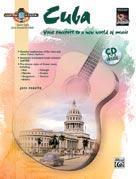
CUBA GUITAR ATLAS Jeff Peretz CD TABLATURE SPARTITI LIBRO CHITARRA BOLERO MAMBO RITMI

CUBA, GUITAR ATLAS. SHEET MUSIC BOOK WITH CD & TABLATURE
LIBRO METODO DI MUSICA CUBANA, CON CD.
SPARTITI PER CHITARRA CON: ACCORDI, PENTAGRAMMA, TABLATURE.
Guitar Atlas: Cuba offers an in-depth look at the signature sound of Cuban music. At the heart of Cuban music lies the clave, the very definition of Cuban groove. Often mystifying to learn, Jeff Peretz breaks down the fundamental rhythm of the clave in Guitar Atlas: Cuba. Now any guitarist, even those who don’t play Cuban music, can learn the clave and improve their sense of rhythm and syncopation. The book also explores the African and European cultural influences that shaped modern Cuban music, as well as the political events of the 20th century. Learn about the different styles of music from all over the island, the musicians who popularized them, and many unique Cuban instruments including the tres, botija, marimbula, and other percussion instruments. Plus, the included CD demonstrates all the examples and compositions featured in the book.
In 1940, after overthrowing the progressive government of Ramon Grau San Martin, Colonel Fulgencio Batista was elected to a four-year term as President of Cuba. In 1952, he overthrew the democratic government of Carlos Prio Socarras to once again assume leadership. During his time in power, Batista courted investors and tourists from the United States. While this led to many mafia acquisitions of hotels, casinos, and mansions in and around Havana, it also led to an era of nightlife unlike any before. Despite the growing corruption of the Batista regime, music, dancing, and singing flourished in Havana in the 1950s. It was during this time that the music of Cuba became a major artistic force and established itself as a source of pride and identity for this island in the Caribbean. The 1950s are considered to be the golden era of Cuban music and nightlife. The instability of the government didn't end with Batista. On December 31, 1958, Batista was ousted by Fidel Castro and his barbudos (bearded guerillas), including the revolutionary legend Ernesto "Che" Guevara. Despite the violence and fear that gripped the nation during these transitional times, the music and nightlife continued to attract people from all over the world. Legendary night spots like the Casino de la Playa and the Tropicana offered musical revues starring such celebrated performers as Celia Cruz (the "Godmother of Salsa"), Arsenio Rodriguez, Xiomara Alfaro, and the Valdes Brothers. The excitement of the scene was not limited to the big night clubs and casinos. Small cafes such as El Paris and La Bombilla hosted local jam sessions known as descargas (which literally means "discharges"). These impromptu sessions attracted record companies from all over the world and are considered by many to be the precursor to the style of music that would later be known as salsa in New York. Some of these sessions were immortalized on classic recordings led by Israel "Cachao" Lopez. Aside from the night clubs, casinos, and cafe jams, radio was an important factor in the rise of Cuban music. It helped launch and sustain the careers of many titanic figures such as Arsenio Rodriguez, Isolina Carrillo, Orquesta Sensacion, and Compay Segundo, who would later gain international stardom as the face of the Buena Vista Social Club.
ABOUT THE AUTHOR
Author's Foreword
CHAPTER I-History of Cuban Music
The Golden Age
African Influence
European Influence
The Migration of Cuban Music
The Guitar and Tres in Cuban Music
Rhythm Instruments
Types of Cuban Groups
CHAPTER 2-Latin Rhythms
Clave
Cascara
Tum bao
CHAPTER 3-Guajeo/Montuno
Linking Guajeo with the Clave
Triad Studies
Agua con Gas
Rhythmic Breaks
CHAPTER 4-Styles .
Son .
Tu Tienes? .
Son Montuno/Guajira .
Hombre Calvo .
Changui .
Cheena Morena .
Bolero .
Las Guajiras del Invernadero .
Nueva Trova .
La Proxima .
Danzon .
Una Mas
Mambo
Blue Brito
Guaguanco
Arroz con Pollo
Final Word