LIBRO CON CD BACKING TRACKS

ADAMS BRYAN PLAY GUITAR WITH... THE EARLY YEARS CD TABLATURE SPARTITI ACCORDI BASI LIBRO

ADAMS BRYAN, PLAY WITH (THE EARLY YEARS). Basi per voce e per chitarra. CD TABLATURE


LIBRO DI MUSICA ROCK CON CD DI BASI PER VOCE E CHITARRA E VOCE.

SPARTITI PER CHITARRA E VOCE. TESTI, ACCORDI, PENTAGRAMMA E TABLATURE.

Can't stop this thing we started -kids wanna rock -(everything I do) I do it for you -run to you -somebody -summer of '69. 

Learn the guitar parts and play along with the backing tracks for six of Bryan Adams' most enduring classics, including (Everything I Do) I Do It For You and Summer Of '69. The CD includes two demo tracks for each song - one with a full band so you can hear how it should sound and sing along, one with the guitar part omitted for you to play along with.

Prezzo: €29,99
€29,99

ADAMS BRYAN PLAY GUITAR WITH CD BACKING TRACKS BOOK CHITARRA LIBRO SPARTITI BASI

ADAMS BRYAN, PLAY GUITAR WITH... . Basi per voce e per chitarra.

SHEET MUSIC BOOK WITH CD & GUITAR TABLATURE. 

LIBRO DI MUSICA ROCK CON CD. 

CD BACKING TRACKS,  BASI PER VOCE E, VOCE E CHITARRA. 

SPARTITI PER VOCE E CHITARRA CON : 

ACCORDI, PENTAGRAMMA, TABLATURE. 


SONGS TITLE : 

- Could number nine

-have you ever really loved a woman?

-18 til I die

-the only thing that looks good on me is you

-when you're gone

-(I wanna be) your underwaer.

LIBRO CON CD E GUITAR TABLATURE.

Prezzo: €29,99
€29,99

AC/DC JAM WITH TOTAL ACCURACY CD TABLATURE back in black-Hells bells-highway to hell-For those about to rock

AC/DC, JAM WITH. TOTAL ACCURACY. Basi per voce e per chitarra, con la Tablature delle 2 tremende colonne portanti dell'hard rock. SHEET MUSIC BOOK WITH CD BACK TRACK & GUITAR TABLATURE . 

LIBRO DI MUSICA HARD ROCK.
SPARTITI PER CHITARRA E VOCE .
ACCORDI, PENTAGRAMMA E TABLATURE. 
BASI CD JAM TRACK PER VOCE E, VOCE e CHITARRA . 


Australian uber-rockers AC/DC have written some of the most recognizable and universally appealing rock standards with uplifting ear-crunching guitars and distinct vocals! Lead guitarist Angus Young's frantic fast fret mastery is evident on most of their tracks and his style has been much imitated by players the world over. Jam with AC/DC gives you the opportunity to learn 8 of their fierce, growling songs note-for-note and then jam with a professional session band! Includes the hits: Back in Black · Highway to Hell · Let There Be Rock · For Those About to Rock · Whole Lotta Rosie · all with full lyrics and vocal lines.


Basi con preascolto:

-For those about to rock

-let there be rock

-highway to hell

-hell ain't a bad place to be 

-sin city

-whole lotta Rosie

-back in black

-Hells bells


ANGUS YOUNG OF AC/DC
If It Ain't Broke, Don't Fix It!
Interview by Nick Bowcott

LAST MONTH, ANGUS STRESSED THE IMPORTANCE
of being able to play rhythm well and discussed the various aspects of tone. This month, the tone talk continues.

ANGUS YOUNG: The heavier your string gauges are, the bigger your sound is gonna be. Not just on rhythm, but on solos as well. With thick strings you can really get a nice, round, bluesy lead sound happening without having to use any pedals to help fatten things up. Because I've got such small hands, though, .010 to .048 [high to low] is about the heaviest set I can deal with. Malc's a different story altogether, though his gauges just keep getting heavier and heavier. He really likes those big, thick, "tram track" things and he's actually at the point where they don't make those gauges anymore. I couldn't tell you his exact gauges, but if you find out what the heaviest set of strings available is right now then that's what he's probably using. [Our most recent report indicates that Malcolm is using a Gibson 900M set, which is .012 to .056 with a wound .025 G string-GW Ed.]
A lot of idiots think, "thick strings are just a macho statement or something," but they're not. When we were growing up we couldn't get those "slinky" strings. We learned how to play on heavy gauge strings, almost bass strings! [laughs] When they started selling those Iighter strings, Mal tried a set and said, "Fuck, these things wobble too much. I've got no tone on my guitar!"

GUITAR WORLD: Talking about gear, your rig is quite simple and direct. 
YOUNG: Yeah, I've always kept it fairly simple right from the get-go. I just plug my guitar straight into a stack or .four [laughs] and start banging away; That's all you need, y'know-have fingers, will play! I've always felt that if you're on stage playing rock and roll and you've got too many toys hooked up, there are just too many things that can go wrong. My SG and Marshall combination has always worked well for me, so I stick with it. As the old saying goes, "if it ain't broke, don't fix it!"

GW: I take it you're not a big fan of effects devices.
YOUNG: Nah, I'm my own effect! [laughs] To be honest, I've always looked at effects as being a bit like a video remote control you' re always trying to work out what the hell they are! I grew up at a time when effects gadgets were being used a lot and pretty much every guitar player had a pile of 'em in front of him. Every time you walked into a guitar shop you'd see all these people stepping on pedals and going "wah-wahwah." That got so common, it cured me pretty quick. My whole approach is to get the amp happening and then just plug in and play. Then, if I want to hear something different, I try and get it with my guitar. The trouble with these effects units is sometimes you can walk awayfrom your gear for a few minutes and people who don't know any better start plugging stuff in for you. I remember once we were playing the Donnington Festival in Britain and I went down the day before the show and they had this gadgetry up there-it looked like Space Station #9! Anyway, I think Van Halen were on the bill too and Eddie Van Halen came up and said, "Jeez, what's all this?" One of the guys who'd built the thing explained it to him and when he was done I said to Eddie, "Do you like it?" Eddie went, "Yeah, it's nice," so I said, "Do me a favor mate, take the fuckin' thing with ya! I'm sticking with me Marshalls-simple is better."

GW: Marshalls have pretty much always been your amp of choice.
YOUNG: Yeah. I've experimented with different makes of amp, but I eventually came to the conclusion that the Marshall 100-watt stack was the best way to go. I love 'em because they're great rock and roll ampsthey' re road-worthy and they're noisy, too (in a good way)! I think if you're into rock music, that's the amp you should be using. Live I
normally use four stacks hooked up in a series via splitter boxes. [On the Ballbreaker tour Angus used four Marshall reissue 1959SLP Plexi heads driving eight Marshall straight-fronted 4x12 cabs loaded with 25W Celestion Greenback speakers: "the noisy ones! ']

GW: And is everything turned up to 11?
YOUNG: Nah! [laughs] A lot of people think that with Marshalls you've gotta run everything full up and drive the buggers to death. I don't do that; I pretty much have everything on around half. To my ears, if you go over half it starts to get a little bit mushy. I like to get a natural sustain that cuts; I don't like playing lead with that false, Tonebender
[fuzz] type sound. It's funny, people hear us and automatically think we play really loud. Well, we don't-mind you, we're not exactly quiet either!

GW: Although you use 100-watt stacks on stage, I believe you have an old Marshall JTM45 miked up under the stage and also use JTM45s in the studio.
YOUNG: You're right, my main amp for recording is an old JTM45 head and I also use it live-I have it underneath the stage with a single 4x12 cabinet and an isolation box. I use a 100-watt head in the studio every now and then, too. It just depends on what I'm after. The 100s are thicker-sounding, have more bottom end and are cleaner and louder. The JTM45 (a 45-watt amp) has a smoother sound and is much easier to overdrive.

GW: And your primary guitar has always been a Gibson SG, right?
YOUNG: Yeah. When I was in school in Sydney, Australia, a friend of mine had a Gibson guitar catalog, and as soon as I saw the SG I went, "Jeez, that looks great, I want one." I always liked the shape of it and the double cutaway is great because if I'm playing high up the neck I don't have to reach around anything like you have to do on aLes Paul. I also like the weight and the size because I'm a little guy, On most people an SG looks pretty small-like a violin. On me, though, it looks like a pretty big guitar and it balances well, too. Oh, Ilike the sound of 'em too!

GW: Have you ever played Strats or Les Pauls? .
YOUNG: I tried Fenders but they were too heavy and they just didn't have the ballsy sound I was looking for. I tried a Les Paul when I was younger and nearly dislocated my hip because the fucking thing was so heavy! You've gotta have muscles to playa Les Paul and if you've ever seen me with my shirt off you'd know that I'm not exactly Arnold Schwarzenegger! 

Prezzo: €39,99
€39,99

AC/DC, PLAY GUITAR WITH... CD TABLATURE-back in black-for those about to rock-highway to hell-whole lotta rosie

AC/DC, PLAY GUITAR WITH... CD TABLATURE

Basi per voce e per chitarra:

-back in black 

-for those about to rock

-highway to hell

-rock and roll ain't noise pollution

-whole lotta rosie

-you shook me all night long. 

Play Guitar With Australian Rock gods AC/DC on six of their greatest hits with these specially recorded CD backing tracks! Learn the virtuosic fret magic of Angus Young with the matching music book which features both guitar tablature and standard notation for each song. Chord symbols and the complete lyrics are also included for rhythm guitarists and vocalists. Includes the famous favourites Back In Black, Highway To Hell and Whole Lotta Rosie.

When you know the music, the accurate backing tracks allow you to take the lead and play as though you are part of the band!

Back In Black
For Those About To Rock (We Salute You)
Highway To Hell
Rock 'N' Roll Ain't Noise Pollution
Whole Lotta Rosie
You Shook Me All Night Long

Prezzo: €23,99
€23,99

ULTIMATE PLAY-ALONG-JUST CLASSIC JAZZ GUITAR 1 LIBRO CD TABLATURE-'round midnight-STAR DUST

ULTIMATE PLAY-ALONG, JUST CLASSIC JAZZ GUITAR 1. SHEET MUSIC BOOK WITH CD JAM ALONG & GUITAR TABLATURE. 

LIBRO DI MUSICA JAZZ CON CD.

CD DI BASI PER CHITARRA. 

SPARTITI PER CHITARRA CON:

ACCORDI, PENTAGRAMMA, TABLATURE.

Ogni titolo è arrangiato in: CHORD-MELODY SOLO, GUITAR SOLO CON TABLATURE, LEAD SHEET.


Basi: Body and soul -days of wine and roses -star dust -invitation -over the rainbow -'round midnight -Laura -when I fall in love -in a sentimental mood. CD TABLATURE

Prezzo: €29,99
€29,99

STERN MIKE ULTIMATE PLAY-ALONG FOR GUITAR BOOK & 2 CD TABLATURE CHITARRA SPARTITI METODO

STERN MIKE, ULTIMATE PLAY-ALONG FOR GUITAR. Basi complete. 2 CD. SHEET MUSIC BOOK with GUITAR TABLATURE. 

LIBRO DI MUSICA FUSION CON 2 CD. 

CD CON BASI JAM TRAX PER CHITARRA. 

SPARTITI PER CHITARRA CON : 

ACCORDI, PENTAGRAMMA, TABLATURE. 

Ultimate Play-Along for Guitar
By Mike Stern with Askold Buk
SERIES: Ultimate Play-Along Series
CATEGORY: Guitar Method or Supplement
FORMAT: Book & 2 CDs

Ultimate Play-Along for Guitar has been developed so that the beginner to intermediate level guitarist can practice in different styles along with all-star musicians including Mike Stern on guitar, John Patitucci on bass and Dave Weckl on drums. This book and CDs package contains two CDs: the first disc contains seven complete rhythm tracks with the guitar melodies and solos, and the second CD contains the rhythm tracks minus the guitar. The book features complete transcriptions of all of Mike Stern's guitar parts and solos, as well as tear-out "roadmap" charts for each tune.

One of the most important considerations to take into account when playing a tune is how to interpret a written melody line. You want to get your "voice" on the tracks, but at the same time, you have to be true to the composer's intent. Here's how I try to approach this. There are times when I get asked to play on a session where the rhythm tracks (bass, drums and piano) are already recorded. My job would then be to overdub the melody. I try to prepare for this beforehand by getting the music ahead of time. Then, I generally learn the notes as written and try to get as comfortable as possible playing them (figuring out positions, etc.). Once I'm more comfortable with the melody, I try to take a few liberties with it. I might find a few spots were I can put in a personal stamp, be it playing a fill or two, bending a few notes or adding some vibrato. This adds a bit of my personality to the tune and, hopefully, makes it come more alive. If you have the chance, it's good to check with the composer ahead of time to make sure that your interpretation goes along with his original intent. This was the case in recording the songs on this project. Before I laid down my parts, I talked with Dave and John (the composers) and made sure that they liked the direction I was going to take. My approach to this tune was to play the melody so it would breathe and sing a little bit. I tried to play the melody pretty much as written, but in my own way, I wanted to lay back, make some of the notes a little longer and add a few embellishments. For example, in the very beginning of this tune (bars 4-7), I threw in a couple of fills that weren't originally written (refer to FIGURE 1- the actual chart given to me for the session). That's because I felt that the tune needed something extra in this space. Using embellishments such as slurs, vibrato and bends brings the individual's personality into interpreting a melody. You're still responsible to play what's written - you don't necessarily change the pitches - but at the same time, you don't want your performance to be stiff. So, in some cases, you could take more liberties. Obviously, the idea is to make these choices on an intuitive, instinctive level - so that it just feels good. Be careful, because you can overthink things. You don't want to get so selfconscious that you'll play like a robot. Let's look at some examples of the stylistic interpretations that I made in the music. As you can see, I didn't adhere strictly to the note values written in the original chart. For example, though the E in bar 14 in the original chart ends at the second beat, I chose to extend the value for the duration of the measure (see measure 12 in the transcription) - it just sounded better to me! I also chose to slide into the B in bar 14, though no slide was notated in the original chart. There's also a long slide at the end of bar 22. Rather than making the A a 16th-note, I slid it down the neck for a more dramatic effect. You can also see that even though no vibrato is indicated in the original chart, I freely use it whenever I think the tune calls for it. A note about rhythm playing: you've got to be careful that your rhythm part works with whatever the soloist is playing, yet doesn't clash with the other rhythm instruments. Otherwise, leave it out. Over the keyboard solo, I just played a single-note "scratch" part throughout, consisting of a D at the 7th position. D was a common tone for all the chords. A common tone is one that fits harmonically through all the changes. Upon analysis, you can see that D is the 9th of C, the flatted 7th of E and the 5th of G. On a session, you also have to be prepared for any unexpected changes in the chart. For example, though an Emll chord was originally written in bar 71, the keyboard player played an E7#9 instead. When I heard that E7#9 chord on the track, I thought it was a strong substitution, so I played it as well. When overdubbing, you should always listen for musical surprises and react to them accordingly.

The best way to practice is to have fun while you learn; and that is exactly what the ULTIMATE PLAY-ALONG series is all about. Every musician has learned by playing along with records, and now with Ultimate Play-Along you can practice with great recorded music as if you were a member of the band. That's because you get eaach track mixed without your instrument. You also get to hear the music with the featured instrument as well, for reference. 
 

ULTIMATE PLAY-ALONG has been developed so that the beginner to intermediate bassist can practice in different styles along with all-star musicians including Mike Stern on guitar and Dave Weckl on drums, John Patitucci on Bass. This book/CD package contains 2 CDs; the first disc contains the full 7 rhythm tracks with the guitar and the second CD includes the rhythm tracks minus the guitar. The seven CD tracks cover a wide range of syles including: Straight Eighths, Shuffle (Blues), Sixteenth-Note Feel, Hip-Hop (Jazz Funk), Pop Ballad, Reggae (Shuffle), and Rock. 

This book and CDs package contains two CDs: the first disc contains seven complete rhythm tracks melodies and solos, and the second CD contains the rhythm tracks minus the guitar. The book features complete transcriptions of all of Mike Stern's guitar parts and solos, as well as tear-out 'roadmap' charts for each tune.

The book features roadmap charts for each tune, as well as a step-by-step discussion of each section. John also gives you a variety of options you can use for both groove and fill ideas. Each section concludes with a 'talk down' of the chart, similar to what you'd encounter on a session or at a rehearsal. Each chart comes perforated so it can be easily removed for use on a music stand. The play-along charts will help improve your reading, time, feel and confidence. So, put on some headphones, turn up the music and work out with the ULTIMATE PLAY-ALONG!

ULTIMATE PLAY-ALONG FOR GUITAR, Features complete transcriptions of all of Mike Stern's guitar parts and solos, as well as "roadmap" charts for each tune. Every chart comes perforated so that it can be easily removed and placed on a music stand. In each chapter, Mike focuses on a specific musical style and explains in depth how he approaches playing in that idiom. He also offers practice tips, soloing suggestions and exercises to help you master each style. Playing along to the tracks will inprove your reading, time and feel and working on the transcriptions will certainly enable you to axpand your improvising vocabulary. So put on some headphones, crack up the music and work out with the ultimate play-along. For guitarists.

Contents: 

Introduction
guitar Notation Guide

Straight Eighths
Shuffle (Blues)
Sixteenth-Note Feel
Hip-Hop (Jazz Funk)
Pop Ballad
Reggae (Shuffle Style)
Rock
Closing Thoughts & Discography
Charts

Prezzo: €39,99
€39,99

JAZZ GUITAR FAVORITES LIBRO CD TABLATURE CHITARRA-All The Things You Are-Hank Garland-KESSEL

JAZZ GUITAR FAVORITES. CD TABLATURE

LIBRO DI MUSICA, SPARTITI PER CHITARRA CON CD E TABLATURE. 


6 titoli:

-All The Things You Are, Hank Garland

-I Hear A Rhapsody, Howard Roberts

-Oleo, Pat Martino

-Speak Low, Barney Kessel

-When Sunny Gets Blue, George Barnes

-Yesterdays, Wes Montgomery
 

Series: Guitar Collection
Medium: Softcover with CD
Arranger: Jack Grassel

Guitar transcriptions for these standards: All The Things You Are/Hank Garland - I Hear a Rhapsody/Howard Roberts - Oleo/Pat Martino - Speak Low/Barney Kessel - When Sunny Gets Blue/George Barnes - Yesterdays/Wes Montgomery.
40 pages

Table of contents :
All The Things You Are
I Hear A Rhapsody
Oleo
Speak Low
When Sunny Gets Blue
Yesterdays


INTRODUCTION

This publication represents a new format in jazz education which allows the learning improvisor and professional to access the benefits of studying classic guitar solos. Most transcription books require that the recordings (if available) be searched out, purchased, and only listened to since most players in the developmental stages of their playing would not have the technique to play the solos up to tempo. The solos in this book are:

1. Played in tune; many old recordings have been sped up to improve fidelity, raising the pitch as much as a whole step.

2. Recorded at an easy-to-play slow practice tempo.

3. Also recorded at a fast tempo slightly slower than the original, making performance attainable sooner.

4. Recorded on modern equipment with fidelity surpassing the original recordings with a modern rhythm section. Bass and drums are monophonic on both channels. Piano is on the right only. Guitar is on the left only.With your "balance control" you can choose what you want to hear. The solos are arranged in progressive order of technical difficulty.We chose performances that are most representative of each master's contribution to the development of jazz guitar.

Barney Kessel: This solo demonstrates his use of hard-driving melodic development and some of the first string bending on record by a jazz artist.

Wes Montgomery: The tone of the jazz guitar was forever changed by this man's thumb while adding to the post-bop vocabulary.

Howard Roberts: This early solo displays his formidable jazz talent which became unavailable to the public as Howard persued his pop hits, studio work and teaching careers in the late sixties.

Hank Garland: This Country-Western studio player shocked the jazz world in the early sixties with
his incredible jazz technique and swinging melodies.

George Barnes: With the use of almost every technique known to man, George uses bending, slides,
and hammer-ons to create a high level of expression seldom heard on the guitar.

Pat Martino: This solo is from the seventies after Pat had left his Wes Montgomery-influenced early
playing and developed his present polytonal-chromaticism, which is much different than the traditional jazz guitar approach.

The final form you see here is the result of an entire year of work; researching and choosing great solos, transcribing and proofreading for accuracy, countless hours of practicing and recording. Our motive is to increase the quality of jazz guitar playing and to preserve music which is or may become "out of print." Jeff Schroedl at Hal Leonard was a big help in developing and improving the book.

Up until starting this project I had avoided playing other's solos thinking that my own unique style of playing would be compromised. After spending a year with these masters, I've noticed that I have retained my original conception of guitar music, but have acquired a technical depth and more tools to play my music my way. So I now recommend this study to any jazz guitarist at any level.
Special thanks to the fine rhythm section who did their homework: Jim Sodke-keys, Del Bennett-drums, Tom McGirr-bass, and also Bill Littlefield-recording engineer.

Prezzo: €24,99
€24,99

GYPSY GUITAR THE SECRETS 1 Angelo Debarre-Daussat-COUP DE POUCE CD TABLATURE SWING SPARTITI

GYPSY GUITAR, THE SECRETS VOL.1, coup de pouce, Angelo Debarre, Samy Daussat, Denis Roux.

LIBRO METODO DI MUSICA MANOUCHE, CON CD.

SPARTITI PER CHITARRA CON:

ACCORDI, PENTAGRAMMA E TABLATURE.

TECNICA, STUDIO, MANUALE, 

Metodo per chitarra ritmica: accordi per l'accompagnamento, tecnica del damping, gli accenti, ritmi vari.
La solista: fraseggio in stile Django, il picking delle terzine, sweeping, armonici, bend, slide. 7 brani completi con basi. CD TABLATURE


As an introduction to the gypsy guitar we have gathered together a series of tips, tricks and techniques as used by the masters.


ACCOMPANIMENT
The traditional gypsy method of learning to play always starts with the rhythm. You'll study the famous gypsy pumping and other rhythms used in the gypsy swing.


PLAYING SOLO
We've collected a number of classic tunes in the style of django. You'll study the techniques used in gypsy jazz: chromaticism, rolling, sweeping, octave etc ...


THE TUNES
We finish our course with 6 pieces performed by angelo debarre and accompanied by samy daussat. Each piece is scored and in guitar tablature.

A series of tips, tricks, and techniques as used by the masters introduces the gypsy guitar style of playing. The first section covers the various traditional accompaniment rhythms such as pumping, waltz, bolero, bossa nova, and rumba. Part two introduces solo playing with techniques used in gypsy jazz: damping, sweeping, rolling, chromaticism, and more. The book ends with six pieces played by Angelo Debarre and accompanied by Samy Daussat. An aid to practicing soloing, the play-along tracks can be found at the end of the CD along with all the exercises.

Tackling a new playing style can be difficult if you don't have a grip of the
particular techniques it uses.

As an introduction to the gypsy guitar we have gathered together a series of tips, tricks
techniques as used by the masters.

This course is split into three parts. we suggest you work through one before moving on to the next.

Guided by the accompanying cd, you will study in detail the famous gypsy pumping (see accompaniment),
As well as a variety of other rhythms used in the gypsy swing.


Part two introduces solo playing, with a number of licks in the style of django reihardt.


The course ends with 6 pieces of music played by angelo debarre and accompanied by samy daussat.

To help you practise your soloing, the play-along tracks can be found at the end of the CD.


PART 1 ACCOMPANIMENT .

FREQUENTLY USED CHORDS .
Gypsy PUMPING .
THE RHYTHMS
WAlTZ .
BOLERO .
BOSSA NOVA .
RUMBA .
TEST EXERCISE .

PART 2 PLAYING SOLO.
TEST EXERCISE .
THE TECHNIQUES
UP AND DOWN.
DAMPING.
TRIPLET.
SWEEPING .
ROLLING.
CHROMATICS.
HARMONICS.
OCTAVES.
BEND / VIBRATO / SLIDING .

PART 3 THE TUNES .
GYPSY SWING .
ANGELO'S WALTZ .
THE OLD GYPSY (GUITAR ONLY) .
SWING 2003
DARK EYES (GUITAR ONLY VERSION) .
DARK EYES .

SCALES OF THE PLAY'ALONG TRACKS .
GYPSY SWING .
ANGELO'S WALTZ .
SWING 2003 .
DARK EYES .

Prezzo: €22,99
€22,99

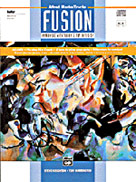
FUSION GUITAR, MASTERTRACKS. Steve Houghton and Tom Warrington CD

FUSION GUITAR, IMPROVISE MASTERTRACKS. CD

Alfred MasterTracks Fusion [Guitar]
Music by Steve Houghton and Tom Warrington

UPC: 038081084381

ISBN 10: N/A
ISBN 13: N/A
CATEGORY: Instrumental Series
FORMAT: Book & CD
INSTRUMENT: Guitar


The music selected for Alfred MasterTracks is intended to provide a broad range of improvisational material for soloists of all skill levels. An improviser needs to feel comfortable in a variety of musical settings, so we have designed a series that addresses a number of different styles, tempos, and keys. Therefore, this book will also serve as a very up-to-date listening reference for many popular Jazz, Latin, and Fusion grooves. In undertaking this project, we decided that we would try to appeal to a wide variety of musicians, from the most raw, beginning improviser all the way to the most advanced improviser. As a result, we have provided charts that indicate a basic structure of harmony and rhythm, plus some very basic melodies for beginning improvisers to play around with, since one good starting point for improvisation is the melody. (These melodies are not recorded on the tracks, however.) More advanced players may want to disregard these melodies completely and dig into blowing over the tracks, worki ng on whatever materials they are currently practicing. It is beyond the scope of this book to present a complete manual for improvisation. Rather, we chose to present some varied harmonic and rhythmic situations that would allow improvisers to practice their craft.


HOW TO USE MASTERTRACKS

After we recorded Essential Styles, Books 1 & 2 (a play-along series for bass and drums), many players said that they would've enjoyed a similar series for other instruments. With that idea in mind, Alfred MasterTracks was born, completely devoted to being a contemporary instrumental play-along for all instruments, not a bass/drum method. These tracks, rather than being designed as a cross section of styles, are more of a collection of varied harmonic and rhythmic situations that melodic improvisers will encounter. For example, in the jazz book, you will find three different versions of the blues. They are obviously the same form and general style, but in different keys and at various tempos in order to provide a more thorough blues "workout." All of the selections in the Alfred MasterTracks Series were professionally recorded and mixed at Chick Corea's Mad Hatter Studios and are of the highest quality. Piano and bass players will be interested to note that the recording is mixed with the piano on the right channel and the bass on the left, so that either of these two rhythm section players can dial out their respective instruments and play accompaniment parts along with the tracks, in addition to soloing with them. Although it is true that the term "improvisation" is foreboding for some young musicians, the selections in these texts have been structured with easy melodic lines which can be used as a point of departure for even the most inexperienced improvisers. The idea here is to have some good-sounding tracks to play along with, and to have some fun! So, without becoming completely encumbered with a lot of intellectual baggage regarding improvisation, young players might simply put on the CD or cassette and start trying to play along by ear. Or they might read the simple melodies that have been provided as a means of gaining some understanding of the form and harmonic content, and proceed from there. By playing portions of the melodies, and then embellishing them slightly, young players will soon find themselves creating their own melodies using the given material as the springboard. Some of the tracks are played in such a way that the harmonies are not extremely complex; altered chords and polyrhythms in the comping have been minimized. On other tracks, these elements are more fully utilized, creating a nice range of intensity levels. The idea is that, while there is an abundance of material here for beginning improvisers, there is also plenty to challenge advanced players. So, have fun with these tracks. We hope they will be a valuable tool in your quest for musical excellence.


FUSION


Foreword / How to Use the Alfred MasterTracks Series

The Soloist and the Rhythm Section .

Thoughts on Improvisation

Understanding Chord Symbols

Understanding Rhythm

Creating Your Own Style

Harmonic Overview - Fusion


Contemporary Fusion-iv- V-Isus (3 :07) 10

CD Track Concert Key

#1 A Major K.C. Blues-bright blues (2:53) .

#2 F Major Blues Shuffle-medium tempo (3:51)

#3 G Major Slow 12/8 Blues Shuffle (4:02)

#4 C Major Contemporary Fusion iv – V -Isus

#5 D Major Up-Tempo Rock & Roll Blues-straight 8ths (2:49)

#6 F Major Half-Time Rock Ballad (3:31)

#7 E minor Medium Funk-minor blues (3:41)

#8 B~minor ii-V Funk Shuffle (5:05)

#9 E minor Techno Funk-8-bar minor blues (3:09)

#10 D Major Early Funk (3:10)

#11 C minor Swing 16ths (2 :56)

#12 F minor Hip-Hop Funk with 16 bar section/solo with guitar & drums (2:53)


About the Authors


Note: All tracks were recorded and mastered at A440.

You may need to make tuning adjustments to match the playback speed of your audio equipment.


Bill Cunliffe, Keyboards

Paul Viapiano, Guitar

Tom Warrington, Bass

Steve Houghton, Drums

Brian Kilgore, Percussion

Recorded and mixed at Mad Hatter Studios, Los Angeles

Engineered and mastered by Talley Sherwood


Exciting play-along tracks for beginning or advanced improvisers!

Digitally recorded and mastered, these top-quality play-along tracks on CD or Cassette provide an invigorating way for you to broaden your improvisation skills while experiencing what it's like to play with a hot rhythm section. The recordings are highly effective as a listening guide to many of today's most popular grooves. Numerous styles are covered in the series, including blues, minor blues, ballads, modal tunes, bebop, rock & roll blues, blues shuffle, funk shuffle, fusion, techno funk, hip-hop, bossa nova, baion, samba, son go, Latinfusion and more.

Also Available for the following instruments:

C Treble Clef (Flute, Vibes, Oboe, Violin)

Bb (Clarinet, Trumpet, Soprano Saxophone,

Tenor Saxophone, Baritone T.c.)

Eb (Alto Saxophone, Baritone Saxophone)

C BassClef (Trombone, Baritone B.C., Bassoon, Tuba, Cello)

Guitar (Acoustic or Electric)

Keyboard (Electronic Keyboard, Synthesizer, Acoustic Piano)

Bass (Acoustic or Electric)

Book & CD

Alfred Publishing Co., Inc.

Prezzo: €21,00
€21,00

TOTAL BLUES JAM SESSION FOR GUITAR BOOK & CD TABLATURE SPARTITI CHITARRA LIBRO BASI JAMTRAX

TOTAL BLUES JAM SESSION FOR GUITAR. 10 basi, 90 esempi di licks, 1 ora. BOOK WITH CD & GUUITAR TABLATURE. 

LIBRO DI MUSICA BLUES CON CD.

CD DI BASI PER VOCE E, VOCE E CHITARRA. 

SPARTITI CON ACCORDI, PENTAGRAMMA, TABLATURE. 


Series: Guitar Jams Series
Medium: Softcover with CD
Author: Various Authors
Total Accuracy Play-Along Tracks Crank up your amp and go for it! Play lead guitar with our pro session band on 10 tracks in a variety of blues styles. Includes 90 licks, tips on solo construction, phrasing, scales, string bending and vibrato. CD includes over 60 minues with full-band backing tracks. 32 pages

Prezzo: €18,99
€18,99
Condividi contenuti