LIBRO CON 3 CD

FINGERSTYLE & SLIDE GUITAR IN OPEN TUNINGS BOOK 3-CD TABLATURE JOHN FAHEY St. Louis Blues-Silent Night, Holy Night

FINGERSTYLE & SLIDE GUITAR IN OPEN TUNINGS BOOK/3-CD SET TABLATURE
BY JOHN FAHEY 

Product Description:
John Fahey was a pioneer in composing and arranging guitar solos in open tunings. In this lesson series for the intermediate guitarist, John teaches a wide variety of techniques, musical textures and styles. The book includes the notation and tablature for the lessons plus 3 compact discs featuring phrase-by-phrase instruction. LESSON ONE: Open G tuning: On the Sunny Side of the Ocean, Spanish Two Step and It Came Upon A Midnight Clear. St.Louis Blues played in a dropped D tuning. LESSON TWO: In this lesson John explores the possibilities of playing in an open C tuning. The Union Pacific has a distinct blues quality, Requiem For John Hurt has an "Eastern" feel. Simplicity often creates beauty and John does this with his version of Auld Lang Syne. LESSON THREE: This lesson concentrates on John's slide guitar playing. Steamboat Gwine Round The Bend played in open G demonstrating many of John's unique technical ideas. The Christmas carol Silent Night is presented in the slide style. John's popular arrangement of Poor Boy A Long Way From Home played in open D tuning finishes the series.

Product Number: 99801BCD
Format: Book/3-CD Set


Contents:

Book Contents:
CD Track Listings
John Fahey by Mark Humphrey
An Interview with John Fahey
A John Fahey Discography
Explanation of the Tab System
On the Sunny Side of the Ocean
Spanish Two Step
It Came Upon a Midnight Clear
St. Louis Blues
The Union Pacific
Requiem for John Hurt
Auld Lang Syne
Steamboat Gwine 'Round the Bend
Silent Night, Holy Night
Poor Boy a Long Way From Home

CD Track Listings
Lesson One
Track 1: Introduction to Open G tuning
Track 2: Tuning to Open G tuning (D G D G B D)
Track 3: Discussion of chords in Open G tuning and introduction to On the Sunny Side of the Ocean
Track 4: Performance of On the Sunny Side of the Ocean
Track 5: Teaching of first section of On the Sunny Side of the Ocean
Track 6: Plays slowly first section of On the Sunny Side of the Ocean
Track 7: Teaching of second section of On the Sunny Side of the Ocean
Track 8: Plays slowly second section of On the Sunny Side of the Ocean
Track 9: Teaching of third section of On the Sunny Side of the Ocean
Track 10: Introduction to Spanish Two Step
Track 11: Performance of Spanish Two Step
Track 12: Teaching of first section of Spanish Two Step
Track 13: Plays slowly first section of Spanish Two Step
Track 14: Teaching of second section of Spanish Two Step Track 15: Plays slowly second section of Spanish Two Step
Track 16: Teaching of third section of Spanish Two Step
Track 17: Introduction to It Came Upon a Midnight Clear
Track 18: Performance of It Came Upon a Midnight Clear
Track 19: Teaching of complete arrangement of It Came Upon a Midnight Clear
Track 20: Plays slowly It Came Upon a Midnight Clear
Track 21: Tuning for Dropped D tuning (D A D G B E)
Track 22: Performance of St. Louis Blues
Track 23: Teaching of first section of St. Louis Blues
Track 24: Teaching of second section of St. Louis Blues
Track 25: Plays slowly second section of St. Louis Blues
Track 26: Plays again slowly second section of St. Louis Blues
Track 27: Closing thoughts on playing St. Louis Blues

Lesson Two
Track 1: Introduction to The Union Pacific
Track 2: Performance of The Union Pacific
Track 3: Tuning in Open C tuning (C G C G C E)
Track 4: Discussion of right hand technique for The Union Pacific
Track 5: Teaching of first section of The Union Pacific
Track 6: Plays slowly first four bars of The Union Pacific
Track 7: Plays slowly again first four bars of The Union Pacific
Track 8: Teaching from end of fourth bar to end of first section of The Union Pacific
Track 9: Plays slowly first section of The Union Pacific
Track 10: Teaching of second section of The Union Pacific
Track 11: Plays slowly complete arrangement of The Union Pacific
Track 12: Performance of Requiem for John Hurt
Track 13: Introduction to first section of Requiem for John Hurt
Track 14: Plays slowly first section of Requiem for John Hurt
Track 15: Teaching of first eight bars of first section of Requiem for John Hurt
Track 16: Teaching from ninth bar of first section of Requiem for John Hurt
Track 17: Plays slowly first section of Requiem for John Hurt
Track 18: Teaching from seventeenth bar of first section of Requiem for John Hurt
Track 19: Plays slowly first section of Requiem for John Hurt
Track 20: Teaching of second section of Requiem for John Hurt
Track 21: Plays slowly picking pattern for second section of Requiem for John Hurt
Track 22: Teaching of variations for second section of second section of Requiem for John Hurt
Track 23: Plays slowly second section of Requiem for John Hurt
Track 24: Teaching of third section of Requiem for John Hurt
Track 25: Teaching of fourth section of Requiem for John Hurt
Track 26: Plays slowly from second section to end of Requiem for John Hurt
Track 27: Discussion of variations in Requiem for John Hurt
Track 28: Introduction to Auld Lang Syne
Track 29: Performance of Auld Lang Syne
Track 30: Teaching of Auld Lang Syne
Track 31: Introduction to Joy To the World
Track 32: Performance of Joy To the World

Lesson Three
Track 1: Introduction to using slide in open tunings
Track 2: Tuning to Open G tuning (D G D G B D)
Track 3: Performance of Steamboat Gwine ’Round the Bend
Track 4: Discussion of slide technique of play guitar on lap
Track 5: Teaching of first section of Steamboat Gwine ’Round the Bend
Track 6: Plays slowly first section of Steamboat Gwine ’Round the Bend
Track 7: Teaching of second section of Steamboat Gwine ’Round the Bend
Track 8: Plays slowly second section of Steamboat Gwine ’Round the Bend
Track 9: Teaching of third (middle) section of Steamboat Gwine ’Round the Bend
Track 10: Plays slowly third (middle) section of Steamboat Gwine ’Round the Bend
Track 11: Plays slowly first section and into second section of Steamboat Gwine ’Round the Bend
Track 12: Discussion of variations in Steamboat Gwine ’Round the Bend
Track 13: Discussion of slide vibrato technique and introduction to Silent Night, Holy Night
Track 14: Performance of Silent Night, Holy Night
Track 15: Teaching of introduction of Silent Night, Holy Night
Track 16: Plays slowly introduction of Silent Night, Holy Night
Track 17: Teaching of first four bars of verse of Silent Night, Holy Night
Track 18: Plays slowly first four bars of verse of Silent Night, Holy Night
Track 19: Teaching from fifth bar to end of Silent Night, Holy Night
Track 20: Plays rift at end of verse of Silent Night, Holy Night
Track 21: Plays slowly verse of Silent Night, Holy Night
Track 22: Teaching of Outro of Silent Night, Holy Night
Track 23: Plays slowly Outro of Silent Night, Holy Night
Track 24: Introduction to Open D tuning (D A D F# A D) and Poor Boy a Long Way From Home
Track 25: Performance of Poor Boy a Long Way From Home
Track 26: Tuning to Open D tuning (D A D F# A D)
Track 27: Teaching of verse of Poor Boy a Long Way From Home
Track 28: Plays slowly verse of Poor Boy a Long Way From Home
Track 29: Teaching variation of verse of Poor Boy a Long Way From Home
Track 30: Teaching of Bridge of Poor Boy a Long Way From Home
Track 31: Plays slowly opening bars of bridge of Poor Boy a Long Way From Home
Track 32: Discussion of origins of arrangement of Poor Boy a Long Way From Home
Track 33: Plays slowly complete arrangement of Poor Boy a Long Way From Home
Track 34: Discussion of Open D tuning
Track 35: Recent instrumental in Open D tuning
Track 36: Closing thoughts on Open D tuning
Track 37: Performance of Steel Guitar Rag

Prezzo: €29,00
€29,00

THE LATIN BASS BOOK A Practical Guide by Oscar Stagnaro 3 CD LIBRO METODO BASSO LATINO

THE LATIN BASS BOOK: A Practical Guide, by Oscar Stagnaro. SHEET MUSIC BOOK WITH 3 CD

LIBRO METODO DI MUSICA LATINA, CON 3 CD.

SPARTITI PER BASSO CON : 

ACCORDI E PENTAGRAMMA. 

267 PAGINE IN ITALIANO 


by Oscar Stagnaro (Bassist with Paquito D'Rivera, Professor at Berklee College) and
Chuck Sher (author of "The Improviser's Bass Method")

The only comprehensive book ever published on how to play bass in authentic Afro-Cuban, Brazilian, Caribbean, Latin Jazz & South American styles.
Over 250 pages of transcriptions of Oscar Stagnaro playing each exercise. Learn from the best!

Includes: 3 Play-Along CDs to accompany each exercise, featuring world-class rhythm sections:

Oscar Stagnaro - bass
Rebeca Mauleón - piano
Orestes Vilató - percussion
Dario Eskenazi - piano
Mark Walker - drums and others

Notes About the Enclosed Play-Along CDs
The accompanying CDs to "The Latin Bass Book" were designed to provide:
a) audio illustrations of how each exercise should be played, and also
b) years of professional~level play~along accompaniment.

How To Best Utilize These CDs ..Please read!
1) Go through each exercise and listen to how the bass part fits in with the rest of the rhythm section
while you watch the transcription go by.
2) Then try playing what is written yourself until you sound pretty much like the bass on the CD.
3) You can then turn off the bass channel and play along with the rhythm track yourself, improvising
your own lines based on the material presented in that exercise-especially any rhythms written out at the
end of the transcription of Oscar's bass line.
4) After you1ve gone through the whole book in this way, you can then use the CDs to practice
anything you want, not just the initial rhythms suggested for that track.
We hope you will find these CDs invaluable in giving you professional Latin rhythm sections to play
along with. Enjoy!

PERSONNEL:
Afro,Cuban Exercises
CD One, All tracks; CD Two, Tracks 1,15; CD Three' Tracks 8 & 18
Oscar Stagnaro ~bass
Rebeca Maule6n ~keyboards, vocals
Orestes Vilat6 ~percussion, vocals
Edgardo Camb6n ~percussion, vocals
Carlos Caro ~percussion, vocals
Recorded and mixed by Oscar Autie at 0 Studios, El Cerrito, CA
Brazilian and Caribbean Exercises
CD Two, Tracks 16,23; CD Three, Tracks 1,7
Oscar Stagnaro ~bass
Dario Eskenazi ~keyboards
Attila Nagy' keyboards (Track 7 only)
Mark Walker ~drums
Pernell Sarturnino ' percussion
Recorded at Alleycat Studio by John Lee, South Orange, NJ.
Mixed at Art Drums Studio by Alberto Netto, Arlington, MA
South American Exercises
CD Three' Tracks 9,17
Oscar Stagnaro ~bass
Aquiles Baez ~Venezuelan cuatro (Tracks 9~13) and guitar (Tracks 16~17)
Omar Ledezma ~congas and percussion (Tracks 9~13)
Franco Pinna - drums (Tracks 14,15)
Julio Santillan ~guitar (Tracks 14~15)
Martin Zarzar ~cajon (Tracks 16,17)
Jorge Perez Albela ~hand claps (Tracks 6-17)
DPelot - quijada, guiro & bells (Tracks 16-17)
Recorded and Mixed at ArtDrums Studio by Alberto Netto, Arlington, MA
All CDs mastered by "The Master", Fred Catero, at Catero Productions, San Carlos, CA 

Editor's Foreword
The role of the bass in Latin music is primarily to hold down the rhythmic and harmonic foundation of the tune. To the casual listener there is certainly a lot of repetition in most Latin bass lines. But if you listen closel you'll usually find a myriad of subtle variations that give the music an extra kick without destroying the underling groove. This book will show you how that is done. “The Latin Bass Book" contains the most comprehensive study ever published of the main Afro-Cuban and Brazilian styles of bass playing, as well as shorter sections on other Caribbean and Latin American styles and al 0 Latin jazz bass playing. If you go through the book and faithfully follow the written instructions, you will be in possession of all the information you need to fulfill your function in a Latin or Latin jazz rhythm section. This is a practical guide for the motivated student to learn how to play in various Latin idioms, not an historical accounting of how these idioms developed. For that, please see Sher Music CO.IS "The True Cuban Bass" by Carlos Del Puerto and Silvio Vergara, an invaluable document. Much thanks goes to Attila Nagy for designing the cover, as well as his informative contribution to the reggae section of the book; Michelle White for the beautiful cover art work; Larry Dunlap and Rebeca Mauleon for their world-class transcriptions; all the wonderful rhythm section players on the CDs; Dave Belove for contributing Chapter Four, on the bassi relation to clave; Chuck Gee for the easy-to-read music manuscript; Fred Catero for a masterful mastering job; the talented photographers who contributed to this book; Andy Gonzalez and Pedro Perez who allowed us to include transcriptions of some of their recorded bass lines; and lastly Oscar Stagnaro, who makes this book come alive with such grace and soul. As the world gets closer together, having a working knowledge of Latin bass playing will increasingly be a prerequisite for any professional, improvising bassist. This book is designed to help you learn to play this passionate and beautiful music. Enjoy the ride! - Chuck Sher

About Oscar Stagnaro
Bassist Oscar Stagnaro, originally from Peru, studied at the Conservatory of Music in Lima, Peru and worked extensively doing studio work and live performances with many international artists and local bands before moving to the USA in 1979. Since then he has been a very active performer and one of the most yersatile bass players on the East Coast. His mastery of different styles including jazz, fusion, Latin jazz, Brazilian jazz and South American music has helped him to travel the world performing with the very best Latin jazz artits. Mr. Stagnaro has been an Associate Professor at Berklee College of Music since 1988, where he teaches private lessons, workshops and ensembles, and has represented Berklee at the IAJE Conventions since 1997. He i an active clinician and has given clinics on bass playing in Peru, Puerto Rico, Cos a Rica, Venezuela, Germany, Spain and the USA. Mr. Stagnaro has recorded with Paquito URivera, the United Nations Orchestra, Dave Valentin, Charlie Sepulveda, The Caribbean Jazz Project and many others (see Discography on page 262.) He has also played with Chucho Valdes, Michel Camilo, Dave Liebman, Ray Barretto, Mark Murphy, Tom Harrell, Leny Andrade, Claudio Roditi, Danilo Perez, Tiger Okashi, Bob Moses, Bob Mintzer, Steve Kuhn, Nestor Torres and many others. His first CD under his own name, "Mariellals Dream", is on the Songosaurus label and features Paquito D'Rivera, Dave Samuels, Ed Simon, Alex Acuna and Ramon Stagnaro. Mr. Stagnaro endorses Etifani speakers, Fender strings and Guild and Warwick basses.

A Note From Oscar
This work is dedicated to my Father, Rogelio, for his love and dedication; my wife Teresa for her love, comprehension, inspiration and huge patience; my children Paulo and Mariella who help me to find the meaning of life; to my brother Ramon, my first bass teacher; and to my best friend Pocho Purizaga. Thanks also to Paquito D'Rivera, Danilo Perez, the Pelots, my Boss at Berklee, Rich Appleman, Pedro Aiscorbe, Carlos Hayre, Aquiles Baez, Los Changos, Sal Cuevas, Alon Yavnai, Dave Valentin, Brenda Feliciano, Alberto Netto, Alain Malett, Lincoln Goines, Milton Cardona, Andy Narell, Dave Samuels, Victor Mendoza, Coc Salazar, Pancho aenz and all my friends and collegues whom I have learned from and share the universal language of music.

SECTION ONE
Chapter 1
Chapter 2
Chapter 3
Chapter 4
Chapter 5

SECTION TWO
Chapter 6
Chapter 7
Chapter 8

SECTION THREE
Chapter 9
Chapter 10

SECTION FOUR
Chapter 11
Chapter 12

SECTION FIVE
Chapter 13
APPENDIX I
APPENDIX II
Table of Contents
The Thmbao Bass Line
The Basic Tumbao and its Main Variations .
Combinations .
Other Simple Tumbao Variations .
The Bass In Relation To Clave .
Advanced Tumbao Variations .
Other Afro-Cuban Styles
Cha-Cha-Cha and its Variations .
Afro Lines in Six .
Contemporary Cuban-Style Bass Lines .
Brazilian Bass Lines
Samba Bass Lines .
Partido Alto, BaHio and Other Brazilian Styles .
Caribbean & South American Styles
Merengue, Reggae and Other Caribbean Styles .
South American Styles .
Latin Jazz Bass Lines
Latin Jazz Bass Lines .
Transcriptions of Recorded Bass Lines ,
Pedro Perez' bass line on "La Rumba Esta Buena"
Andy Gonzalez' bass line on "Little Sunflower"
Oscar Stagnaro's bass line on "Sin Saber Porque"
Andy Gonzalez' bass line on "Rainsville"
Andy Gonzalez' bass line on "Water Babies"
Oscar Stagnaro Discography .

Prezzo: €36,99
€36,99

BASS METHOD COMPLETE EDITION 1-2-3 ED FRIEDLAND 3 CD TABLATURE rake-Scale-Right-Hand Technique

BASS METHOD COMPLETE EDITION 1, 2, 3. BY FRIEDLAND. 3CD TABLATURE

Hal Leonard Bass Method - Complete Edition
The critically acclaimed Hal Leonard Electric Bass Method – Second Edition in a handy composite edition! Contains 3 books and 3 CDs for Levels 1, 2 and 3.

Inventory #HL 00695074
ISBN: 9780793563838
UPC: 073999950748
Width: 9.0"
Length: 12.0"
144 pages

HAL LEONARD

Books 1, 2 and 3 Bound Together in One Easy-to-Use Volume!
Series: Bass Method
BOOK W/CD - TAB
Author: Ed Friedland

The critically acclaimed Hal Leonard Electric Bass Method - Second Edition in a handy composite edition! Contains 3 books and 3 CDs for Levels 1, 2 and 3. 144 pages,


TUNING
TUNING TO THE CD
To tune your bass, adjust the tuning pegs. Tightening a peg will raise the pitch
of a string, loosening a peg will lower it.
On CO Track 1, each string is played four times. The first string you'll hear is
the G (1st) string. Check your string with the CD; if it sounds lower than the
recording, tighten the tuning peg until you get closer to the pitch on the CD. If
your string is higher, then loosen the peg. Once the G string is in tune, repeat
this process with the 0, A, and E strings (2, 3, and 4).

USING AN ELECTRONIC TUNER
Electronic tuners have become very affordable, so it's a good idea to have one.
There are generally two types available: a "bass" (or "guitar") tuner, which will
only read the open strings of your instrument, or a "chromatic" tuner, which
will read any pitch. Either will do the job. Plug your bass into the input of the
uner and play your open G string. The tuner will read the pitch and tell you if
he string is sharp (too high) or flat (too low). Adjust the tuning peg until the
tuner indicates you are in tune. Repeat the process with the 0, A, and E strings.

TUNING TO A KEYBOARD
Use the appropriate key on a piano/keyboard to check your open strings.

G 4th string
D 3rd string
A 2nd string
E 1st string

RELATIVE TUNING

Here's another way to tune your bass. It is less accurate, as it assumes that your starting string is in tune-and it is harder for
he ear to hear the low pitch of the bass as well as a tuner can-but this method works when there are no other alternatives.
It's also a good way to check your tuning.
• Start with your open G string. If there is an accurate G available, use it; otherwise, assume the G string is tuned to
the correct pitch.
• Play the 0 string at the 5th fret, and see if that note matches the open G. Tune the 0 string up or down until the
two notes match.
• Play the A string at the 5th fret; compare it to the open O. Tune the A string up or down until the two notes match.
• Play the E string at the 5th fret; compare it to the open A. Tune the E string up or down until the two notes match.
nut 5th fret
This is called relative tuning because the strings are tuned relative to one another.


BOOK 1

The Electric Bass
The Bass Amp
Tuning
Playing Positions
Musical Symbols
Right-Hand Technique
Fingerstyle
Pick Style
left-Hand Technique
The 1-2-4 Fingering System
Open-String Exercises
The Rake
Notes on the E String
Little Rock
Kinda Folky
More Notes on the E String
lookin' Sharp
The Shift
Notes on the A String
You Go, Slav
Repeat Sign
One More Time
Cattle Crossing
More Notes on the A String
The Finger Roll
Roll It
Rolly
12 -Bar Blues
A Little Heavy
Notes on the D String
Private Eye
Minor league
D-Lite
More Notes on the D String
Three-String Review
Crossin'Three
The Octave
Octa Gone
Notes on the G String
Gee Whiz
All Right
More Notes on the G String .
All Four One .
FiX .
More Octaves .
Octave Blues .
Ties .
Taiwan On .
3/4 Time & the Dotted Half Note .
Three's a Crowd .
Tell It. .
Changin' Times .
Rests .
Rock 'n' Rest .
D.C. al Fine .
Three Play .
Eighth Notes .
Movin' 8's .
Eight Ball .
Eighth Rests ,
Rok Gruv ,
Bop Bop ,
D.C. al Coda ,
Coda Pendant. .
Dee Dee .
Using a Metronome .
The Classic Rhythm .
Down Home .
Raitt On .
Minor's Tale .
A Classic Variation .
Classic Blues .
Petty Thief .
Third Posi~on .
3rd Watch .
Flying leap .
oand 3 .
Shifty .
Shift-Crazy Blues .
Stones-y .
Etude Brute .


BOOK 2
The Box Shape
E.A & B Box
Box Lunch
Box-E Blues
Movable Boxes
Your Move
Move It
Movie Star
5th Position
On the G String
Shift Practice
Shifty Henry
On the D String
Dee Gee
5-3-1
Dig It.
On the A String
Introducing Tablature
Tab Hunter
Pay the Tab
On the E String
Open/Closed
Da Blues
All Together Now
Swing lime
One Finger Per Fret
The Major Scale
Scale Sequence #1
Scale Sequence #2
Key Signatures
Universal Fingerings
Scale Sequence #3
Scale Sequence #4
Pasta Mon
D-Lish
A-Flat lire
Open E
G3
B-Flat Jump
The Classic Blues Line
Gee Blues
Aay, Blues! .
Low Down
Understanding Bass Lines
Syncopated Eighth Notes
Off Beat.
Funky Soul Groove
That '70s Thing
The Major Triad .
Tri Again
Funky Li'l Blues .
The Minor Scale .
Minor Scale Sequence .
Relative Minor and Major
House 0' Horror
Noir
Jazz Minor
Modulation
Minor Modulation .
Mod Crazy
Minor Triads
Bogey Man
Roots
Gypsy Swing
Room-ba with a View
Eighth-Note Triplets
The '50s
12/8 Time
Bumpin' .
The Shuffle Rhythm
Old Days
One- and Two-Measure Repeats
Bad Bone
Uptown Down
Classic Flat 7
Rollin' .
Go On


BOOK 3
The Chromatic Walkup
Open Up
Staccato
Double Up
Rez-Q.
Curtis
Kickin' It.
Sixteenth Notes
One Drop
Dada Dadat
Jog Wheel
Sixteenth Rests
Layin' Back
Nazz-T
Plutonic
Funky16th-Note Syncopation
Ookachu Wha?
Groove
Combo
Minor Glitch
Do It Now
Soul Groove
D-Troit
Seventh Chords
Floaty
Vanilla
L'il Thing
Funk lime
Little M
Shufflin'
Middle Man
On the Verge
Slides
Slippin' & Slidin'
Minor Pentatonic
Venture Forth
Deja View
Hammer-Ons & Pull-Offs
Hammer Head
X-Tender
Major Pentatonic
Just Like My Girl
N' awlins Beat
Playing Off Chord Symbols .
Just Roots .
Roots & 8ths .
Jumping Octaves .
Your Turn .
Adding the 5th .
Use the 5 .
5By8 .
Root-5-8 .
You Got It .
Chromatic Approach .
Chromatic R-5-8 .
It's Up to You .
Scale Approach .
Scale R-5-8 .
All Yours .
Dominant Approach .
Dominant to the 5th .
You Go, Hugo .
Using Triads to Create Bass Lines .
Walking Triads .
Walk This Way .
Simple Triads .
On Your Own .
Triads & Dotted Quarters .
Uh Huh .
Locking In to the Groove .
Groove Jam .
lime 2 Groove .
Slap Funk .
Slap This .
Pent Up .
The Pop .
Combining Slap and Pop .
Octave Slap .
Chromatic Octaves .
Gritty .
The Pressure Roll .
Dead Notes .
Dead End .
Keep It Together .
It's an Eyeful! . 

Prezzo: €23,99
€23,99

LONNIE JOHNSON THE GUITAR OF Woody MANN LIBRO 3 CD TABLATURE CHITARRA BLUES

LONNIE JOHNSON, THE GUITAR OF. SHEET MUSIC BOOK WITH 3 CD & GUITAR TABLATURE

LIBRO DI MUSICA BLUES, CON 3 CD.

SPARTITI PER CHITARRA CON:

ACCORDI, PENTAGRAMMA, TABLATURE.


3 Ore di musica con le originali registrazioni. Audio lezione di Woody Mann.

Product Description:
Lonnie Johnson blended blues and jazz styles, performing with blues shouters like Bessie Smith and Texas Alexander on one hand, and Louis Armstrong and Duke Ellington on the other. Now learn essential exercises and tips as they are presented in this compilation of tunes by this legendary musician. As part of Stefan Grossman's Guitar Workshop Audio Series not only does this book contain valuable lessons, but as an added bonus, the three accompanying CDs contain three full hours of instruction featuring note-by-note, phrase-by-phrase instruction to make the style and technique of Lonnie Johnson something that anyone can learn. Master instructor Woody Mann teaches you step-by-step to play these selections: Away Down in the Alley; Woke Up This Morning With Blues in My Fingers; Go Back to Your No Good Man; Blues in G; and Stompin' 'Em Along Slow. Written in standard notation and tablature.


Song Title: Composer/Source:
Away Down In The Alley - Lonnie Johnson
Blues In G - Lonnie Johnson
Go Back To Your No Good Man - Lonnie Johnson
Stompin' 'Em Along Slow - Lonnie Johnson

Prezzo: €31,99
€31,99

BIG BILL BROONZY, THE GUITAR OF. Woody Mann. 3 CD TABLATURE

BIG BILL BROONZY, THE GUITAR OF. 3 Ore di musica con le originali registrazioni. Audio lezione di Woody Mann. 3 CD TABLATURE

Big Bill Broonzy's recording career spanned from 1927 until his death in 1958. His repertoire was well recorded, from solos and duets to ensemble playing. He was rediscovered just as the "folk-revival" began in the early 1950's. Broonzy was a master of ragtime and country blues guitar whose playing was highlighted by a strong pulsating bass and melodic lead lines. In this comprehensive new audio lesson, Woody Mann explores the ideas, techniques, and styles of this legendary musician who has influenced generations of guitarists. The CDs contain three full hours of instruction featuring note-by-note, phrase-by-phrase instruction. Selections include: House Rent Stomp; Brownskin Shuffle; Moppin' Blues; Hey, Hey; Worryin' You Off My Mind; Stove Pipe Stomp; and Saturday Night Rub. Written in standard notation and tablature. Inlcudes 3 CD's. 


Brownskin Shuffle

House Rent Stomp

Worryin' You Off My Mind

Stove Pipe Stomp

Hey, Hey

Moppin' Blues

Saturday Night Rub

Prezzo: €27,99
€27,99

KING B.B., BLUES MASTER I II III COMPLETE BOOK 3 CD GUITAR TABLATURE LIBRO the thrill is gone

KING B.B., BLUES MASTER I, II, III, COMPLETE.

LIBRO PER CHITARRA CON 3 CD E TABLATURE

Contiene 242 esempi! Edizione completa che riunisce i 3 volumi. Ogni titolo è esaminato integralmente in tutte le sue parti, chitarra ritmica, l'introduzione e gli assoli I e II. B.B. King e la sua band suonano: You upset me baby -rock me baby -nobody loves me put my mother -the thrill is gone -you done lost your good thing now -payin' the cost to be the boss -three o'clock blues -when it all comes down, I'll still be around -every day I have the blues -all over again -darling you know I love you -sweet little angel. 3 CD TABLATURE

Prezzo: €159,99
€159,99

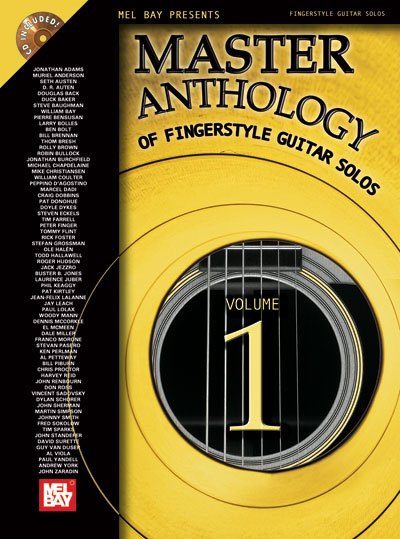
MASTER ANTHOLOGY OF FINGERSTYLE GUITAR SOLOS VOLUME 1 BOOK WITH 3CD TABLATURE CHITARRA

MASTER ANTHOLOGY OF FINGERSTYLE GUITAR SOLOS, VOLUME 1. SHEET MUSIC BOOK WITH 3 CD, & GUITAR TABLATURE.

LIBRO DI MUSICA PER CHITARRA ACUSTICA, CON 3 CD.

SPARTITI PER CHITARRA CON: 

ACCORDI, PENTAGRAMMA, TABLATURE. 


408 pagine, 70 pezzi di: Marcel Dadi, Peppino D'Agostino, Franco Morone, Martin Simpson, John Renbourn, Buster B. Jones, Duck Baker, Al Viola, Jonathan Adams, Muriel Anderson, Seth Austen, D.R. Auten, Douglas Back, Steve Baughman, William Bay, Pierre Bensusan, Larry Bolles, Ben Bolt, Bill Brennan, Thom Bresh, Rolly Brown, Robin Bullock, Jonathan Burchfield, Michael Chapdelaine, Mike Christiansen, William Coulter, Craig Dobbins, Pat Donohue, Doyle Dykes, Steven Eckels, Tim Farrell, Peter Finger, Tommy Flint, Rick Foster, Stefan Grossman, Ole Halen, Todd Hallawell, Roger Hudson, Jack Jezzro, Laurence Juber, Phil Keaggy, Pat Kirtley, Jean-Felix Lalanne, Jay Leach, Paul Lolax, Woody Mann, Dennis McCorkle, El McMeen, Dale Miller, Stevan Pasero, Ken Perlman, Al Petteway, Bill Piburn, Chris Proctor, Harvey Reid, Don Ross, Vincent Sadovksy, Dylan Schorer, John Sherman, Johnny Smith, Fred Sokolow, Tim Sparks, John Standefer, David Surette, Guy Van Duser, Paul Yandell, Andrew York, John Zaradin. 3CD TABLATURE

Product Description:
This anthology includes both new pieces and outstanding previously published fingerstyle tunes. Veteran performers and talented young upstarts are given a forum for their best work. Includes 3 CD's! Intermediate to advanced in difficulty with nearly all pieces appearing in standard notation with tablature. The contributors are: Jonathan Adams, Muriel Anderson, Seth Austen, D.R. Auten, Douglas Back, Duck Baker, Steve Baughman, William Bay, Pierre Bensusan, Larry Bolles, Ben Bolt, Bill Brennan, Thom Bresh, Rolly Brown, Robin Bullock, Jonathan Burchfield, Michael Chapdelaine, Mike Christiansen, William Coulter, Marcel Dadi, Peppino D'Agostino, Craig Dobbins, Pat Donohue, Doyle Dykes, Steven Eckels, Tim Farrell, Peter Finger, Tommy Flint, Rick Foster, Stefan Grossman, Ole Halen, Todd Hallawell, Roger Hudson, Jack Jezzro, Buster B. Jones, Laurence Juber, Phil Keaggy, Pat Kirtley, Jean-Felix Lalanne, Jay Leach, Paul Lolax, Woody Mann, Dennis McCorkle, El McMeen, Dale Miller, Franco Morone, Stevan Pasero, Ken Perlman, Al Petteway, Bill Piburn, Chris Proctor, Harvey Reid, John Renbourn, Don Ross, Vincent Sadovksy, Dylan Schorer, John Sherman, Martin Simpson, Johnny Smith, Fred Sokolow, Tim Sparks, John Standefer, David Surette, Guy Van Duser, Al Viola, Paul Yandell, Andrew York, and John Zaradin.

Song Title: Composer/Source:
A Waltz For Rebecca Al Petteway
Aurora Borealis Tommy Flint
Badlands John Standefer
Beyond The Known Jack Jezzro
Blues For The Mann Stefan Grossman
Blues From Jekyll Roger Hudson
Bourree David Surette
Breath Of Spring Aj Weidt, Arr: Douglas Back
Bright Morning Stars Arr: Martin Simpson
Brisas Nordestinas John Zaradin
Brusseler Spitzer Albert Vossen, Arr: Ole Halen
Buster B Boogie Buster B. Jones
Chapel Road Rolly Brown
Cindy And Norm Arr: Guy Van Duser
Clair De Lune Arr: Jonathan Burchfield
Con Spirito Al Viola
Cowboy Waltz Michael Chapdelaine
Crazy Basses Franco Morone
Dove Song Steven Zdenek Eckels
Fay's Hornpipe Bill Brennan
Fiddle Melody Tim Sparks
Gee Fred Sokolow
Getaway Peter Finger
Gitana Stevan Pasero
Gitarre 2000 Doyle Dykes
Glass Of Beer Arr: Dylan Schorer
Global Village Seth Austen
Hangin With The Girls I Know Thom Bresh
Hickory Jack Arr: Steve Baughman
High Society Pat Donohue
If I Only Had Wings D.R. Auten
Jacobs Ladder El Mcmeen
Jesus Loves Me Arr: Bill Piburn
Joyride To Tranquility Tim Farrell
Keep It Under You Heart Duck Baker
Klimbim Don Ross
Laguna Girls Jean-Felix Lalanne
Lazy Tuesday William Bay
Leola Kay Todd Hallawell
Londonderry Air Arr: Rick Foster
Lord Inchquin Arr: Jonathan Adams
Lost Hollow Lament Robin Bullock
Love Lifted Me Howard E Smith, Arr: Craig B Dobbins
Marleys Ghost Andrew York
Meadowlands Arr: Paul Lolax
Misty Night William Bay
Mo Ghille Mear Macdhomnaill
Of Eagles Wings Jay Leach, Transcribed: Lenny Carlson
Palermo Show John Renbourn
Prelude And Allegro Larry Bolles
Prelude To Minstrel's Dream Harvey Reid
Relaxin Paul Yandell
Remembering Linda Michael Christiansen
Rosalee Muriel Anderson
Runoff Chris Proctor
Rural Life Pat Kirtley
Scarborough Fair Arr: Ben Bolt
Seguel/The Vision Phil Keaggy
Shadow Dancing Vincent Sadovsky
Song For Chet Transcribed: Lenny Carlson
Sonny's Mazurka Ken Perlman
The Dancer Peppino D'agostino
The Green Valleys Dennis Mccorkle
The Jig Is Up Laurence Juber
The Rascally Rabbit John Sherman
Top Hat Woody Manm, Transcribed: Lenny Carlson
Waltz Johnny Smith, Edited: Charles Postlewate
Watch The Stars Arr: Martin Simpson
Whispering Adapted And Arr: Dale Miller
Wu Wei Pierre Bensusan

Prezzo: €56,99
€56,99

FAHEY JOHN AMERICAN PRIMITIVE GUITAR 3CD TABLATURE LIBRO Indian Pacific Railroad Blues

FAHEY JOHN, AMERICAN PRIMITIVE GUITAR. In Christ There Is No East Or West -Take A Look At That Baby -Some Summer Day -Indian Pacific Railroad Blues -The Last Steam Engine Train -When The Springtime Comes Again -The Approaching Of The Disco Void. SHEET MUSIC BOOK WITH 3CD & GUITAR TABLATURE. 

LIBRO DI MUSICA ACUSTICA, CON 3 CD. 

SPARTITI PER CHITARRA CON :

ACCORDI PENTAGRAMMA, TABLATURE. 

... in roots music as a living, breathing thing rather than a museum piece. Industrial guitar grind dominates City Of Refuge, bathyspherelike booms echo through Womblife. White gamelan sounds reverberate through The Epiphany Of Glenn Jones. Such experimentation might have isolated him from his peers through most of the last 30 years, but in the 90s he has discovered an affinity with the ever expanding global underground communitY. "I didn't know there was an alternative movement going," Fahey admits, "so I just kept trying to create similar things to the old. I was aware that there had been an experimental movement in the 60s with John Cage and his followers, but thought they had all gone. Then some friends introduced me to Sonic Youth. Until then I didn't know what was going on.
"As defined by Sonic Youth's Thurston Moore, this "alternative movement" was out of a desire for music resistant to "commodification", be it noise, lo-fi, 20th century experimental music and improv, or global and rediscovered American roots musics like bluegrass, folk and blues.
John Fahey's work feeds the new underground spirit on a number of counts, while Revenant - the label Fahey co-owns with his manager, the Nashville-based attorney Dean Blackwood - alerts new audiences to a hidden history of American music, retrieved from the tiny regional labels scattered across its rural hinterlands.
The surprising success of the six CD box set reissue of rogue archivist Harry Smith's Anthology Of American Folk Music (for which Fahey supplied award-winning sleevenotes) attests to a desire for music that emerges from and addresses real experiences rather than a marketing man's business plan. The Revenant archive releases, meanwhile, vividly recast the past not as nostalgia but as American Primitive or Raw Music. "It was Dean's idea to do that," Fahey modestly states, "but I provided most of the information, together with this collector called Gayle Dean Wardlow. Now that the American Primitive thing is catching on we'll do more. People love the title" The range of his enthusiasms combined with the breadth of his own music make Fahey a vital link connecting today's underground with a century of raw and experimental musics. For his part, he is only too pleased to be working within his newly adopted alternative music 'community'. His instant conversion has already produced one of its finest works in The Epiphany Of Glenn Jones, which teamed John with the Massachusetts post-rockers Cui De Sac, led by Glenn Jones. The title refers obliquely to the project's unpromising start as a "retro lounge music" session - quickly aborted - which Jones's sleeve notes describe as being akin to taking part In some "hellish sensory deprivation experiment". Was working with Fahey really that bad?
The guitarist chuckles mischievously: "Glenn told me after the Epiphany that he had got on a power trip. It had happened to him before, only he hadn't realized it. He did things like not letting me meet the other members of the band until the recording sessions, all kinds of tricks, so that he could remain ultimate dictator of Cui De Sac and the project. But that's an old battle, Glenn's a friend of mine and it came out OK."

AMERICAN PSYCHO
When Fahey was venting his disgust for his 60s recordings earlier on, he went at them with a ferocity out of all proportion to the quality of music. His negative attitude hinted that something deeper was going down than a mature reappraisal of his youthful endeavours. Eventually, his hostility relents, and the negativity lets up long enough to reveal the pain at its source.
"Mainly it's a parental situation:' Fahey explains, washing down more popcorn with gulps of sweet iced tea. "I was writing these things as an escape, as a possible way to make money. The sentiments expressed come out of a messed up situation. I was creating for myself an imaginary, beautiful world and pretending that I lived there, but I didn't feel beautiful. I was mad but I wasn't aware of it. I was also very sad, afraid and lonely. By presenting this so-called beautiful facade I looked good to myself and my audience.
"This went on for years," he continues. "I always tried to put a peaceful element into the music, but it was false because I was not at peace. I didn't know what 1was doing and felt pretty phony. I didn't understand any of this until I had psychoanalysis."
Entering psychoanalysis in the mid-80s helped him exorcise the past. "Before psychoanalysis:' Fahey recalls, "I used to accidentally get so high on prescription drugs and booze that, sometimes, I wouldn't show up for a show. Or I'd be there and not know it. For a while I thought 1was going insane. People would tell me I did these crazy things, but I didn't attribute it to the Quaaludes I was taking so that the memories of my father abusing me as a child wouldn't come back."
In taking Fahey back to the source of his traumas psychoanalysis invested the innocent symbols he had carried over from his childhood with sinister new meanings. Out of a boy's fascination with turtles and tortoises, he had elaborated a personal mythology based on the reptiles, using them as a repeat motif anchoring his art and discography in his childhood.
Under analysis he recalled how he burst out screaming when he first saw a turtle. "When I was about four or five years old I saw what I thought was a penis walking across the front lawn:' he shudders. "It was just a box turtle, but it kind of upset me ..."
Analysis related the encounter to the memory of being sexually molested by his father. "The obsession comes from the psychic meaning of turtles, reptiles and amphibians. In dreams they symbolize genitalia. That's why I went to a psychoanalyst because I had all these repressed memories." The unifying visual motif of his personal mythology and extensive discography turned out to be the corrupting agent of their potential destruction all alone. Remarkably, coming to terms with the full horror of such a revelation marked the beginning of Fahey's 90s regeneration.

AMERICAN PRIMITIVE
John Fahey was born on 28 February 1939 and spent most of his childhood in Takoma Park, Maryland, a small town on the outskirts of Washington DC. His early musical training was at once formal and frustrating. His parents occasionally took him to see 50s bluegrass stars like The Stanley Brothers, whose early recordings Fahey would later reissue on Revenant. But though he grew up with Country & Western and bluegrass, his first instrument was a clarinet. He abandoned it at 14 when he bought his first guitar, a $17 Sears And Roebuck special, with money earned from his newspaper round. After teaching himself to pick his way through the Eddy Arnold songbook, the young, lonely and slightly crazy guitar player decided it was time to start writing his own material. The year was 1954, and Elvis Presley was just beginning to make waves in America. If the young Fahey readily embraced the ...

Prezzo: €35,99
€35,99

acoustic guitar magazine-THE ACOUSTIC GUITAR METHOD COMPLETE-David Hamburger-3 CD TABLATURE

acoustic guitar magazine-THE ACOUSTIC GUITAR METHOD COMPLETE. Learn to play using the techniques and songs of American roots music. David Hamburger. LIBRO CON 3 CD E TABLATURE

LIBRO METODO DI MUSICA ACUSTICA, CON 3 CD.

SPARTITI PER CHITARRA PER VOCE E CHITARRA CON: 

ACCORDI, PENTAGRAMMA, TABLATURE. 


Series: Guitar Method                       
Publisher: String Letter Publishing
Softcover with CD - TAB
Author: David Hamburger

Ogni titolo è preceduto da esercizi e lezioni.

A complete collection of all three Acoustic Guitar Method books and CDs in one volume! Learn how to play guitar with the only beginning method based on traditional American music that teaches you authentic techniques and songs. Beginning with a few basic chords and strums, you'll start right in learning real music drawn from blues, folk, country and bluegrass traditions. You'll learn how to find notes on the fingerboard, expand your collection of chords by learning songs in various keys, and learn different kinds of picking patterns. When you're done with this method series, you'll know dozens of the tunes that form the backbone of American music, using a variety of flatpicking and fingerpicking techniques.
Songs include: Bury Me Beneath the Willow - Delia - Frankie and Johnny - The Girl I Left Behind Me - House of the Rising Sun - Ida Red - In the Pines - Little Sadie - Man of Constant Sorrow - Sally Goodin - Scarborough Fair - Will the Circle Be Unbroken? and many more. 136 pages.

The Acoustic Guitar Method teaches you how to play guitar using the techniques and songs of American roots music. Beginning with a few basic chords and strums, you'll start right in learning real music drawn from blues, folk, country, and bluegrass traditions. Working in both standard music notation and a special system for guitar called tablature, you'll learn how to find notes on the fingerboard by using them in particular song arrangements. You'll use different kinds of picking patterns and expand your collection of chords by learning songs in various keys. And as your knowledge of the fingerboard expands, you'll solidify that knowledge by picking out the melodies to the tunes you're working on. When you're done with the Acoustic Guitar Method, you'll know dozens of the tunes that form the backbone of American music and be able to play them using a variety of flat picking and fingerpicking techniques.

WHY ACOUSTIC GUITAR? The acoustic guitar is an incredibly flexible instrument. With just a few chords under your fingers you can play dozens of traditional and popular tunes; with time and effort, you can take the same instrument to virtuosic heights. The acoustic guitar knows few stylistic limits: everything from Lester Flatt's bluegrass backup to John Hurt's country blues fingerpicking, from the Everly Brothers' percussive rock strumming to Leo Kottke's supercharged slide workouts, has been done on essentially the same instrument. You can make music on an acoustic guitar all by yourself or use it as a songwriting tool, and since you can play both rhythm and lead, it's a great instrument for bands and jamming as well. The amount and variety of music that's made on the acoustic guitar is staggering. Country, blues, bluegrass, jazz, folk, rock-acoustic guitar lies at the heart of all these styles. You may find yourself wanting to check out a little bit of everything. Or maybe one style will grab your attention and not let go. No matter where your interests lead you, you'll be expanding your ears, strengthening your fingers, and learning more about music and your instrument.

WHY ROOTS MUSIC? The various genres collectively referred to as roots music are all very much alive, and the guitar is very much a part of those traditions. Whether you're revved up about learning fingerstyle blues, bluegrass flatpicking, basic country backup, or western swing, it all starts with the same fundamentals. Learning tunes is a practical and fun way to acquire a chord vocabulary, practice strumming techniques, learn about picking and playing single notes, and apply picking patterns to real-world situations. We've chosen the traditional tunes in this series for their variety and accessibility and because they are great songs and a blast to play. These songs are survivors


THE COMPLETE ACOUSTIC GUITAR METHOD

CHOOSING AN INSTRUMENT

The dreadnought is the standard acoustic guitar shape, a relatively large, squarish design developed by C.F. Martin around 1916; nearly every guitar company now makes dreadnought-style instruments. There are also numerous smallerbodied instrument styles, often based on older designs by Martin or Gibson and variously referred to as parlor, concert, or simply small-bodied guitars. These are often easier to hold and to wrap your arms around as a beginner than the bulkier dreadnought or the equally large jumbo instruments based on Gibson's various models of that name. Different styles and shapes of instruments do sound different from one another, but right now the most important issue is comfort, so get something that feels like it fits your body. While we're on the subject, keep in mind that you can make music on any instrument. Many musicians use a variety of guitars over the course of their lives or keep a few instruments to change their sound on stage, in the studio, or at home. Much of the earliest country and blues music was made with whatever instruments were available or affordable at the time. People played cheap Stella, Harmony, or hand-me-down guitars because that's what they had, and they made music that's still worth listening to decades later. In our own era, there are more and more good, inexpensive guitars being produced all the time, making it easier than ever to find a comfortable, reasonably priced, good-sounding beginner instrument. Whether you get something new or secondhand, have the shop where you buy it or a recommended repair shop do a setup before you get started. That basically means adjusting the neck for the most comfortable action, or distance between the strings and the fretboard, putting on a fairly light gauge of strings, and checking the intonation (that is, making sure your guitar plays in tune all the way up the neck), which may involve adjustments to the saddle and/or the nut. (Aren't you glad you looked over that illustration on page 5)

HOLDING THE GUITAR

The standard sitting pose for playing acoustic guitar has the guitar resting on your right leg. Your right arm can drape over the lower bout of the guitar, with the instrument fitting snugly in the crook of your arm. That should leave your right hand dangling somewhere between the bridge and the sound hole, or right at the soundhole's edge, when you go to strum or pick. If you're planning to stand up, you might want to have a strap button attached to the heel of the neck. It doesn't have the same Woody Guthrie-esque hobo look as tying a piece of string around the headstock, but it centers the guitar's body on you a bit better and ensures a more stable placement of the instrument. Keep your left-hand thumb along the back of the neck, wherever it feels most comfortable. It can creep up over the top, past the fingerboard, as long as it's not actually touching the low string and keeping it from ringing out when you strum. Be sure to keep your fingers arched, with each joint bent; if they flatten out across the strings they will also flatten the sound when you strum.


Contents:

Columbus Stockade Blues
Careless Love
Get Along Home, Cindy
Sally Goodin
Ida Red
Darling Corey
Hot Corn, Cold Corn
East Virginia Blues
In the Pines
Banks of the Ohio
Scarborough Fair
Shady Grove
Man of Constant Sorrow
Stagolee
The Girl I Left Behind Me
Shady Grove
Shenandoah
Will the Circle Be Unbroken?
Sail Away Ladies
I Am A Pilgrim
Bury Me Beneath the Willow
Alberta
Sugar Babe
House of the Rising Sun
Frankie and Johnny
Delia
Gambler's Blues
Banks of the Ohio
Crawdad
New River Train
Little Sadie
Omie Wise
That'll Never Happen No More


CONTENTS - Book 1


Welcome

Tune-Up

Lesson 1.: First Chords, First Song .

Columbus Stockade Blues .


Lesson 2: New Chord, New Strum .

Careless Love .


Lesson 3: Tab Basics and Your First Melody .

Get Along Home, Cindy .


Lesson 4: Reading Notes .

Sally Goodin, Part I .


Lesson 5: The G Chord .

Ida Red .

Darling Corey .


Lesson 6: The C Chord

Hot Corn, Cold Corn .


Lesson 7: More Single Notes .

Sally Goodin, Part /I .


Lesson 8: Country Backup Basics 

East Virginia Blues .


Lesson 9: Seventh Chords .

East Virginia Blues .


Lesson 1.0: Waltz Time .

In the Pines .


Lesson 1.1.:Half Notes and Rests .

Banks of the Ohio .


Lesson 1.2: Minor Chords .

Scarborough Fair .


Lesson 1.3: A Minor-Key Melody .

Shady Grove .


Lesson 1.4: The B7 Chord .

Man of Constant Sorrow .


Congratulations .


CONTENTS - Book 2

Welcome

Tune-up Track .


Lesson 1: The Alternating Bass

Columbus Stockade Blues


Lesson 2: Blues in E

Stagolee .


Lesson 3: Major Scales and Melodies .

The Girl! Left Behind Me .


Lesson 4: Starting to Fingerpick .

Shady Grove .


Lesson 5: More Picking Patterns .

Shenandoah .

will the Circle Be Unbroken? .


Lesson 6: The G-Major Scale .

Sail Away Ladies .


Lesson 7: Bass Runs .

I Am a Pilgrim .


Lesson 8: More Bass Runs .

I Am a Pilgrim .

Bury Me Beneath the willow .


Lesson 9: Blues Basics .

Alberta .


Lesson 10: Alternating-Bass Fingerpicking .

Sugar Babe .


Lesson 11: Fingerpicking in 3/4 .

House of the Rising Sun .


Congratulations


CONTENTS - Book 3

Welcome

Tune-up Track .


Lesson 1: The Swing Feel .

Frankie and Johnny 


Lesson 2: Tackling the F Chord .

Delia .


Lesson 3: More Chord Moves .
Minor moves, 

Gambler's Blues .


Lesson 4: Introducing Travis Picking .

Banks of the Ohio .


Lesson 5: Travis Picking, Continued .

Crawdad .


Lesson 6: Hammer-ons .

New River Train .


Lesson 7: Slides and Pull-offs .

Sail Away Ladies .


Lesson 8: Alternate Bass Notes .

Little Sadie .


Lesson 9: The Pinch .

Omie Wise .


Lesson 10: All Together Now .

That'll Never Happen No More .


Congratulations 

About the Author

Prezzo: €33,99
€33,99
Condividi contenuti